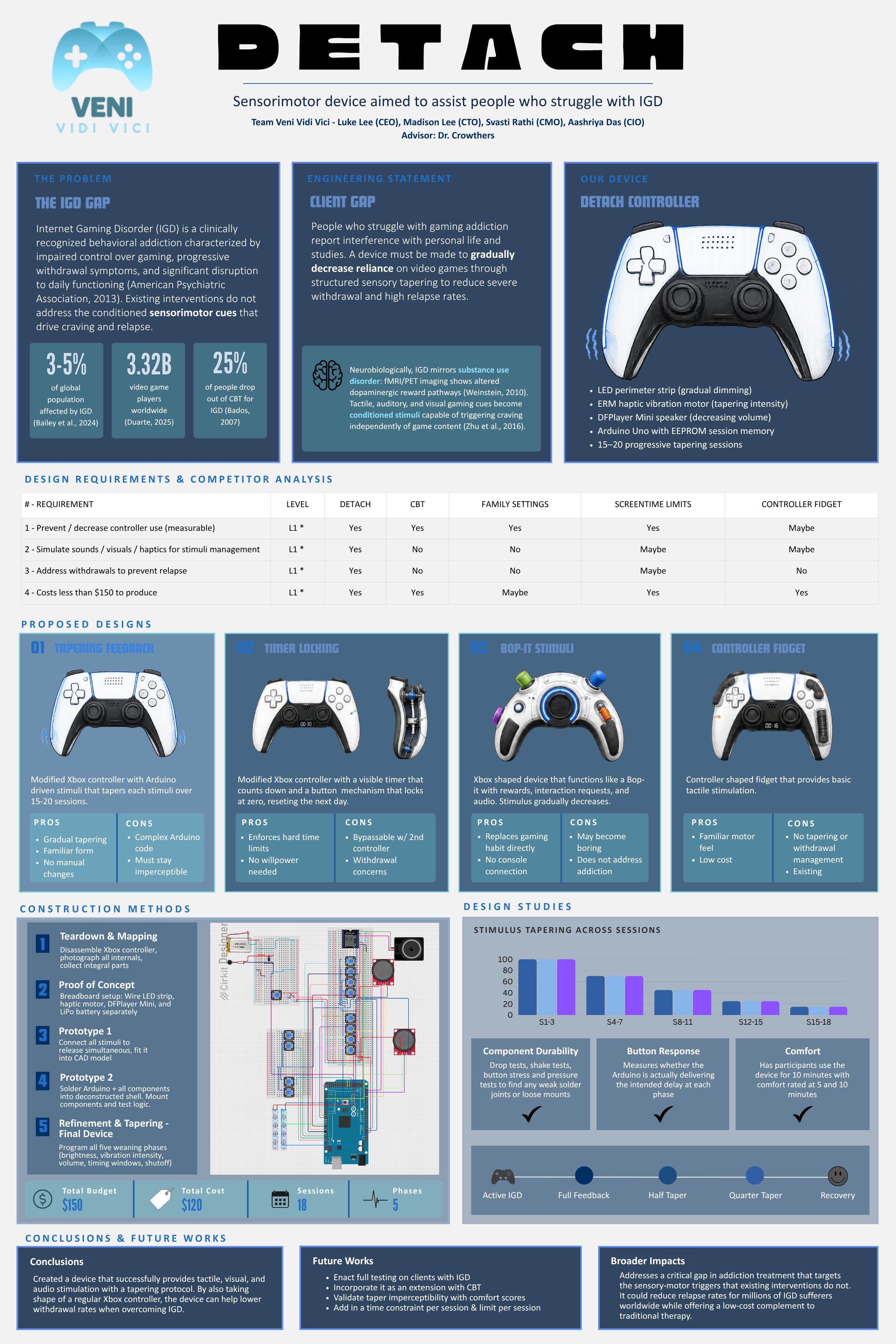
Internet Gaming Disorder (IGD) is a clinical behavioral addiction characterized by impaired control over gaming, withdrawal symptoms, and disruptions to a person's day-to-day life. The effects of gaming addiction can be connected to the effects of drug addiction, both affecting the brain in the same way. Over 5% of the world population is affected by IGD, but no proper treatment exists. Current treatments, including Cognitive Behavioral Therapy (CBT) or screen time limits, fail to address the sensorimotor functions of gaming that drive the addiction.
Engineering Goal: To combat this disorder, we wanted to create a device that would decrease gaming addiction by giving the sensory stimuli initially provided by video games and decreasing the amount of stimuli over time. Research shows that general addiction is best combated through slowly decreasing the amount of each stimulus over time through controlled sessions, so we wanted to include that idea as well in our design.
We wanted to create a device that provides the stimuli that video games provide, but in a controlled setting that will actually decrease gaming addiction. Based on the design requirements that we developed, we decided on a tapering feedback controller. It would be a standalone device not connected to a console or video game. It will provide visual, audio, and tactile stimuli to the user through LED lights, speakers, sound effects, and haptic motors. These stimuli will initially start at full power, the lights being fully bright, the speaking volume at full, etc. However, as we saw through research, gradually decreasing the amount of stimuli the user receives is very effective in decreasing addiction, so we implemented this process in our device as well. We developed about 20 sessions that occur every time the user uses the device. After every use, the amount of stimuli will gradually decrease, such as the lights getting dimmer or the speaker volume slightly decreasing, eventually removing the addictive factors and decreasing the user's reliance on video games.
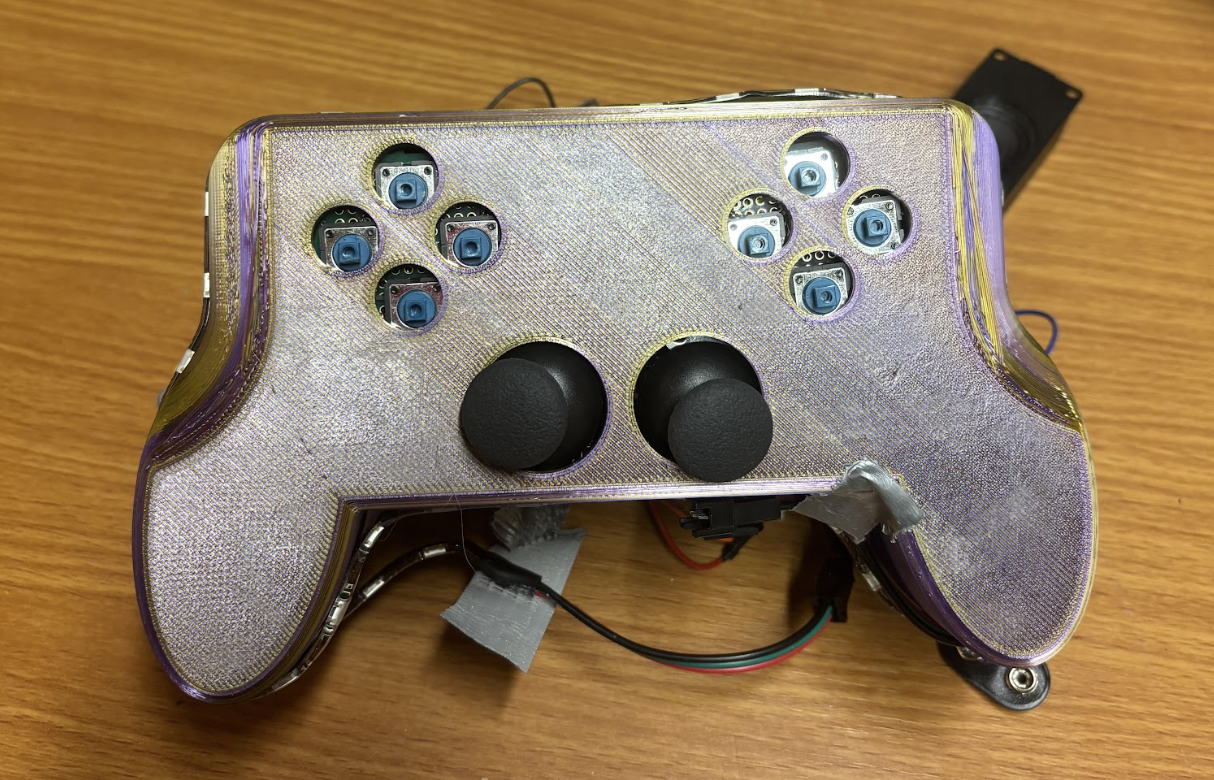
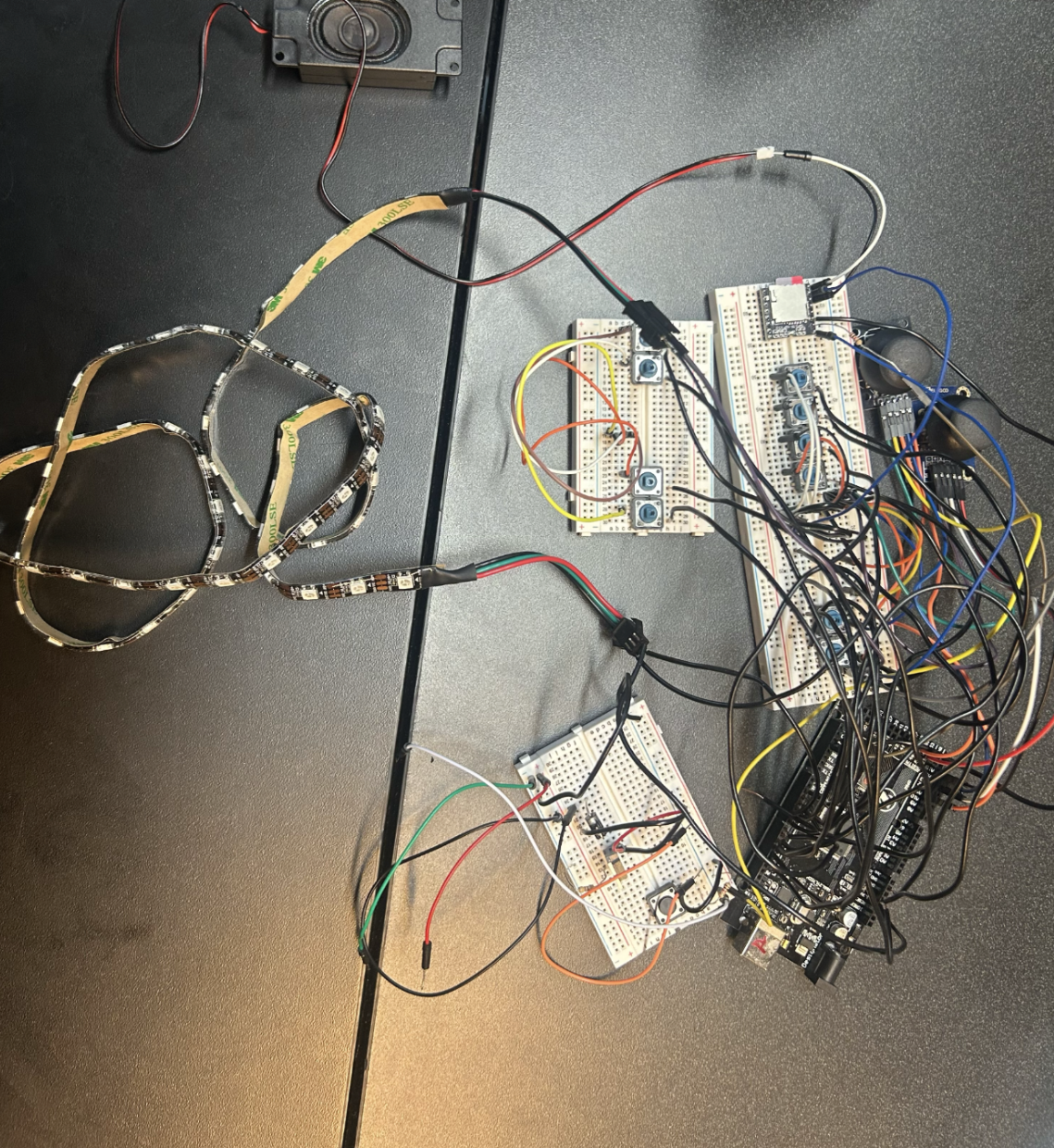
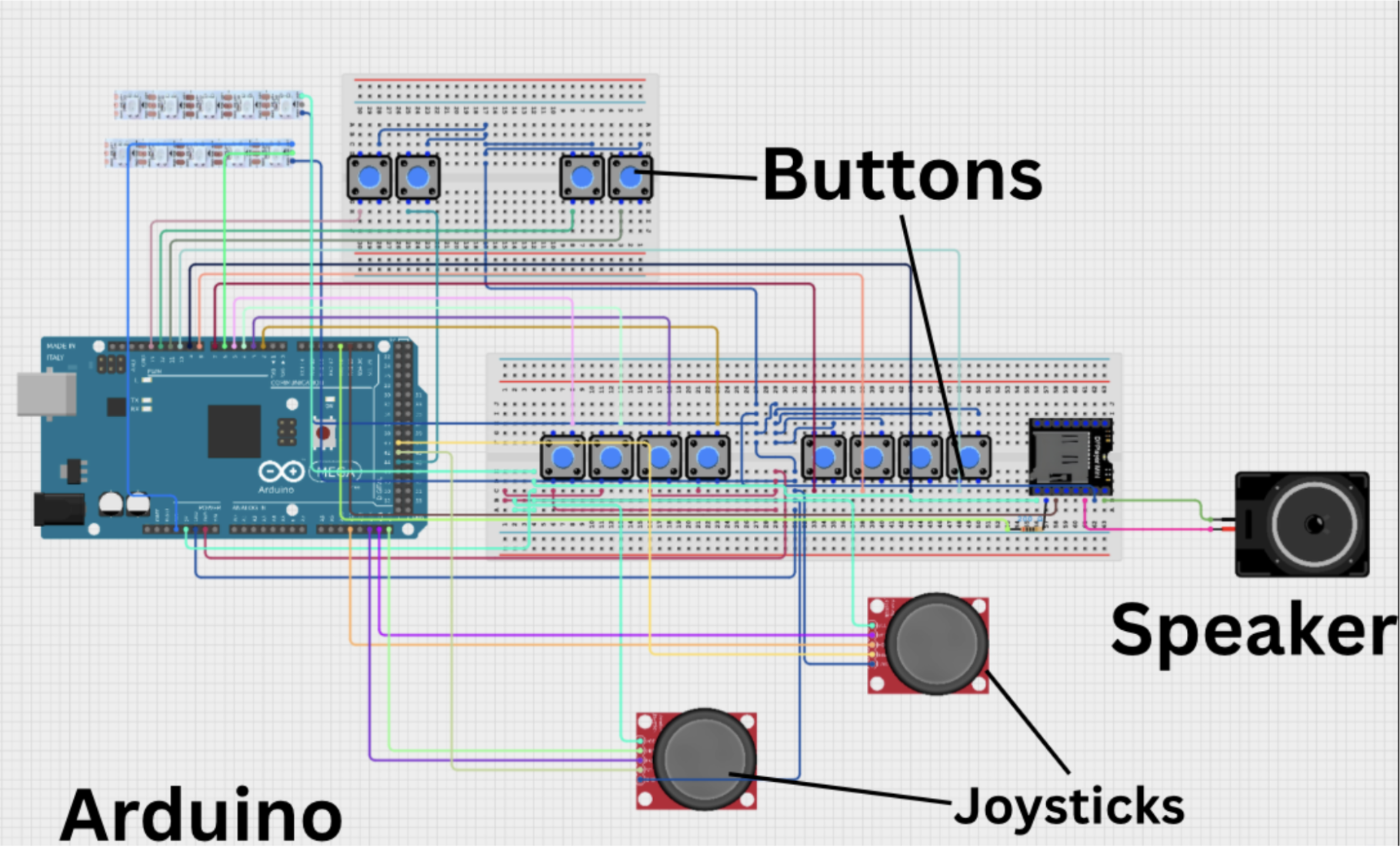
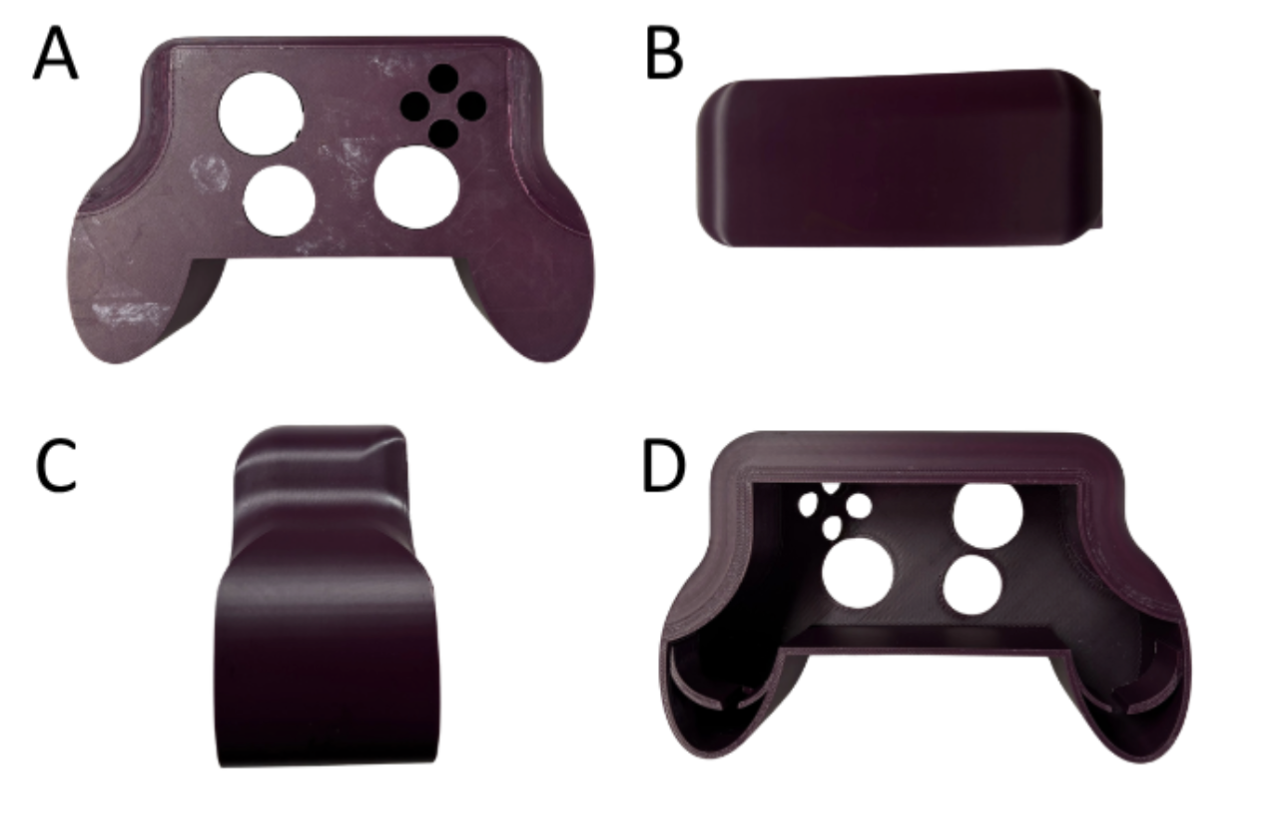
In our current device, we were able to implement the visual and auditory stimuli, along with the tapering mechanism, over 18-20 sessions. To construct our device, we initially created a breadboard and circuit system that allowed us to test out each of our functions without making any permanent decisions, which was our first prototype. Doing this allowed us to see the feasibility of each part of our device and see what parts we needed to work on more. Once we finalized that structure, we started creating CAD models of the casing we would put our wiring in. We wanted it to replicate an actual controller, but needed it to be a bit bigger than what was commercially available, so we created our own. We went through many iterations to make sure everything fit inside, but eventually we created the perfect casing. Once our casing was finalized, we started making the wiring permanent using perfboards and soldering our wires and buttons onto it. This allowed us to have stronger connections for each function in our device and also decrease the amount of space being taken up since we were compressing all of the parts together. Once the permanent wiring was complete, we fit everything into our controller casing and secured each part into its designated spot. Once that was complete, we did our final testing with our client and also some other students in the school who face similar problems of gaming taking up a lot of their time, and we gained a lot of valuable feedback on what possible changes could be made to make our device even better. You can find some of our initial prototype designs and also our final design below!