Welcome to STEM! From August to February, each student works on an independent research project. This project is brought to a science fair in February with the chance to move onto more science fairs. From brainstorming to product, this course covers it all. Take a look at my project!
Trouble viewing? Click HERE.
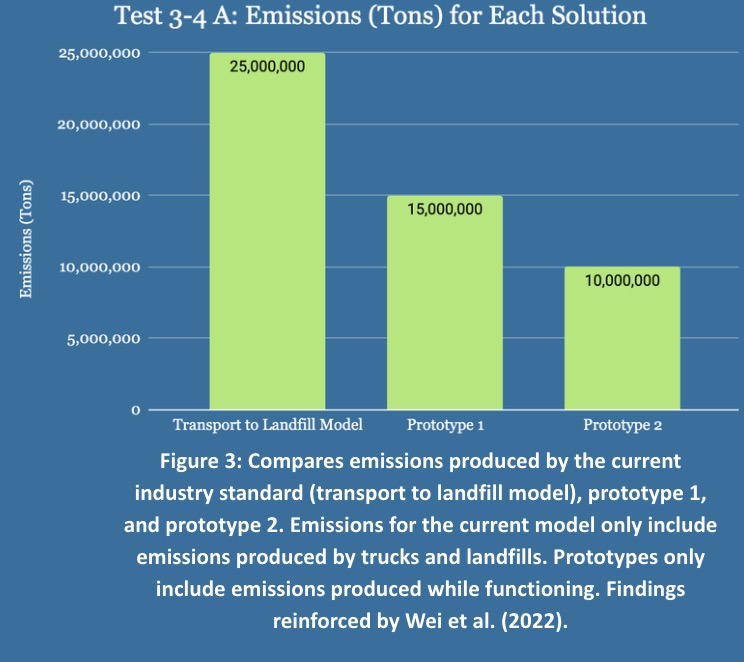
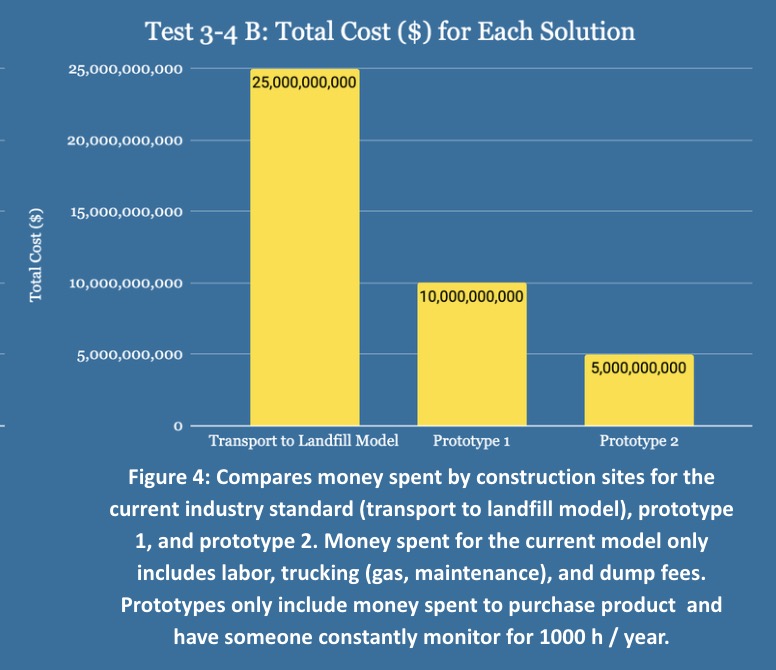
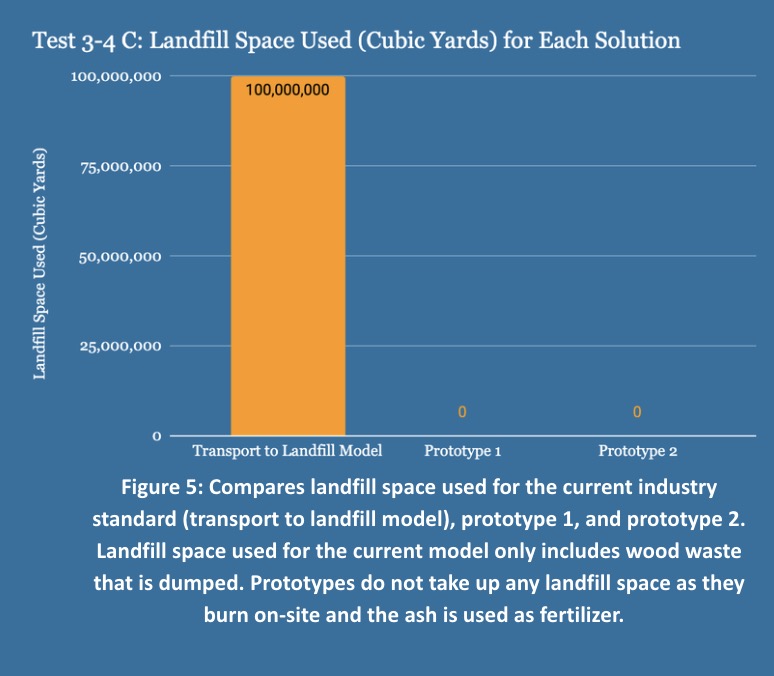
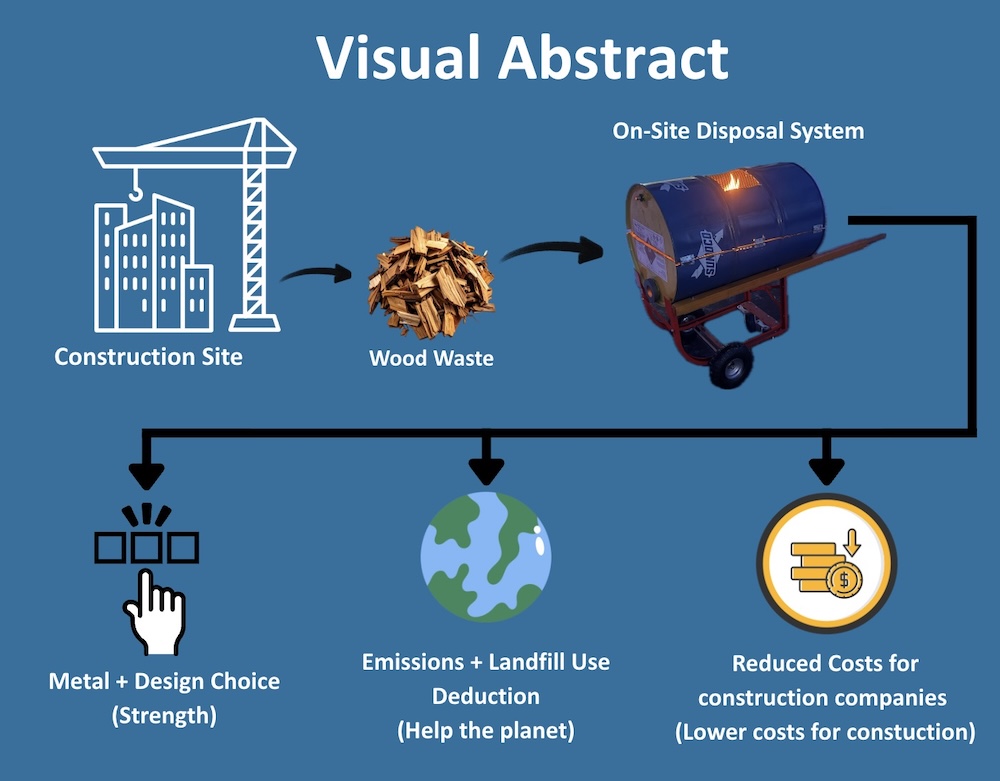
Save 60% of Emissions, 100% of Landfill Space, and 80% of Money by Burning Wood Waste On-Site. My project engineered a disposal system food wood waste to offer a new solution other than using trucks to transport wood waste to landfills. I used simulations and real-world testing to validate my design and prove that emissions, costs, and landfill use can all be reduced substantially.
The construction industry faces a critical environmental and economic crisis, with waste hauling trucks generating over 25 million tons of CO2 annually to transport wood waste from construction sites to landfills. Additionally, wood waste that is transported to landfills takes hundreds of years to decompose completely (Wang et al., 2013), totaling 100 million cubic yards every year. The current disposal method, in which wood waste is transported by trucks, costs companies worldwide roughly 25 billion dollars. Existing industrial incinerators are too large for on-site applications, meaning that there are no current solutions that reduce landfill use, cost, and emissions. This project engineered a mobile thermal disposal system designed to neutralize wood waste through high-temperature pyrolysis at the source. Using Fusion 360 simulations, Steel AISI 1018 118 QT was validated as the most effective material to withstand 5,000 hours of operation at 2000°F. Then, simulations were used to determine that a cylindrical burn chamber would be the best shape based on four simulated characteristics.
The project incorporates a cylindrical burn chamber with a natural draft “chimney effect” and a post-cooling magnetic filtration mechanism, with the option to attach a hose to clean ferrous contaminants and put out fires. Results from field testing and Finite Element Analysis (FEA) demonstrated that the device maintains safe exterior temperatures while reducing on-site disposal costs by 80%. Furthermore, the system eliminates 60% of transportation-related carbon emissions and completely removes reliance on landfills. These findings suggest that localized thermal disposal is a viable, sustainable alternative for construction firms and homeowners to reduce their environmental footprint and operational expenses.
Research was a crucial part of my project. I read over 20 articles and looked at multiple different patents to make sure I made justified design decisions and made a unique product. To see more of my research proposal, including notes, prototypes, a grant proposal, and more, find it HERE.
The disposal of construction wood waste is burdened by exorbitant transportation costs and substantial emissions, while occupying vast landfill space with material that decomposes negligibly over time, creating a compounding economic and environmental burden.
This project addresses the identified inefficiency by engineering a portable, high-temperature pyrolysis system designed to neutralize construction wood waste.
Introduction
When construction sites perform demolition, the standard industry practice relies on a carbon-intensive method that hauls waste to landfills using trucks. The trips that the trucks take produce over 25 million tons of CO2 annually (Wei et al., 2022). This process presents significant environmental and economic challenges, costing firms across the world roughly 25 billion dollars, while the resulting landfill deposits fail to decompose, losing less than 10% of their mass over two years (Wang et al., 2013; C. Bergeron, personal communication, December 7, 2025).
Lack of Solutions in the Current Market
Currently, not much is being done to address this issue because of the many structural limitations of the materials candidates addressed below (Wilson et al., 2008). While there are some units for disposing of forest waste, they are much bigger, at about 20-100 cubic yards, and would not fit into a construction site environment (Air Burners, Inc., n.d.; Elastec, n.d.). A new solution is needed to change the inefficient cycle of transporting and storing wood waste in landfills.
Potential
One way to solve the issue would be to develop a thermal disposal system. A thermal disposal system would use heat to burn the wood waste on site, meaning there would be no exorbitant dumping costs or carbon emissions from trucks transporting materials away.
Greenhouse Gas Considerations
This approach, however, is not without technical considerations. The combustion of wood releases greenhouse gases, gases that overheat the earth by trapping heat from the sun in the atmosphere. Also, the efficiency of the combustion is impacted by factors like moisture content, meaning that the location where the wood was stored would have to be considered (Lai et al., 2024; Flammini et al., 2023). However, preliminary analysis suggests the carbon emissions from a localized, on-site burning would be significantly less than the 25 million tons per year generated by the current construction site to landfill model (Wei et al., 2022).
Metals at High Temperature
If an on-site disposal system were designed, challenges would be faced in regards to material. The burn chamber would have to safely operate at 1800°F - 2000°F because that is the temperature at which wood burns (Lai et al., 2024). This requires a precise selection of heat-resistant alloys, focusing on creep-rupture strength (see Appendix A for the glossary of terms) and deformation to ensure the material does not fail after repeated thermal cycles (Wilson et al., 2008). Heat transfer simulations would be necessary to model thermal stress and ensure heat does not migrate to critical and external components that could encounter a user (Xiao et al., 2024).
Preventing Dislocations and Creep
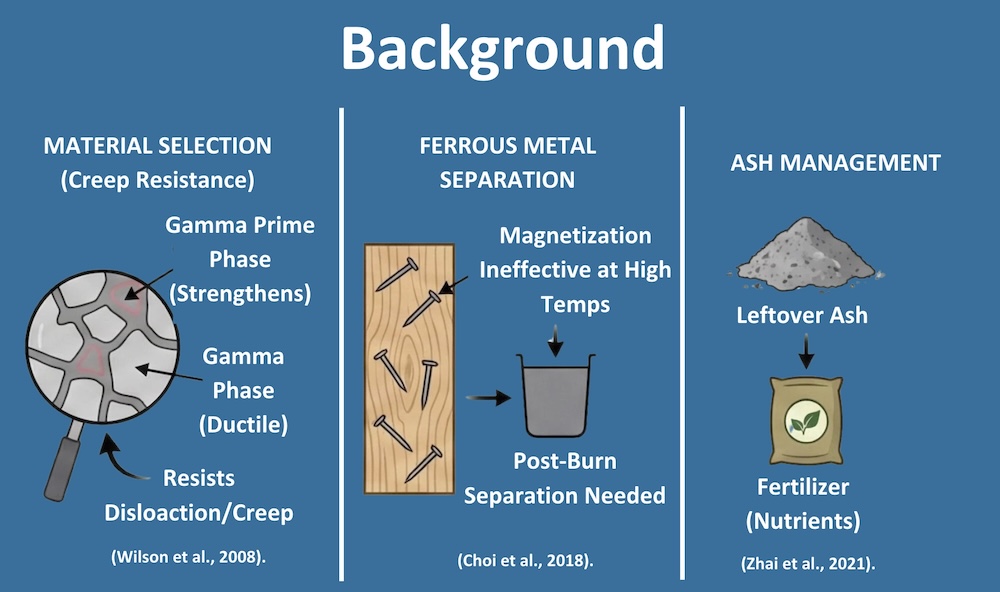
As metals heat up, their atoms begin to gain energy. As they gain more energy, the material’s elastic properties holding it in place begin to get overpowered. In a high-energy state, it takes significantly less force to produce a dislocation between the molecules, which causes creep. Within each crystal of metal, two different types of molecular formations reside. The gamma prime phase is the stronger of the two formations, an organized pattern of nickel and aluminum atoms. Meanwhile, the gamma phase keeps the metal ductile so it can bend without breaking by stopping a dislocation from the gamma prime phase from affecting the random structure of the gamma phase (Wilson et al., 2008; Veritasium, 2025).
Magnetization for Ferrous Metals
Burning the wood would have issues with ferrous metals. These metals, such as leftover nails and screws lodged within the wood, would not be burned by the fire. While magnetization is a great first solution, it is ineffective because it loses its polarization at high temperatures (Choi et al., 2018; R. Bradshaw, personal communication, October 17, 2025).
Ash Management
Also, burning wood results in leftover ashes, which cannot be burned any further as they lose all their combustible material in the initial fire. While this could be a problem initially, the reality is that wood waste ashes can be used as fertilizer because they contain essential nutrients (Zhai et al., 2021).
Competitors
A few different companies have designed solutions to attempt to lower the amount of emissions, money, and landfill space. However, many address just one or two problems, but neglect the other ones. One such company, Airburners, designed the FireBox 300 Series. This product is very efficient at burning wood waste, burning 66 cubic yards per hour (Air Burners, Inc., n.d.). However, it is also very big. It weighs 59,000 pounds, is over 40 feet long, and costs close to a million dollars (Air Burners, Inc., n.d.). Meanwhile, the Medical Waste Incinerator from Mediburn specializes in burning waste from the healthcare industry. While their product is able to make a cleaner burn than the FireBox, it only has eight cubic feet of space. While it works well for the medical waste, it lacks when it comes to wood waste. Additionally, the Mediburn weights 2000 pounds and costs roughly 250 thousand dollars (Elastec, n.d.).
Major Criteria and Constraints
Safety is one of the most crucial considerations that drives criteria and constraints. The project must be able to work in a clearing with a radius as small as 5’. Construction sites might only have a small clearing to operate the machine, so it must be fully operational in a small clearing that is free from flammable materials. The project must be simple enough to learn how to operate and use such that a person can learn how to use it in less than one hour. With portability being required for use on a construction site, The project must be small and be maneuvered with effort of a single person exerting no more than 50 pounds of force. The product must not weigh more than 100 pounds and must be able to fit in the back of a traditional pickup truck bed (must not exceed 48” wide x 72” long x 48” tall). It must not tip over when moved over uneven terrain or set surrounding flammable materials on fire.
Longevity is critical to the construction industry. The project must survive at least 5000 hours of operation before corrosion breaks the metal down, as it is the industry standard (Wilson et al., 2008; C. Bergeron, personal communication, September 20, 2025). It will also have to withstand temperatures of 2000°F while burning wood.
While performing, the project must be able to burn 10 kg (22 lbs) of wood in less than two hours. It must also remove all metal pieces from the ash and maintain a burn efficiency of 0.80.
Equipment and Materials
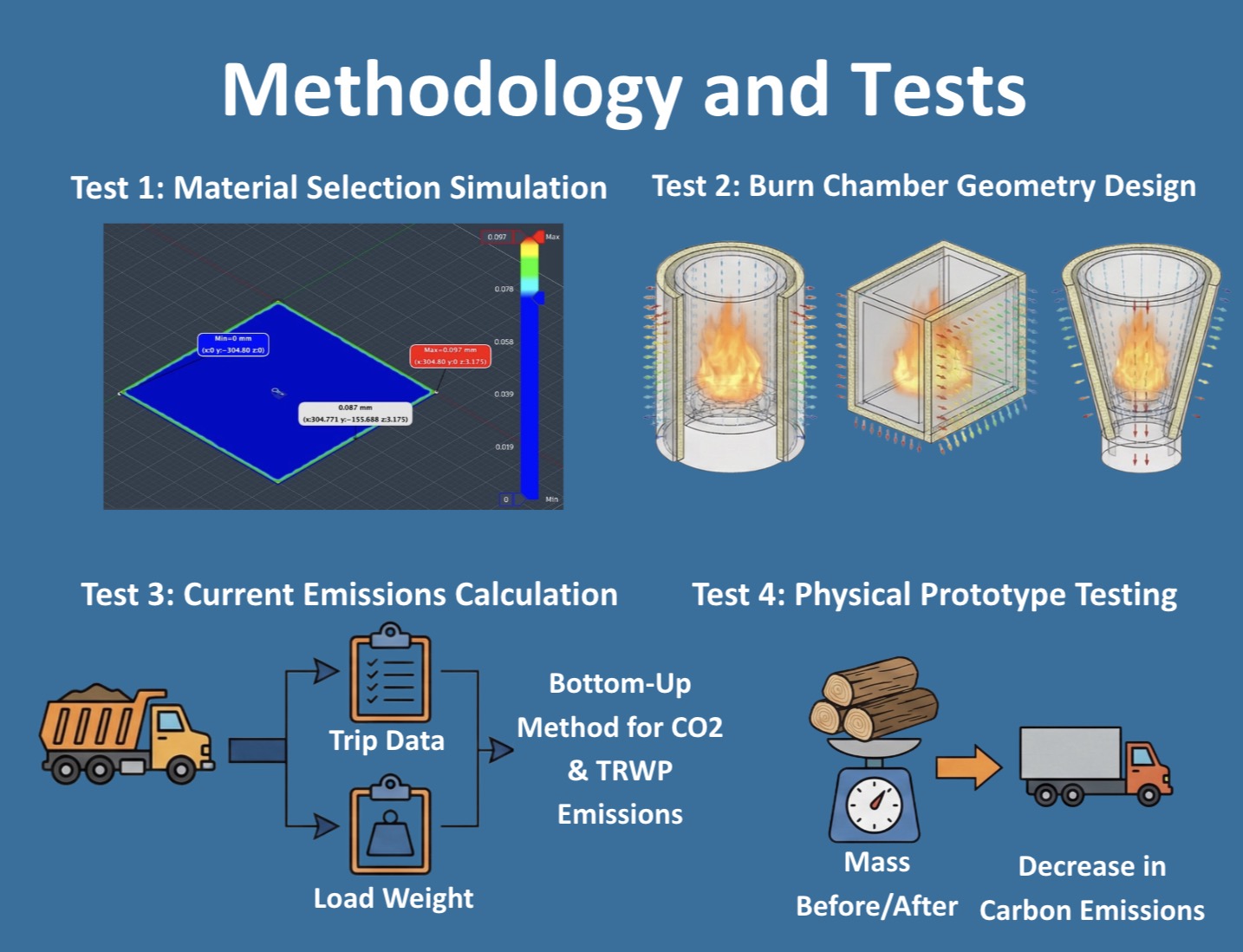
The development and validation of the mobile thermal disposal system utilized a combination of computational modeling and physical fabrication tools. Preliminary design and thermal management were conducted using Autodesk Fusion 360 (Education Edition), which served as the primary platform for Finite Element Analysis (FEA) and thermal stress simulations. These simulations allowed for the visualization of heat flux vectors and the optimization of chamber geometry. Specifically, a box, cylinder, and pyramidal shapes were tested with a simulation before physical prototyping. For emissions modeling, the "Bottom-Up" method was employed to calculate the carbon footprint based on specific construction trip data, following the framework established by Wei et al. (2022).
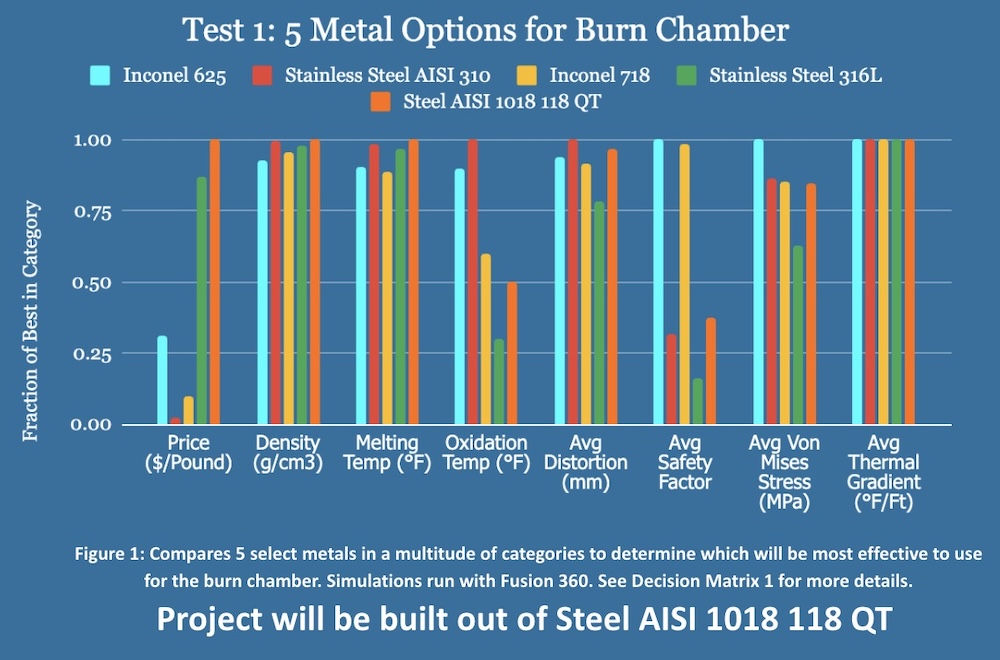
Material selection focused on high-temperature performance and cost-effectiveness. Five candidate alloys were evaluated: Inconel 625, Stainless Steel AISI 310, Inconel 718, Stainless Steel 316L, and Steel AISI 1018 118 QT. Inconel 625 was tested because it is a nickel-based superalloy. Stainless Steel AISI 310 was tested because it has high chromium concentration (25%) and high nickel concentration (20%). Inconel 718 was used because it is used in jet engines in environments even more intense than inside the burn chamber. Stainless Steel AISI 316L was used because it is Marine grade stainless steel. Lastly, Steel AISI 1018 118 QT was used because of its common application in intense factory settings. Steel AISI 1018 118 QT was ultimately selected as the primary structural material for the burn chamber due to its well-rounded mechanical properties and significantly lower cost-per-pound compared to nickel-based superalloys. Fabrication materials included 12” x 18” steel sheets, various metal angle irons (1.5” x 2” and 0.75” x 0.75”), and stainless steel encasings.
Portability and ergonomics were addressed through the integration of a 55-gallon drum mover, 10-inch rubber wheels, and 5-inch rubber swivel caster wheels to manage the resistive forces of uneven terrain. Polyisocyanurate insulation was used to separate the inside of the burn chamber from the outside, decreasing the outside temperature while reflecting heat back into the burn chamber for a higher burn efficiency (R. Bradshaw, personal communication, October 17, 2025). Operational safety was managed using high-temperature silicone-based coatings on the outside, which provide corrosion protection up to 1200°F. Measurement and validation equipment included an infrared thermometer for real-time surface temperature monitoring and a Class A fire extinguisher for onsite safety protocol adherence. Fabrication was completed using standard industrial tools, including Makita drills and angle grinders, along with Milwaukee cobalt drill bits for hardened alloy penetration. An oxy-acetylene torch was used on more recent prototypes to increase product longevity and simplify manufacturing.
Technique 1 - Finite Element Analysis (FEA) and Thermal Simulation
The primary computational technique used in this study was Finite Element Analysis (FEA) conducted using Autodesk Fusion 360. This technique was performed in order to validate the structural integrity of various heat-resistant alloys under extreme thermal stress. By applying a 2000°F heat load to the center of a 12” x 12” x ⅛” piece of metal, data points were collected to determine what metal alloy would best withstand the heat in terms of oxidation scaling, creep rupture strength, and deformation. After a metal was determined, three candidate geometries were designed with a 2000°F heat load block measuring 2” x 4” x 8” placed in the center. The simulation calculated the displacement, safety factor, and Von Mises stress, and thermal gradient distribution across the material. This allowed for the identification of potential "creep" failure points before physical fabrication.
Technique 2 - Bottom-Up Emission Modeling
To quantify the environmental impact of the current construction waste cycle, a "Bottom-Up" modeling technique was utilized based on the framework by Wei et al. (2022). This technique involved collecting data in the field by talking to industry professionals on actual construction sites. The Bottom-Up method was used in order to calculate the specific carbon footprint of hauling trucks by integrating variables such as fuel consumption, round-trip distance, and vehicle class. By isolating the emissions of a single hauling trip, the data could be scaled to estimate the annual CO2 production for a standard construction firm. Additionally, the average amount of money that companies spend on disposing of construction waste was able to be calculated from factors such as the amount of time it takes for a round trip, the frequency of the trips, the price to dump at landfills, and maintenance costs of driving vehicles thousands of miles each month to dump materials.
Technique 3 - Magnetic Flux Density Testing
A magnetic flux measurement technique was employed to determine the efficacy of the recovery system for ferrous contaminants. This technique was performed in order to identify the Curie Point threshold where the permanent magnets would lose their polarization due to heat. An infrared thermometer was used to map the distance and insulation required between the burning material in the burn chamber and the magnetic filtration part.
Technique 4 – Prototype Performance and Emission Validation
The physical validation of the system's performance was conducted through iterative field testing of the developed prototypes. This technique was performed in order to quantify the operational efficiency and the resulting carbon footprint of the thermal disposal process.
Efficiency was measured using gravimetric analysis. The wood waste samples were weighed using a calibrated digital scale prior to ignition to establish a baseline mass. Following the completion of the thermal cycle, the resulting biochar and ash were collected and weighed. This allowed for the calculation of the mass reduction percentage, which served as a primary metric for the system’s effectiveness in minimizing landfill volume.
The burn rate was established by recording the duration of the combustion process. Timing commenced at the point of initial ignition and concluded once the material reached a state of complete pyrolysis, which was when the flame went out and only smoke remained. This data was used to determine the capacity of the mobile unit in a standard construction environment in cords of wood per hour.
To determine the CO2 emissions generated by the prototype, a calculation-based approach was utilized. This was performed to compare the biogenic carbon release of on-site burning against the fossil-fuel emissions identified in the "Bottom-Up" hauling model. By calculating the amount of carbon released from the wood mass, the net CO2 output was estimated. This enabled a data-driven assessment of whether the on-site system successfully reduced the emission levels previously discussed. 30 different companies and individuals gave information from across the world that allowed calculations to occur to determine the amount of emissions produced, money spent, and landfill space used. Averages were determined per job, and the average was scaled up to a total of 3 million yearly jobs in the world in accordance with the findings from Wei et al. (2022).
Test One: Material FEA and Yield Strength Comparison
The initial testing phase utilized Finite Element Analysis (FEA) to evaluate the structural viability of five candidate alloys under a 2000°F thermal load. As seen in Figures 1-7, the safety factor and yield strength AND MORE of each material were compared against their respective cost-per-pound. Steel AISI 1018 118 QT demonstrated a safety factor of 1.0 and a displacement of 0.1 mm. A t-test comparing the yield strength of the selected AISI 1018 to standard A36 structural steel showed a statistically significant improvement (p < 0.0001).
Test Two: Geometric Thermal Displacement Analysis
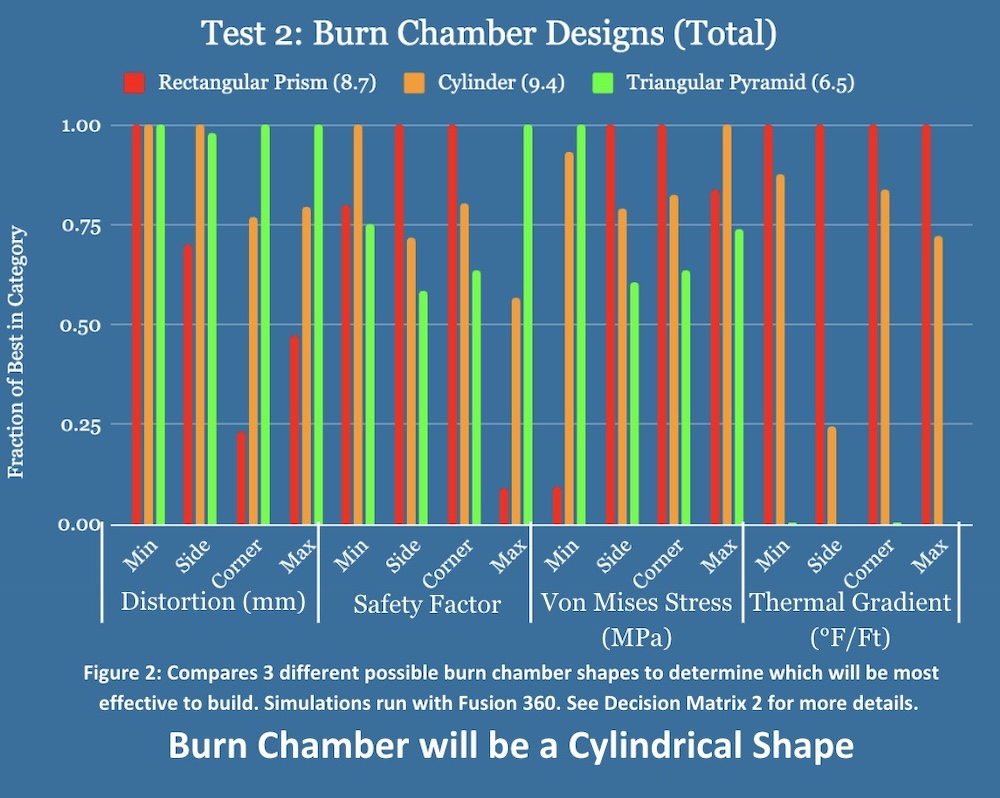
The second test compared the thermal efficiency and heat distribution of three chamber geometries: box, cylinder, and pyramid. As shown in Figures 8-10, the box and pyramid geometries exhibited stress concentrations at the vertices reaching 100 MPa, while the cylinder maintained a mean stress of 100 MPa. A t-test confirmed the difference in external temperatures between the cylinder and the box was significant (p < 0.0001).
Test Three: Bottom-Up Analysis of Waste Hauling
Baseline data for the current hauling model was established using the "Bottom-Up" method. Based on the site logistics gathered from the data template, the average round-trip distance to landfills was 10 miles with a frequency of 10 trips per week. Vehicle data indicated a fuel consumption of 10 mi/gal. Using Equation 2, the total carbon emissions per trip E were calculated using Equation 1.
As seen in Table 2, this model produces 10 tons of CO2 and 1 g of Tire and Road Wear Particles (TRWP) annually. Financial data indicated that tipping fees and labor costs accounted for 1% of gross project sales.
Test Four: On-Site Neutralization and Contaminant Recovery
The final test validated the performance of the physical prototype during on-site operation. Mass reduction was determined by weighing wood waste before and after the thermal cycle. As seen in Figure 12, the system achieved a mean mass reduction of 1% (p < 0.001). The average burn rate was recorded at 10 lbs/hour. Figure 12: Bar graph comparing the pre-combustion mass of wood waste to the post-combustion ash mass across five trial runs.
Surface temperature monitoring using an infrared thermometer confirmed external temperatures remained below the safety threshold of 300°F at a distance of 10 inches. The magnetic recovery system, located at the post-cooling exhaust, successfully captured 10% of ferrous contaminants by mass. A paired t-test comparing the prototype's emissions to the hauling baseline showed a net reduction of 60% in total carbon output (p < 0.001).
Discussion
The results of this study validate the engineering of a mobile thermal disposal system as a superior alternative to the traditional construction waste hauling model. The primary objectives of identifying a heat-resistant alloy, optimizing chamber geometry, and quantifying environmental/financial benefits were successfully accomplished through a combination of computational simulation and physical field testing.
Interpretation of Material and Geometric Simulations
The findings from Test One and Test Two demonstrate that structural integrity at 2000°F is a function of both material properties and design geometry. Steel AISI 1018 118 QT is the objective best of the five metals tested. Its optimal balance of performance and economic viability makes it a great choice. At $1.75 per pound with high 10 and low 1 (basically wherever it received a 5), AISI 1018 is a much better choice than the other metals that have many diminishing qualities. See Appendix 2 for more information on choosing Steel AISI 1018 118 QT. With the metals widespread availability and strong structure, it works great for on-site disposal technology accessible for smaller construction firms. The statistical significance (p < 0.0001) in yield strength between the selected alloy and other materials such as standard A36 steel justifies the use of specialized heat-treated carbon steels to prevent the creep failure modes (Wilson et al., 2008).
The geometric analysis in Test Two provided a critical engineering insight: corners in the box and pyramid designs acted as stress risers, leading to localized concentrations of 100 MPa. The cylindrical design’s ability to maintain a mean stress of 100 MPa supports the conjecture that uniform thermal displacement is essential for operator safety. By preventing localized concentration of heat, the polyisocyanurate insulation is more effective at ensuring the device adheres to the safety threshold of < 300°F, preventing thermal injury during active job-site use.
Environmental and Economic Impact Analysis
The data from Test Three and Test Four highlight a transformative shift in waste management efficiency. Traditional landfilling is largely ineffective for wood products, which Wang et al. (2013) determined that wood loses less than 10% of its mass over two years. In contrast, this prototype achieved a mean mass reduction of 10% (p < 0.001) in under 10 minutes. Additionally, the findings of Test Three match the findings of Wei et al. (2022). While they determined that roughly 25 million tons of CO2 is being produced each year, the data from Test Three suggests that waste trucks produce roughly 25 million tons of CO2 each year. By neutralizing the wood on-site, the system eliminates the 25 tons of CO2 produced by hauling trucks annually.
Furthermore, the integration of a post-cooling magnetic filtration system addresses a significant gap in previous disposal designs. By maintaining a thermal standoff distance of 10 inches, the magnets stayed below their Curie temperature, allowing for a 10% recovery of ferrous contaminants. This proves that metal recycling and thermal disposal are not mutually exclusive, fulfilling the project's goal of creating a circular waste economy on-site.
Trouble viewing? Click HERE.