Course Description
Science, Technology, Engineering and Mathematics with Science and Technical Writing (STEM/STW) is a course taught by Dr. Crowthers. In the first part of this class, called STEM I, students work on their 5-month long independent Research Projects, where they can choose a topic on interest and work on it. This class culminates to February Fair, where students present the findings and conclusions. Take a look at my work below!
Novel Automated Carbon Monoxide Forecasting, Dead-Zone Detection, and Ventilation System for Homes
In the modern household, around 400 people die a year due to CO (Carbon Monoxide) poisoning with around 100,000 emergency visits per year. Current electrochemical sensors, despite being economical, are affected
severely by environmental sensitivities and lack advanced forecasting capabilities. Additionally, current residential ventilation systems tend to contain leftover pollutant and aren’t suited for autonomous poisonous gas filtration.
The goal of my project is to design a novel carbon monoxide dead-zone detection and ventilation system that not only detects dead-zones,
areas with little circulation but high levels of CO, and forecasts future CO levels, but also smartly informs the user where carbon monoxide might be building up for further action.
Abstracts
Graphical Abstract
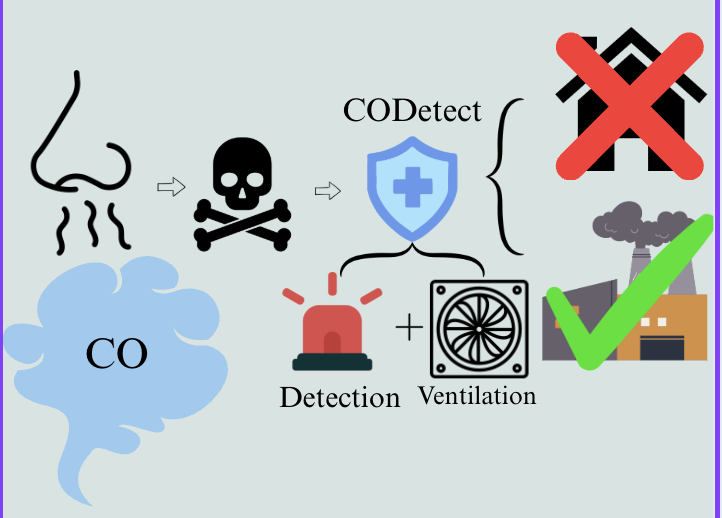
Abstract
In the modern household, around 2.1 billion people worldwide cook using open fires or inefficient stoves fueled by harmful chemicals, with over 3.2 million people per year dying due to air pollution (WHO, 2025), carbon monoxide (CO) poisoning being one of the deadliest (EIA, 2024).
In the body, CO binds to hemoglobin, inducing hypoxia, lack of oxygen, which can kill a person within a matter of minutes. Currently, around 400 people die a year due to CO poisoning with around 100,000 emergency visits per year (CDC, 2025). Current electrochemical sensors, despite being economical, are affected severely by environmental sensitivities such as hydrogen gas and carbon dioxide, while lacking advanced forecasting capabilities.
Additionally, current residential ventilation systems tend to contain leftover pollutants, consume high amounts of energy, and aren’t suited for autonomous poisonous gas filtration, with the current residential ventilation fan module costing upwards to $300; Additionally, advanced and autonomous filtration capabilities are exclusive to only commercial or industrial fans. The goal of this project is to design a novel, dual-mode carbon monoxide dead-zone detection and
ventilation system that not only detects dead-zones, areas with little circulation but high levels of CO, and forecasts future CO levels for users to install detectors in those areas, but also smartly informs the user where carbon monoxide might be building up for further action.
Click the button under to view other secondary and formal documents for this project!
Quad Chart
Project Outline
Phrase 1
Currently, around 400 people die a year due to carbon monoxide poisoning with around 100,000 emergency visits per year. Additionally, current residential ventilation systems tend to contain leftover pollutants, consume high amounts of energy, and aren’t viable for poisonous gas filtration.
Phrase 2
The goal of this project is to design a novel, dual-mode carbon monoxide dead-zone detection and ventilation system that not only detects dead-zones for users to install detectors in those areas, but also smartly informs the user where carbon monoxide might be building up for further action.
Background Infographic
Background
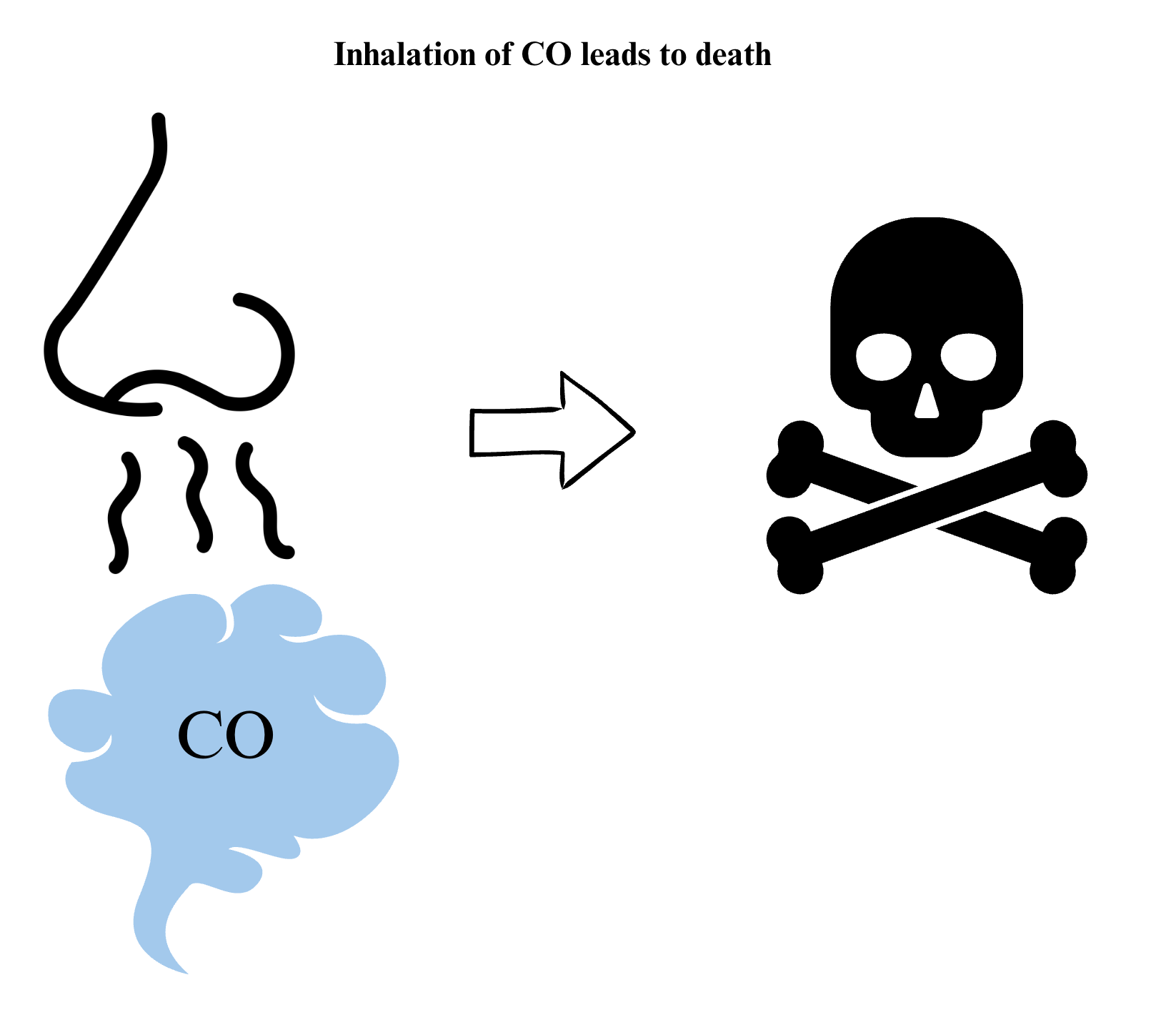
In the modern household, around 400 people die a year due to CO poisoning with around 100,000 emergency visits per year. Current electrochemical sensors, despite being economical, are affected
severely by environmental sensitivities and lack advanced forecasting capabilities. Additionally, current residential ventilation systems tend to contain leftover pollutant and aren’t suited for autonomous poisonous gas filtration.
The goal of my project is to design a novel carbon monoxide dead-zone detection and ventilation system that not only detects dead-zones,
areas with little circulation but high levels of CO, and forecasts future CO levels, but also smartly informs the user where carbon monoxide might be building up for further action.
Methodology Infographic
Methodology
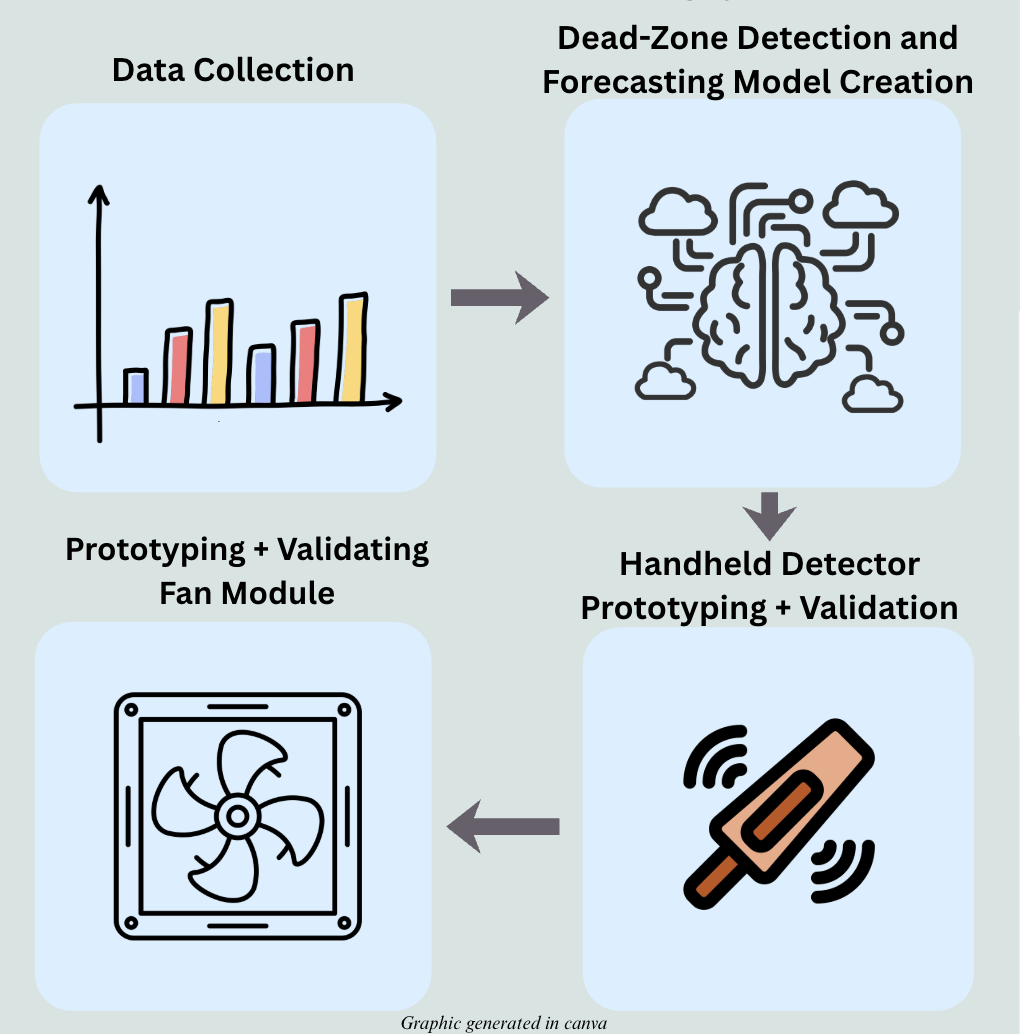
This project involves developing a comprehensive carbon monoxide detection and monitoring system through several integrated components: building a data collection device using an ESP32 or
Arduino Uno R4 Minima with an MQ-7 CO sensor and BME280 environmental sensor to gather temperature, humidity, pressure, and CO levels in both simulated dead-zones (using gas chambers with near-zero oxygen and elevated CO) and real home environments,
storing this data in CSV files; creating an LSTM model for forecasting and dead-zone detection; developing a compact handheld detector prototype using smaller microcontrollers or PCBs; designing a mobile app that displays environmental readings and
integrates the predictive models; building computational fluid dynamics simulations in ANSYS Fluent to model CO transport in various household ventilation configurations (testing different numbers of windows with constant fan counts,
including furniture obstacles if time permits, and expanding to include parameters like window positions, air ducts, room volumes, and multiple rooms); and constructing a small engineering prototype that connects a 5V cooling fan in a polycarbonate casing
to the detector and app to demonstrate automated system responses to varying CO levels.
Results
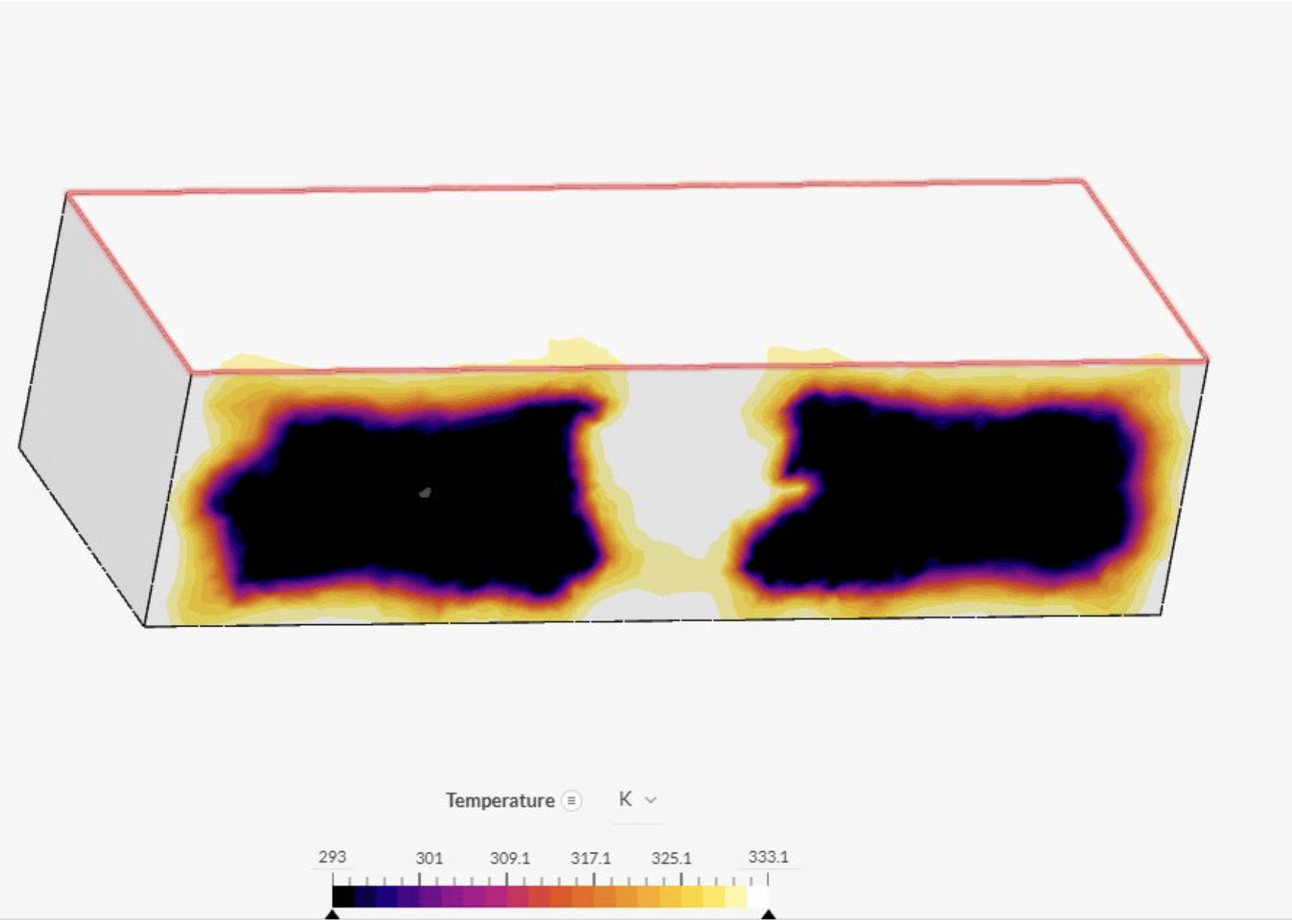
Heat Blockage Analysis of Design 2 of Ventilation System
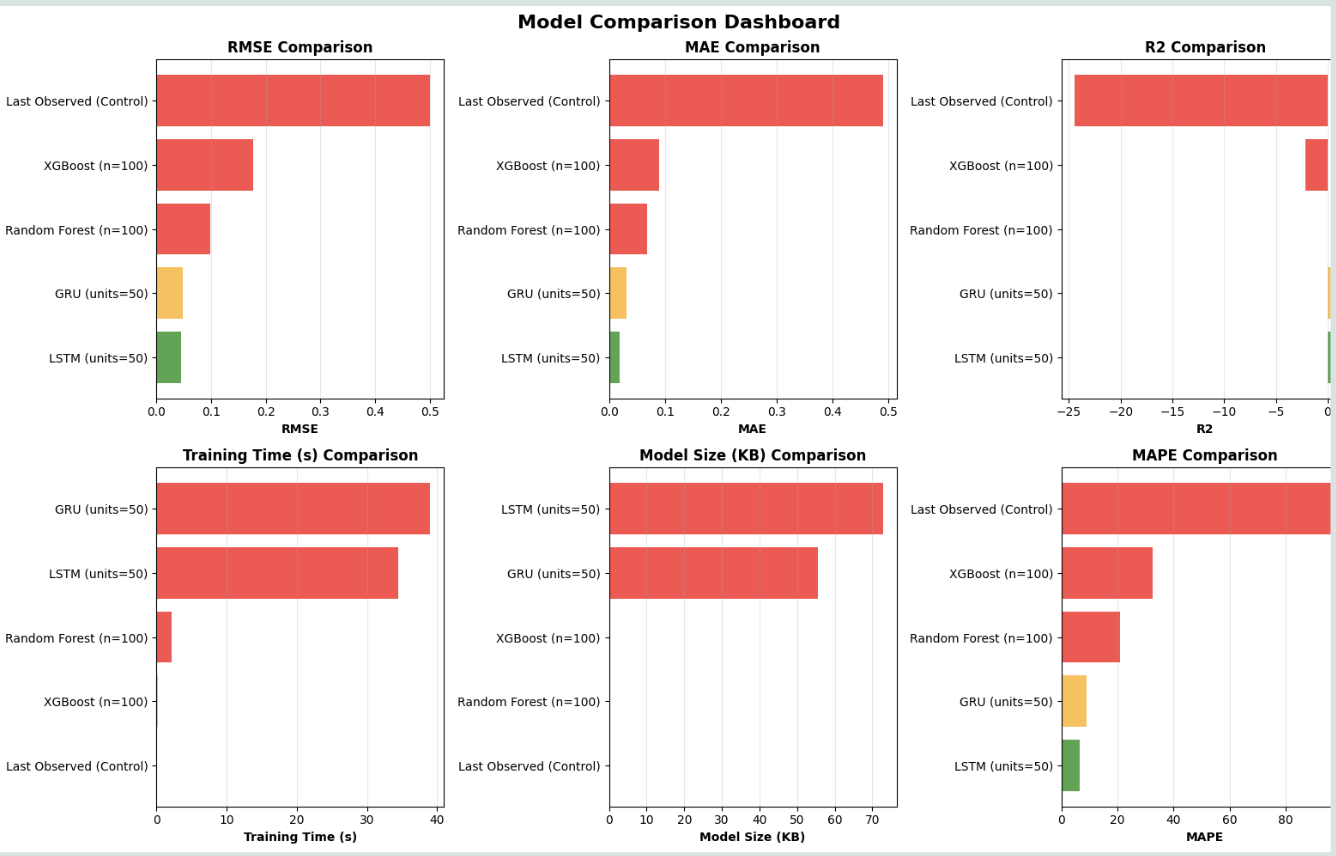
Time-Series Forecasting Model Comparison for Detector
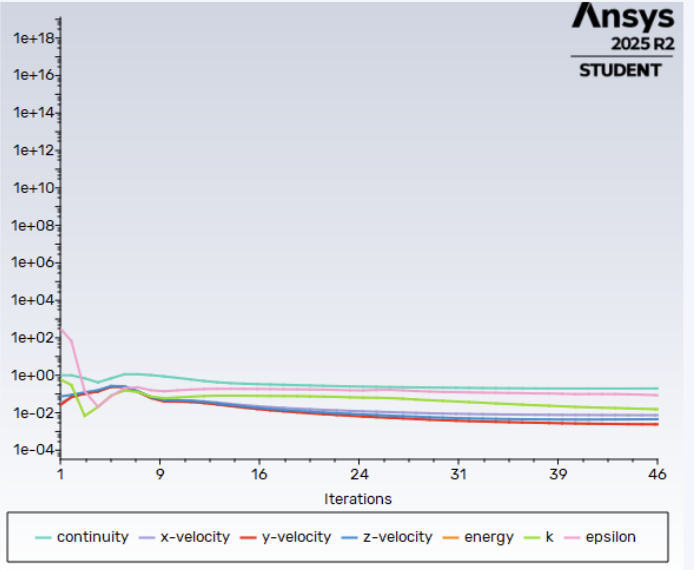
Curves of parameters of k-epsilon model used for CFD
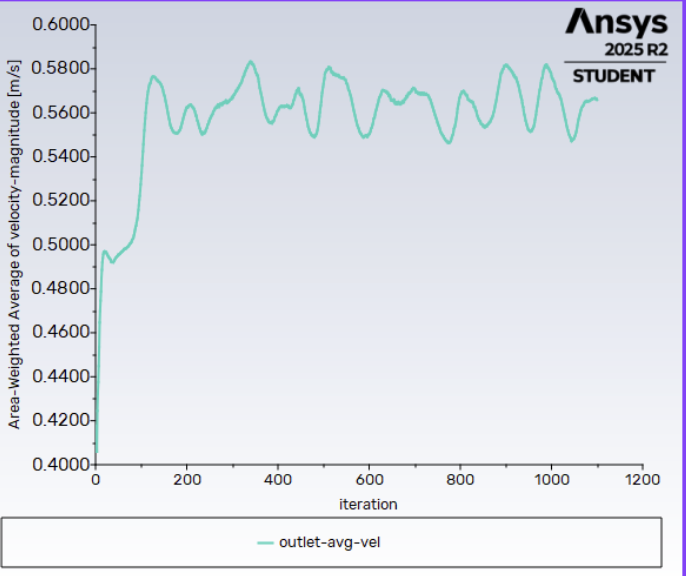
Graph of average fan velocity. Used to calculate ACH (Ventilation coefficient)
Analysis and Discussion
The provided figures offer a comprehensive validation of the proposed dual-mode system, effectively bridging the gap between advanced AI forecasting and physical ventilation optimization.
The Model Comparison Dashboard directly addresses the abstract's critique of current sensors lacking forecasting capabilities; it demonstrates that Deep Learning architectures—specifically LSTM model—achieves drastically lower error rates (RMSE, MAE) compared to standard tree-based models, justifying their use for precise CO prediction.
Crucially, the 3D spatial contour map visualizes heat blockage in Design 2, revealing specific areas of thermal stagnation, leading to the transition into design 3, which consists of a dual-mode ventilation system that filters our air with CO and replaces it with clean air and the design choice of not installing the module on vents as it would block great amounts of heat.
Complementing this, an ANSYS simulation system implemented within a floorplan simulated with carbon monoxide. Overall, the graph approaches a value of around 0.56, which is then converted to ACH. An ACH of 15 was obtained, compared to the average home ACH of 2 with dead-zones, confirming the system’s effectiveness.
References
February Fair Poster