STEM I introduces the foundations of scientific research and engineering design. The course emphasizes identifying problems, conducting background research, and developing well-structured proposals in preparation for independent research.
Quad Chart
The quad chart assignment required summarizing our research on a single page,
presenting the problem, methodology, data, and conclusion in a clear four-quadrant format.
Page: 1 / ?
Ventrilo-Wrist: A Wrist Brace Preventing the Onset of Carpal Tunnel Syndrome
Overview of Project
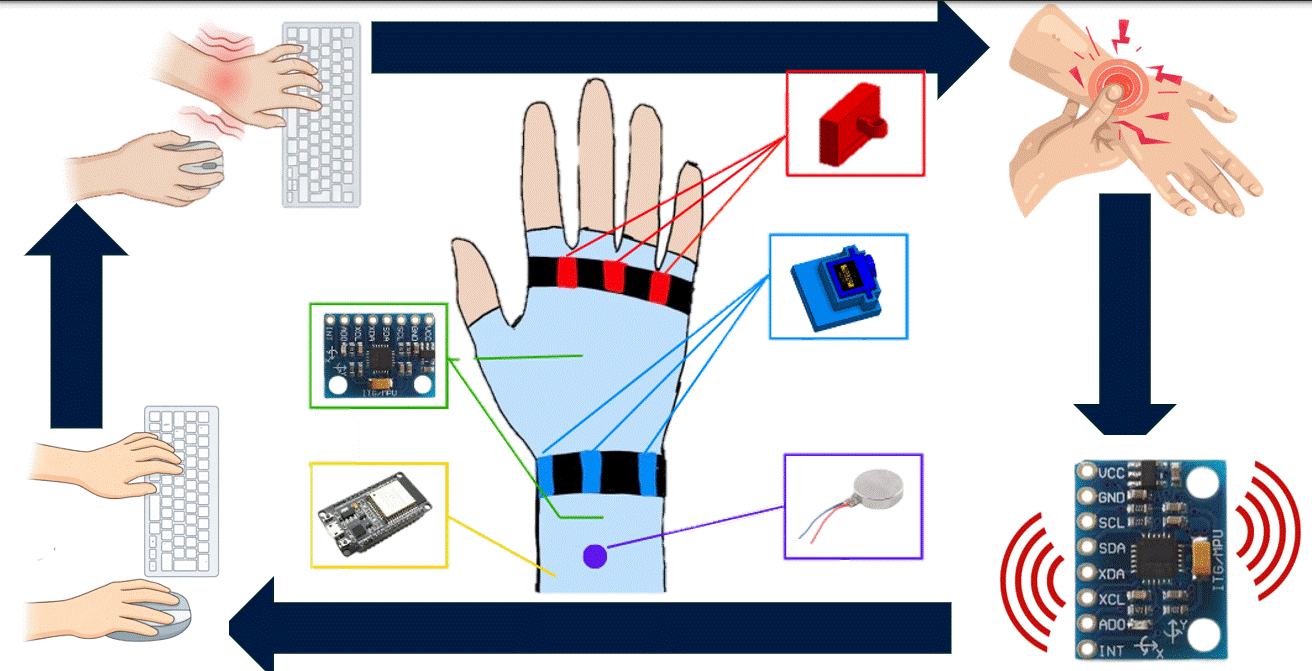
Ventrilo-Wrist is an active wearable ergonomic brace intended for the prevention of the occurrence of Carpal Tunnel Syndrome (CTS) during work. It monitors the position of the wrist in real-time, informing the wearer how to adjust it correctly in real-time. Specifically, CTS happens because of the repetitive use of the wrist. In addition, repetitive bending of the wrist toward the palm or away from it puts pressure on the median nerve. To prevent the occurrence of this condition, the Ventrilo-Wrist wearable contains two inertial measurement units (IMUs) located on the forearm as well as the hand. The accuracy of the position of the wrist can be ascertained by the use of sensor fusion as part of the ESP32 microcontroller. Using a risk-scoring algorithm to enable the identification of risky behavior can be effectively achieved using the Ventrilo-Wrist wearable. From the experimental analysis of the use of the Ventrilo-Wrist wearable, it is noted that the accuracy of the wearable is less than one degree. Subsequently, functional testing of the wearable established that with minimal effects on typing accuracy, the prevention of ergonomic hazards is feasible.
ABSTRACT
Carpal Tunnel Syndrome (CTS) is a pathologic, usually progressive, process due to compression of the median nerve in the carpal tunnel, often due to excessive wrist motion. CTS affects 6.7% of employed adults in the US, with major socioeconomic consequences for prolonged work absence and reduced earnings. Present methods to address CTS symptoms are reactive, utilizing either various braces to hold the wrist in a neutral position or surgical solutions. The aim of this project is to develop a wearable active ergonomic system, named Ventrilo-Wrist, aimed at preventing the occurrence of CTS. The system is comprised of two inertial measurement units, one located on the forearm and the other on the hand, which calculate wrist angles of flexion, extension, and deviation with high accuracy. A risk-scoring algorithm identifies risky wrist deviations, sending a warning signal to the user upon exceeding critical risk levels or offering corrective actions to ensure proper wrist angles. Experimental validation included an average absolute error of less than 0.4 degrees, good correlation with ground-truth data (r > 0.999), and good actuation. The functional test also showed reduced risk of unsafe angles, as well as typing inaccuracy. Ventrilo-Wrist, by blending biomechanics, embedded systems engineering, and statistical validation, realizes a prevention-based approach to CTS, shifting the paradigm from post-injury rehabilitation to long-term ergonomic habit development.
There is no accurate, low-cost wearable device capable of continuously monitoring wrist posture and detecting hazardous deviations and repetitive strain patterns in real time to proactively prevent the onset of Carpal Tunnel Syndrome.
Phrase 2
Design, build, and validate a dual-IMU wearable wrist brace that measures wrist kinematics with high precision, computes real-time biomechanical risk, and delivers corrective feedback to reduce exposure to CTS-inducing postures.
Background
Carpal Tunnel Syndrome (CTS): What’s happening and why prevention matters
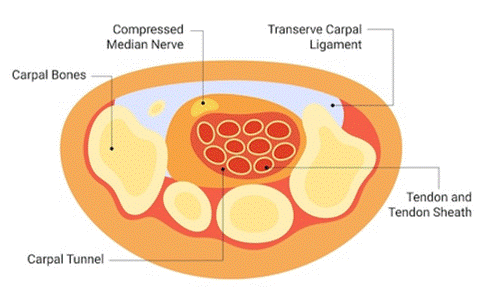
CTS develops when repeated wrist deviation increases pressure in the carpal tunnel and compresses the median nerve—leading to pain, numbness, and loss of hand function.
Background visual: Carpal tunnel anatomy + median nerve compression (diagram).
Why it matters
6.7% of employed U.S. adults reported CTS (NHIS 2010)
2–10 mmHg normal vs ~30 mmHg during wrist flexion/extension
High impact on productivity and long-term work ability
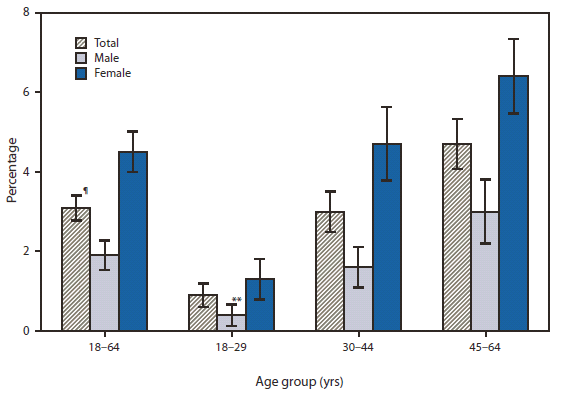
Background visual: CTS prevalence by age/sex (CDC/NHIS) to motivate prevention.
Engineering Gap: validated, low-cost, real-time wearable prevention
Next: validate performance in static, dynamic, and real-world functional tasks.
Background
Carpal Tunnel Syndrome, or CTS, is the most common compressive neuropathy of the upper extremity, and it results from chronic compression of the median nerve within the carpal tunnel (Aboonq, 2015). The carpal tunnel is a rigid osteofibrous canal formed by the carpal bones and transverse carpal ligament, containing nine flexor tendons and the median nerve (Aboonq, 2015). Because the tunnel has a fixed volume, small increases in tissue swelling or mechanical load significantly elevate intracarpal pressure (Aboonq, 2015). Normal pressure ranges from 2–10 mmHg, but wrist flexion and extension can increase it to approximately 30 mmHg and damage intraneural microcirculation and disrupt the blood-nerve barrier (Aboonq, 2015). Sustained compression leads to ischemia, inflammation, demyelination, and progressive nerve degeneration (Aboonq, 2015). Repetitive wrist deviation and vibration exposure also damage the subsynovial connective tissue, reducing tendon glide efficiency and further increasing pressure inside the tunnel (Werthel et al., 2014). These biomechanical stressors create a self-perpetuating cycle of inflammation and structural degeneration (Werthel et al., 2014).
CTS is also highly prevalent in the working population. According to the National Health Interview Survey, 6.7% of employed US adults aged 18-64 report CTS, with a 12-month prevalence of 3.1%, which translates to approximately 4.8 million persons in 2010 (Luckhaupt et al., 2013; Centers for Disease Control and Prevention [CDC], 2010). There was significantly higher prevalence among women (5.4%) compared to men (1.9%) and increased age-specific prevalence (Luckhaupt et al., 2013). Occupational factors were strongly associated with risk, particularly in occupations and industries categorized as manufacturing and administrative work involving repetitive motion. The economic burden is substantial, with workers with CTS missing a median of 138 workdays and may lose approximately $31,000 in earnings per decade. Total case costs range from $85,000 to $110,000. These data underscore the need for preventative ergonomic strategies rather than reactive treatment..
The current interventions that are being used are mainly symptomatic. The passive brace, such as the Manu® Soft Hand Brace, alters carpal tunnel geometry. It has been proven to reduce symptoms over the short term (Manente et al., 2013). So, soft or rigid splints increase the pain scores. The problem with this is that it’s not addressing the long-term biomechanical issues. Surgery, when performed, is effective, though it has its own set of complications. However, it neither alters occupational biomechanics. (Aboonq, 2015).
Recent wearable technologies attempt to monitor wrist posture. Flex-sensor-based systems provide simple curvature detection but lack multi-axis precision and are prone to nonlinear drift (Agarwal, 2019). IMU-based systems enable three-dimensional kinematic reconstruction and have been validated for occupational posture assessment (Umar et al., 2019; Shawn, 2019a). Ayrapetyan et al. (2021) developed an overuse warning glove integrating IMUs and EMG to trigger alerts; however, limitations included signal instability and limited personalization. Additionally, many monitoring systems provide feedback without validated high-precision angle tracking or active correction mechanisms (Piper, 2017).
Procedure
How Ventrilo-Wrist was tested
Validation was performed in three domains: controlled static angles, high-velocity dynamic motion, and real-world typing performance.
Static Accuracy
Goal: verify precise angle measurement
Method: 30°, 45°, 60° holds per motion plane
Compared: IMU vs ground-truth angle
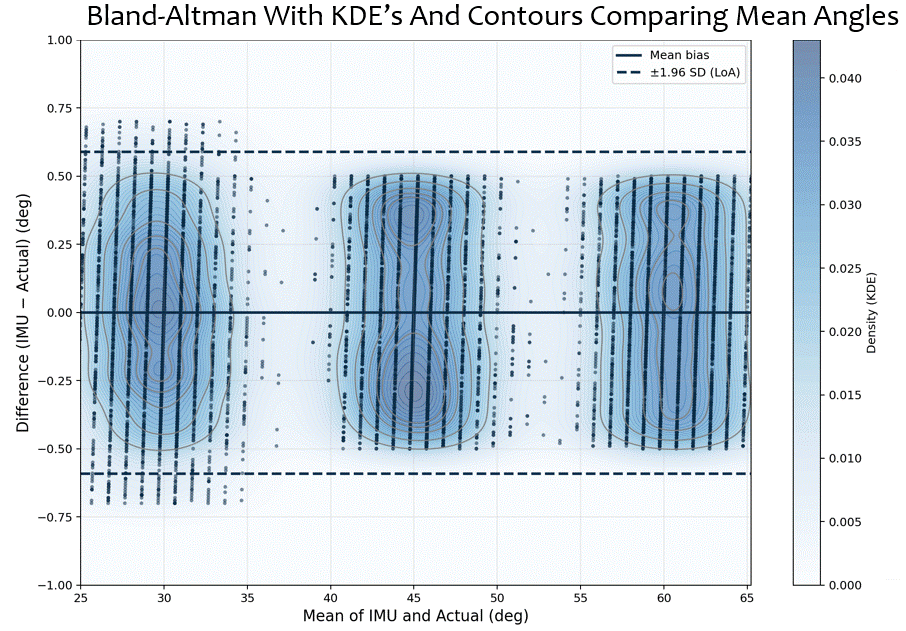
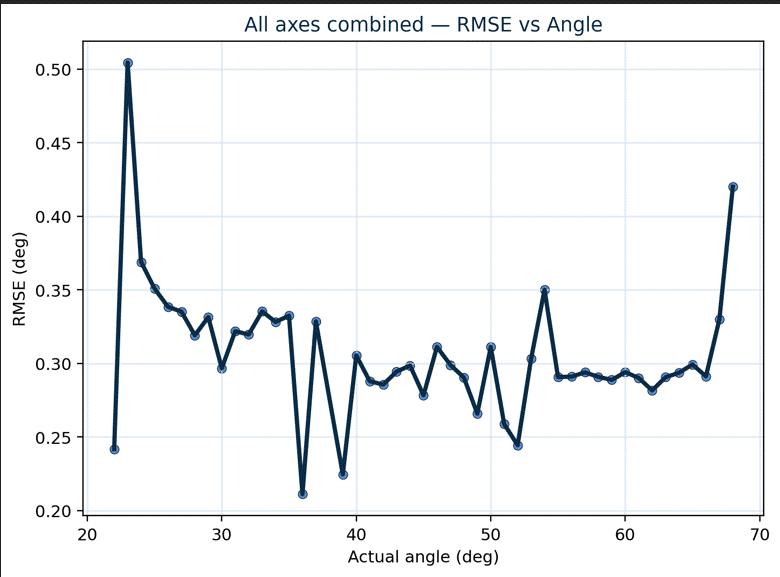
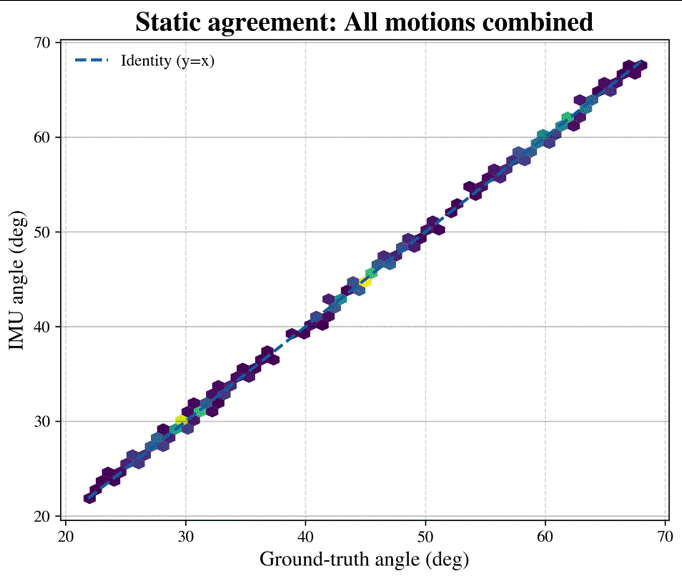
Static figure: Agreement analysis (parity/identity + Bland–Altman) and/or RMSE vs angle.
Metrics: Bland Altman with KDE and Contours
Dynamic Motion
Goal: confirm tracking during fast motion
Method: standardized throwing trials
Measured: error across the motion cycle and relative speeds
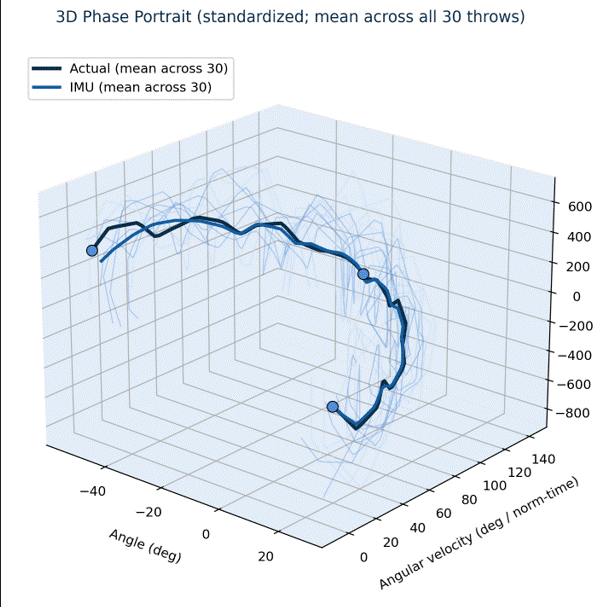
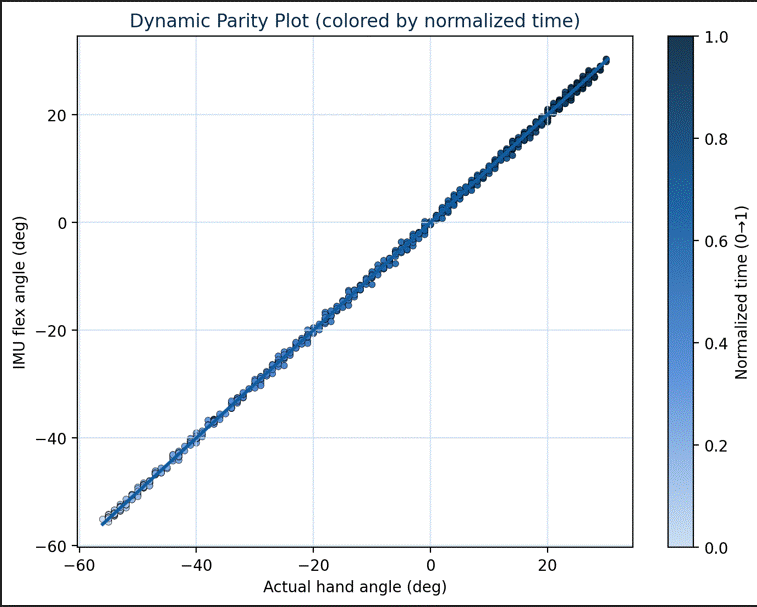
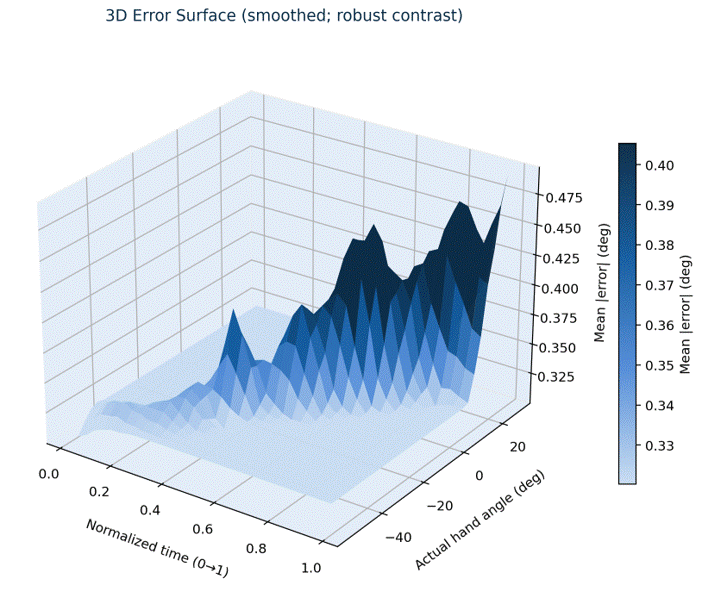
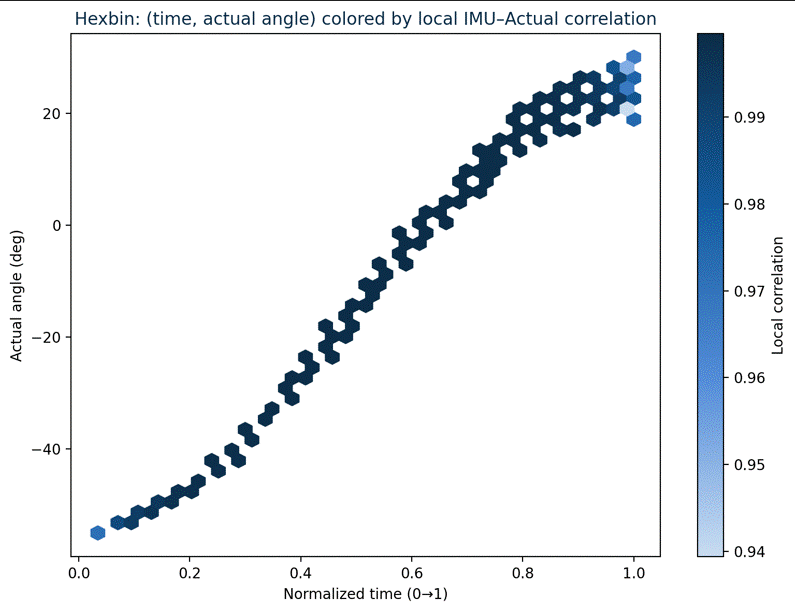
Dynamic figure: Time-resolved tracking (parity colored by time) and error surface across motion.
Metrics: Angle, Angular Velocity, Angular Acceleration
Typing Ergonomics
Goal: test real-world usability tradeoff
Method: typing under brace vs no-brace
Measured: WPM, accuracy, posture stability
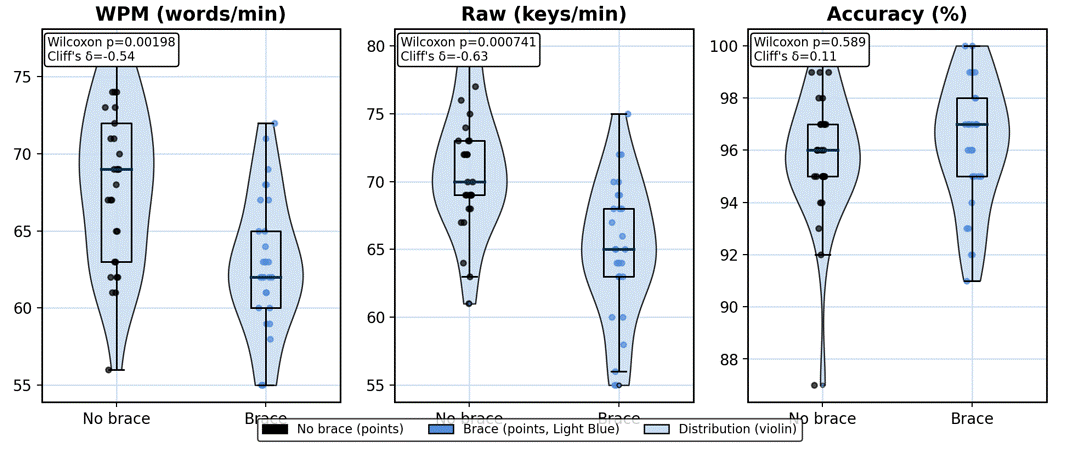
Typing figure: Performance comparison WPM, raw WPM, and Accuracy with brace vs without brace.
Metrics: WPM, Accuracy, and Raw WPM
Procedure
The experimental procedure in Ventrilo-Wrist was designed for wrist-angle measurement accuracy, real-time biomechanical risk modeling, and assessment of functional performance during bracing. The system was implemented by using an ESP32 dual-core microcontroller and two MPU6050 6-DOF IMUs attached on the dorsal forearm and dorsal hand to calculate the relative orientation of the wrist. Sensors were sampled at 500 Hz and processed using a Madgwick sensor fusion algorithm to perform estimates of flexion, extension, radial, and ulnar deviation angles relative to a calibrated neutral reference posture. Static validation involved having the forearm fixed on a table with the wrist at controlled angles of 30°, 45°, and 60° across all motion planes. Synchronized video recordings were performed to extract protractor-based ground-truth measurements using manual digitization via paired statistical comparison. Dynamic validation had thirty standardized throwing trials with the forearm fixed at a pivot point and peak wrist angles from IMU data aligned against video timestamps to assess accuracy in high-velocity conditions. A three-zone biomechanical risk model was also employed, where posture severity and repetition exposure were quantified, and actuation due to violation of thresholds was reliably triggered through vibration warnings and/or servo motors for corrective action, while reliability and latency were measured for repeated actuations. Finally, functional ergonomic testing involved thirty trials of typing while wearing a brace on and off, where words per minute, accuracy, and risk exposure were used to assess performance compromises. Various statistical tests were also employed, including Pearson correlation, RMSE, agreement tests using Bland–Altman, repeated-measures ANOVA, equivalence tests, and nonparametric tests, where α = 0.05 was chosen for all tests.
Figure 1: Dynamic parity plot of IMU vs. ground-truth angle during motion, colored by normalized time; strong alignment with y = x indicates accurate tracking.
Figure 2: 3D error surface showing mean angular error across time and angle; errors remain low with slight increases at higher angles.
Figure 3: Mean 3D phase portrait (30 trials) comparing actual and IMU trajectories; close overlap demonstrates dynamic fidelity.
Figure 4: Hexbin plot of time vs. angle colored by local IMU–Actual correlation; correlation remains consistently high throughout motion.
Figure 5: RMSE vs. angle across all axes; error stays low across most of the measurement range.
Figure 6: Static agreement plot of IMU vs. ground-truth angle; points closely follow the identity line.
Figure 7: Bland–Altman plot with KDE contours; minimal bias and tight limits of agreement observed
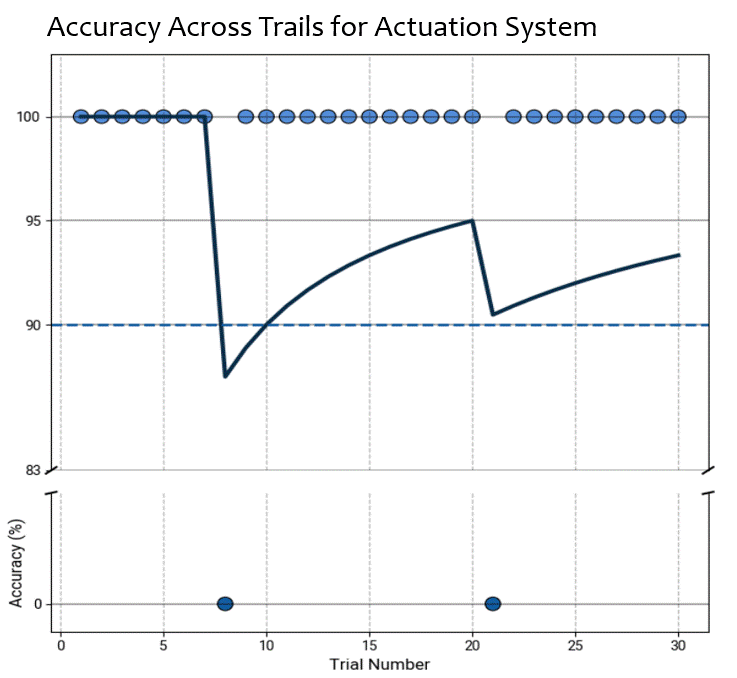
Figure 8: Trial-wise actuation accuracy across 30 trials; performance remains consistently high with few deviations.
Analysis
Comprehensive statistical analysis demonstrated strong agreement between IMU-derived wrist angles and ground-truth measurements across static, dynamic, ergonomic, and actuation conditions. In static flexion and extension testing (n = 6,000 measurements), the system achieved a mean absolute error (MAE) of 0.253° and RMSE of 0.292°, with negligible bias (−0.005°). Pearson correlation was extremely high (r = 0.9997, p < 0.001), explaining 99.94% of variance (R² = 0.9994), and 100% of measurements fell within ±0.5° of ground-truth angles. Radial and ulnar deviation trials (n = 5,962) produced comparable results (MAE = 0.263°, RMSE = 0.311°, bias = +0.003°, r = 0.9997, p < 0.001), with 93.34% of values within ±0.5°. Repeated-measures ANOVA revealed no significant differences in error across target angles (p > 0.05), confirming consistency across range of motion. During dynamic throwing trials (n = 899), the system maintained strong accuracy (MAE = 0.391°, RMSE = 0.501°, r = 0.9998, p < 0.001), with 94.33% of measurements within ±1°. Although dynamic trials showed significantly greater variance than static conditions (t = 5.045, p = 4.59×10⁻⁷; variance ratio = 2.73), the absolute error increase remained clinically small. Ergonomic testing revealed a statistically significant 7.6% reduction in typing speed under brace conditions (mean decrease = 5.17 WPM; t = 3.367, p = 0.002, Cohen’s d = 1.06), while typing accuracy showed no significant difference (p = 0.472). The actuation subsystem demonstrated 93.33% reliability (28/30 successful corrections), with performance statistically consistent with an expected reliability between 85% and 95%). Together, these findings confirm high-precision kinematic tracking, robust dynamic performance, and reliable corrective functionality, supporting the system’s viability as a real-time ergonomic intervention.
Discussion/Conclusion
Discussion
The findings of this study demonstrate that Ventrilo-Wrist achieves high-precision wrist angle tracking with sub-degree accuracy across both static and dynamic conditions, while maintaining reliable corrective performance. Near-perfect correlations (r > 0.999) and low mean absolute errors confirm that the dual-IMU sensor fusion architecture provides clinically aligned measurement precision. Although dynamic motion increased variance compared to static trials, absolute error remained small and within acceptable ergonomic tolerance. The brace produced a statistically significant reduction in typing speed but did not affect accuracy, indicating that corrective stabilization influences movement efficiency without impairing motor control. Overall, the results support the feasibility of integrating real-time posture monitoring, biomechanical risk modeling, and actuation into a functional closed-loop ergonomic system..
Conclusion
Ventrilo-Wrist successfully addresses the engineering gap between passive wrist support and active preventative intervention by combining accurate multi-axis motion sensing, real-time risk computation, and adaptive corrective feedback. The system demonstrated strong statistical agreement with ground-truth measurements, maintained performance during dynamic motion, and achieved over 93% actuation reliability. While minor ergonomic trade-offs were observed, the overall system performance supports its viability as a preventative tool aimed at reducing exposure to hazardous wrist postures associated with Carpal Tunnel Syndrome.
Applications
The Ventrilo-Wrist platform has practical applications in occupational ergonomics, workplace injury prevention, and assistive wearable technology. It could be deployed in high-risk industries such as manufacturing, office work, and repetitive manual labor to provide continuous posture monitoring and real-time corrective feedback. Beyond CTS prevention, the underlying architecture may be adapted for broader musculoskeletal risk monitoring, rehabilitation tracking, and personalized ergonomic analytics. With further refinement and long-term validation, this system could contribute to reducing workplace injury rates and associated economic burden through proactive biomechanical intervention.
References (APA format)
Aboonq, M. S. (2015). Pathophysiology of carpal tunnel syndrome. Neurosciences, 20(1), 4–9. https://pmc.ncbi.nlm.nih.gov/articles/PMC4727604/
Agarwal, T. (2019, August 15). Flex sensor: Pin configuration, working, types & its applications. ElProCus – Electronic Projects for Engineering Students. https://www.elprocus.com/flex-sensor-working-and-its-applications/
Ayrapetyan, M., Miao, W., & O’Rourke, K. (2021). Over-use warning glove for carpal tunnel syndrome (augmenting human dexterity) [Project]. University of California, Berkeley. https://edg.berkeley.edu/wp-content/uploads/2021/05/p7S21.pdf
Centers for Disease Control and Prevention. (2010). QuickStats: Percentage of employed adults aged 18–64 years who had carpal tunnel syndrome in the past 12 months, by sex and age group—National Health Interview Survey, 2010. Morbidity and Mortality Weekly Report. https://www.cdc.gov/mmwr/preview/mmwrhtml/mm6049a4.htm
De Angelis, M. V., Pierfelice, F., Di Giovanni, P., Staniscia, T., & Uncini, A. (2009). Efficacy of a soft hand brace and a wrist splint for carpal tunnel syndrome: A randomized controlled study. Acta Neurologica Scandinavica, 119(1), 68–74. https://doi.org/10.1111/j.1600-0404.2008.01072.x
Luckhaupt, S. E., Dahlhamer, J. M., Ward, B. W., Sweeney, M. H., Sestito, J. P., & Calvert, G. M. (2013). Prevalence and work-relatedness of carpal tunnel syndrome in the working population, United States, 2010 national health interview survey. American Journal of Industrial Medicine, 56(6), 615–624. https://doi.org/10.1002/ajim.22048
Mack, M., & Min, C.-H. (2019). Design of a wearable carpal tunnel syndrome monitoring device. In Proceedings of the IEEE Midwest Symposium on Circuits and Systems (p. 1198). https://doi.org/10.1109/MWSCAS.2019.8884804
Manente, G., Melchionda, D., Staniscia, T., D’Archivio, C., Mazzone, V., & Macarini, L. (2013). Changes in the carpal tunnel while wearing the Manu® soft hand brace: A sonographic study. Journal of Hand Surgery (European Volume), 38(1), 57–60. https://doi.org/10.1177/1753193412446112
OpenELAB. (2024, October 16). ESP32 vs Arduino vs Raspberry Pi Pico: Which is better? OpenELAB Technology Ltd. https://openelab.io/blogs/learn/esp32-vs-arduino-vs-raspberry-pi-pico-which-is-better
Piper, B. (2017). Design and validation of a smart brace: Wearable technology for carpal tunnel syndrome (Master’s thesis, The University of Guelph). https://atrium.lib.uoguelph.ca/server/api/core/bitstreams/d6347397-59d6-4ae5-9ce8-3b057c7a96c6/content
Ruttenberg, R. (2019). The social and economic impact of carpal tunnel syndrome among maintenance-of-way employees. Journal of Ergonomics, 9(1), Article 246. https://doi.org/10.35248/2165-7556.19.9.246
Shawn. (2019a, December 24). Accelerometer vs gyroscope sensor, and IMU: How to pick one? Seeed Studio Blog. https://www.seeedstudio.com/blog/2019/12/24/what-is-accelerometer-gyroscope-and-how-to-pick-one/
Shawn. (2019b, December 29). What is EMG sensor, Myoware and how to use with Arduino? Seeed Studio Blog. https://www.seeedstudio.com/blog/2019/12/29/what-is-emg-sensor-myoware-and-how-to-use-with-arduino/
Umar, R. Z. R., Ling, C. F., Ahmad, N., Halim, I., & Hamid, M. (2019). Occupational wrist postural assessment and monitoring system: Development and initial validation. Journal of Engineering Science and Technology, 14(6), 3421–3436. https://jestec.taylors.edu.my/Vol%2014%20issue%206%20December%202019/14_6_25.pdf
Werthel, J.-D. R., Zhao, C., An, K.-N., & Amadio, P. C. (2014). Carpal tunnel syndrome pathophysiology: Role of subsynovial connective tissue. Journal of Wrist Surgery, 3(4), 220–226. https://doi.org/10.1055/s-0034-1394133