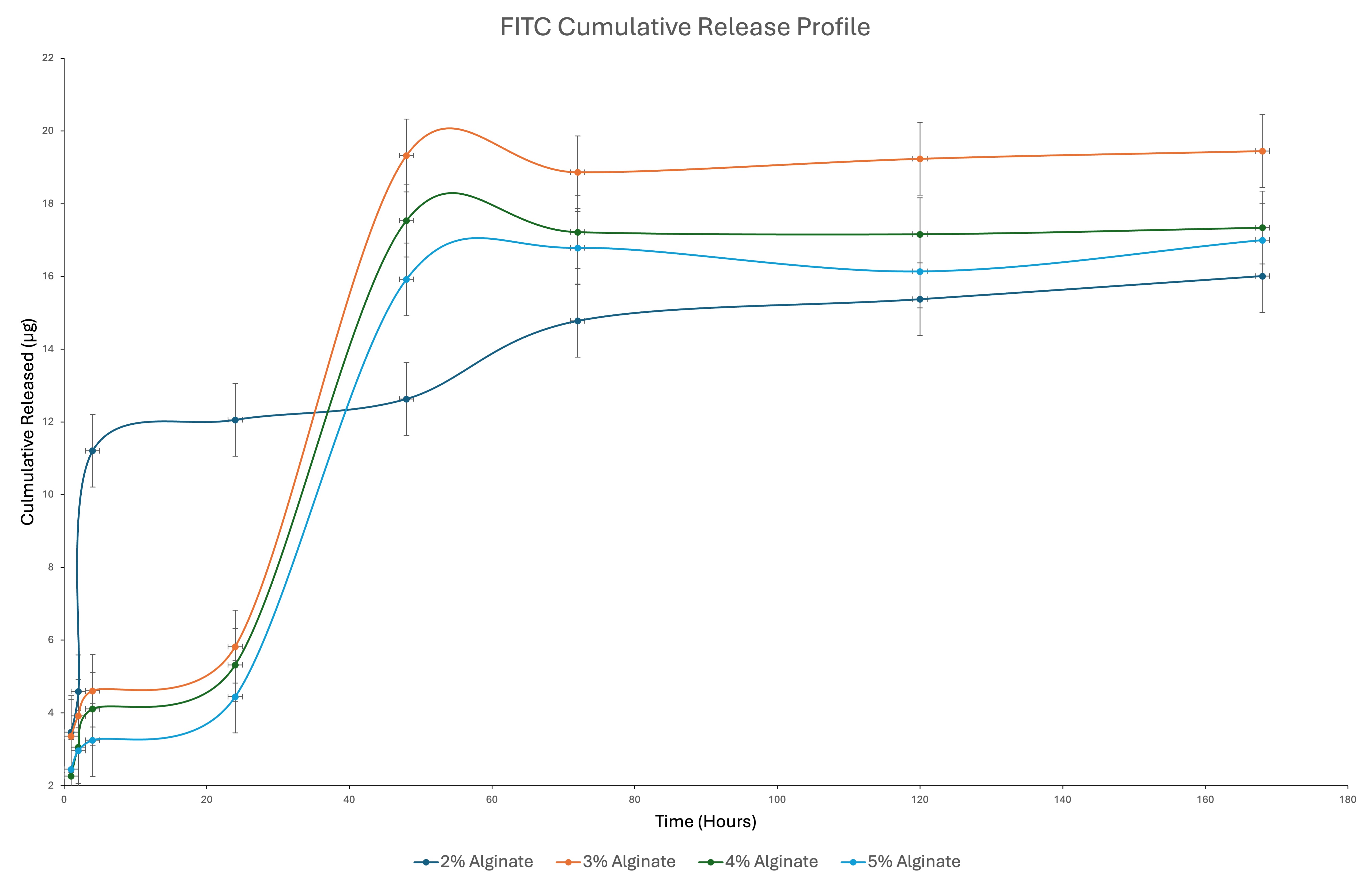
Figure 1: Compiled FITC-dextran individual release over 168 hours from alginate hydrogels with different concentrations
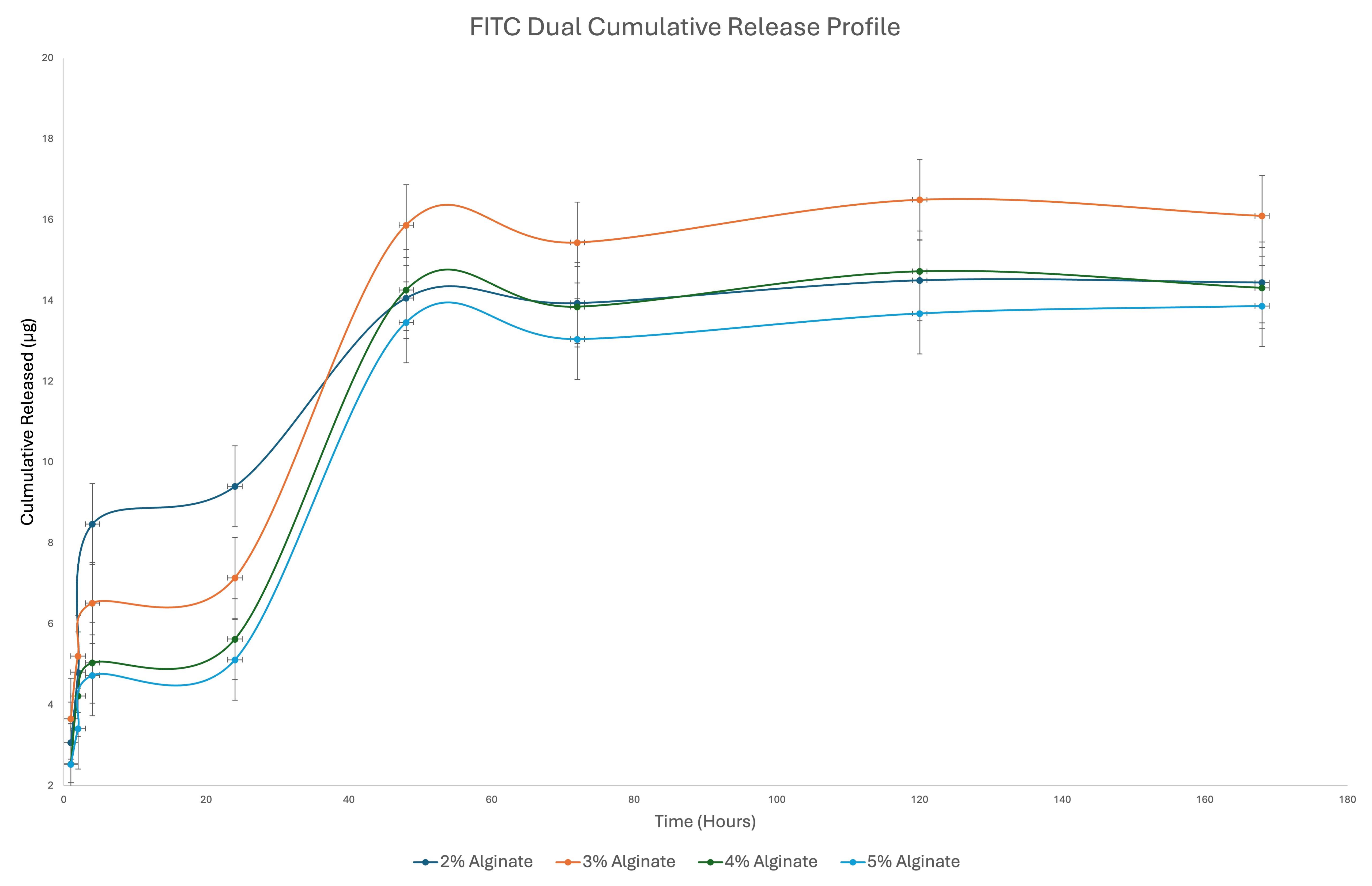
Figure 2: Compiled FITC-dextran dual release over 168 hours from alginate hydrogels with different concentrations
Advanced STEM with Scientific and Technical Writing is a course where I conduct an independent research project from August to March. I chose to explore a scientific question and have designed experiments, collected and analyzed data towards my project. I then learned how to communicate my findings through technical writing, reports, and presentations. This class develops both my analytical and communication skills.
As part of my independent research project, I created a quad chart to visually summarize my research. Each quadrant highlights a key aspect of my project, such as the methodology, current findings, and the main takeaway. This exercise will be useful during science fair and helped me practice finding ways to present complex information and in a short and concise way. This is based on my preliminary data and shows the overall aim of my project, including overall goal that has chanced as my project progressed.
not loading? Open PDF
This project studies how hydrogel properties affect the simultaneous release of multiple proteins. Alginate hydrogels of varying concentrations were used to deliver two model molecules of different sizes, both individually and together, and release was measured over time using fluorescence. The results show that polymer concentration and co-delivery influence release behavior, helping establish design principles for immune-mimicking biomaterials.
Hydrogels are increasingly being used in biomedical engineering for controlled delivery of chemokines and other therapeutic proteins, yet their ability to release multiple signaling molecules simultaneously remains difficult. Understanding how multiple molecules interact and diffuse within hydrogels is crucial to designing an effective material to mimic complex biological environments. Individual molecule-hydrogel interactions have been widely studied, but co-delivery introduces the additional complexities of intermolecular competition, charge and size-based interaction, and altered diffusion behavior. These factors are important since cells rely on the coordination of proteins rather than the signals of a single molecule. This study aims to investigate how the characteristics of a hydrogel can regulate the simultaneous release of two dextrans with distinct characteristics to model release behavior. The dextrans used in this project are FITC (150kDa) and Texas Red (40kDa) that vary in molecular weight. Ionically crosslinked alginate hydrogels (2-5% w/v) were used to observe how size-based diffusion influences the release kinetics, molecular interaction, and retention during co-delivery. The results show that hydrogel concentration has a significant influence on molecule release behavior, with 3% alginate exhibiting the highest cumulative release for both dextrans individually and together. Conversely, the higher concentrations reduce the overall release due to increased crosslinking density. All formulations displayed biphasic release profiles that have an initial burst and a later plateau. When both molecules were released, the cumulative release was reduced compared to individual loading, but the overall release kinetics and curve remained consistent. This work establishes the foundation insight into how hydrogel properties interact with regular multi-molecule release. This will guide the future design of immune-mimicking biomaterials that will be capable of controlling multi-protein delivery in complex biological environments. Keywords: hydrogels, co-delivery, alginate, chitosan, dextran, FITC, Texas Red, release, proteins
Click this link to view my Research Proposal
How do hydrogel properties, such as polymer concentration, influence individual and dual release of molecules of different sizes?
It is hypothesized that molecular weight will affect release; specifically, dextrans of lower molecular weight will release more rapidly due to increased diffusion, whereas dextrans of higher molecular weight will be retained longer as a result of reduced diffusion. Furthermore, the interactions of the dextrans within the hydrogel matrix are expected to impact the release behavior. Finally, the properties of the hydrogels, including charge and polymer concentration, are predicted to be vital to regulating both the individual delivery and co-delivery of the dextrans.
Hydrogels are soft, water-rich polymers that mimic natural tissue and are widely used for controlled drug delivery (Peppas & Huang, 2004). In particular, properties such as charge, stiffness, and crosslinking strongly influence how hydrogels interact with immune environments (Zulfiqar et al., 2022). However, despite the availability of suitable synthetic and natural polymers, achieving predictable and controlled release remains a significant challenge (Guo et al., 2025).
This project was completed in Professor Coburn’s lab with her technical guidance, while the experimental design and research work were carried out from October 20th to February 7th. Alginate hydrogels were prepared at concentrations of 2–5% (w/v) and crosslinked using calcium chloride. FITC–dextran (150 kDa) and Texas Red–dextran (40 kDa) were added either individually or together before gelation. The hydrogels were placed in phosphate-buffered saline (PBS), and samples of the surrounding solution were collected from 1 to 168 hours to measure release over time. Fluorescence was measured using a plate reader, and triplicate values were averaged to calculate cumulative release and generate release curves for comparison.
Figure 1: Compiled FITC-dextran individual release over 168 hours from alginate hydrogels with different concentrations
Figure 2: Compiled FITC-dextran dual release over 168 hours from alginate hydrogels with different concentrations
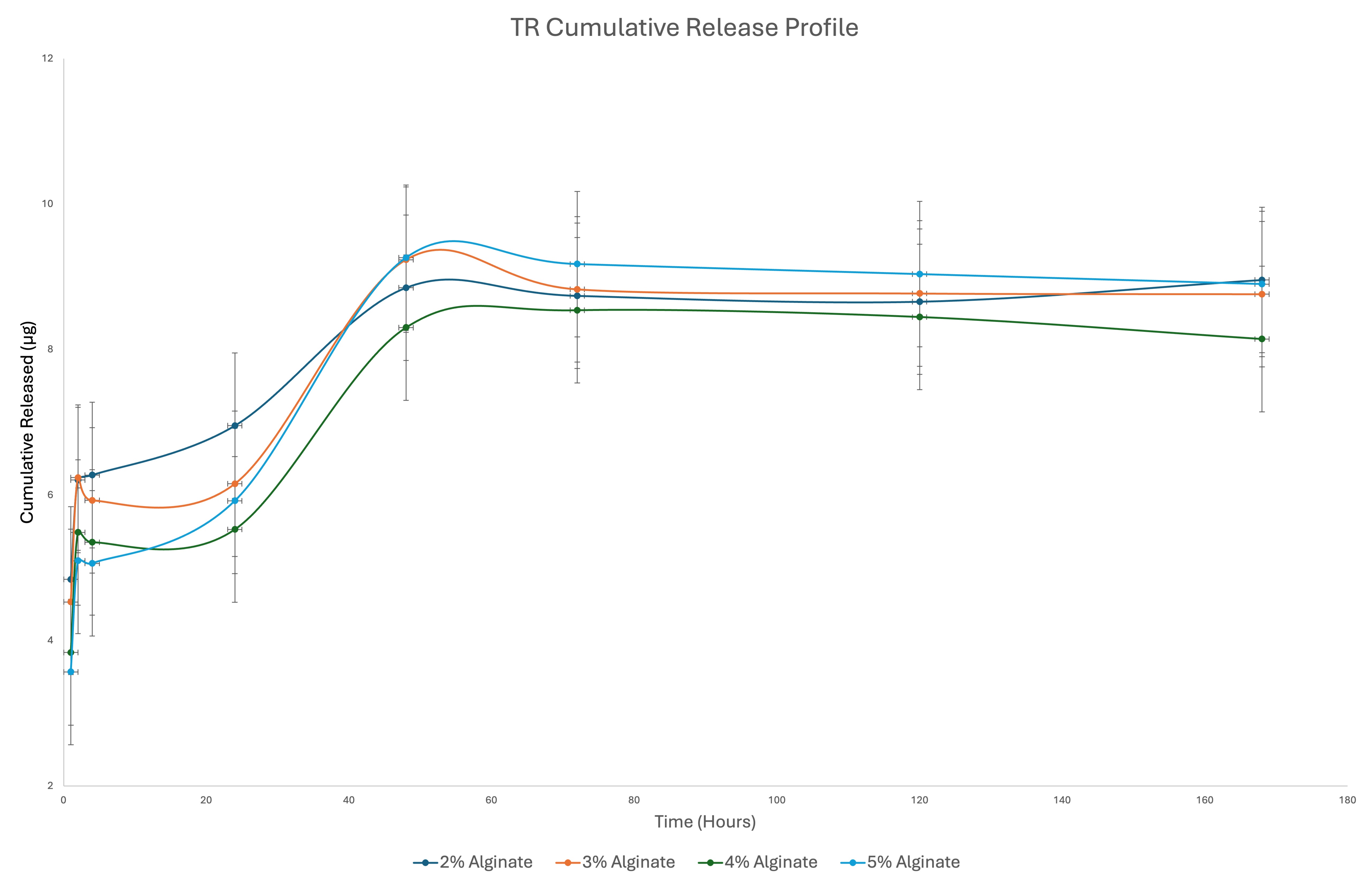
Figure 3: Compiled Texas Red-dextran individual release over 168 hours from alginate hydrogels with different concentrations
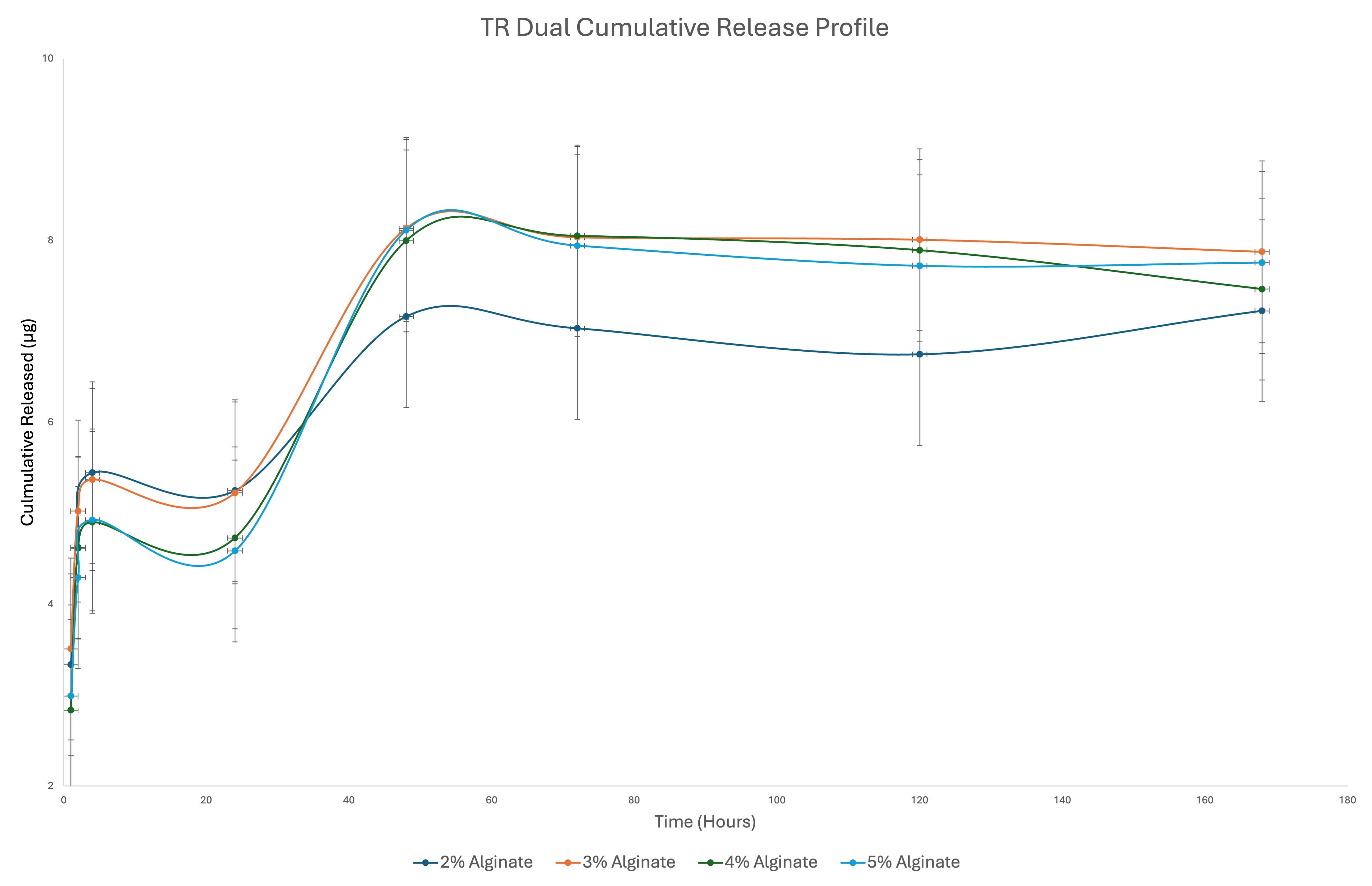
Figure 4: Compiled Texas Red-dextran dual release over 168 hours from alginate hydrogels with different concentrations
Release profiles were analyzed over a 168-hour period to assess both burst and sustained release phases, and behavior was compared across all alginate concentrations (2%, 3%, 4%, and 5%) to evaluate the effect of network density. Additionally, individual and dual-loaded hydrogels were compared to determine the impact of co-delivery on molecule transport. FITC-dextran and TR-dextran release profiles were first analyzed separately to establish baseline release behavior, which was then used for comparison with the dual-release condition.
References