Pictures of My Work
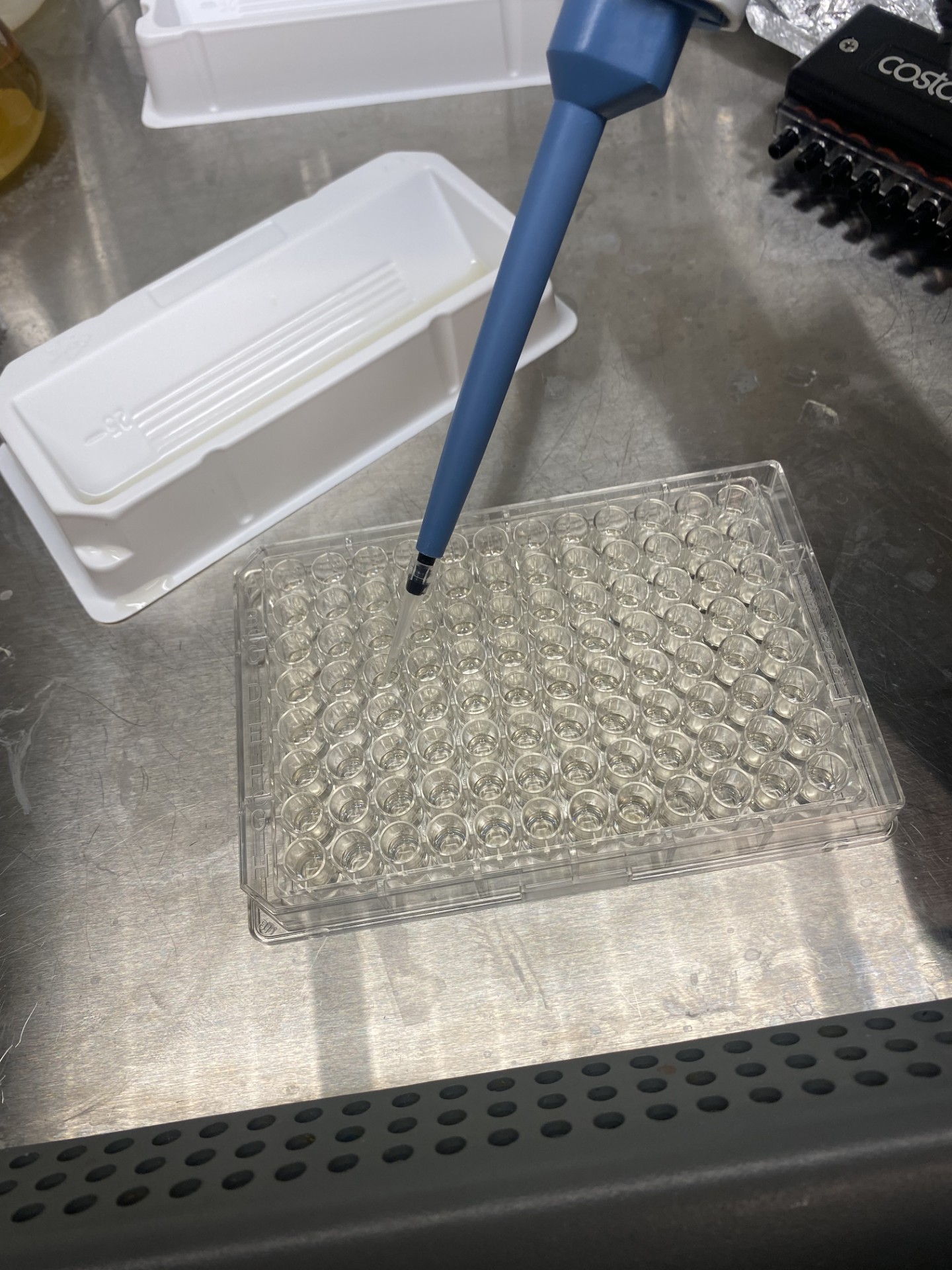
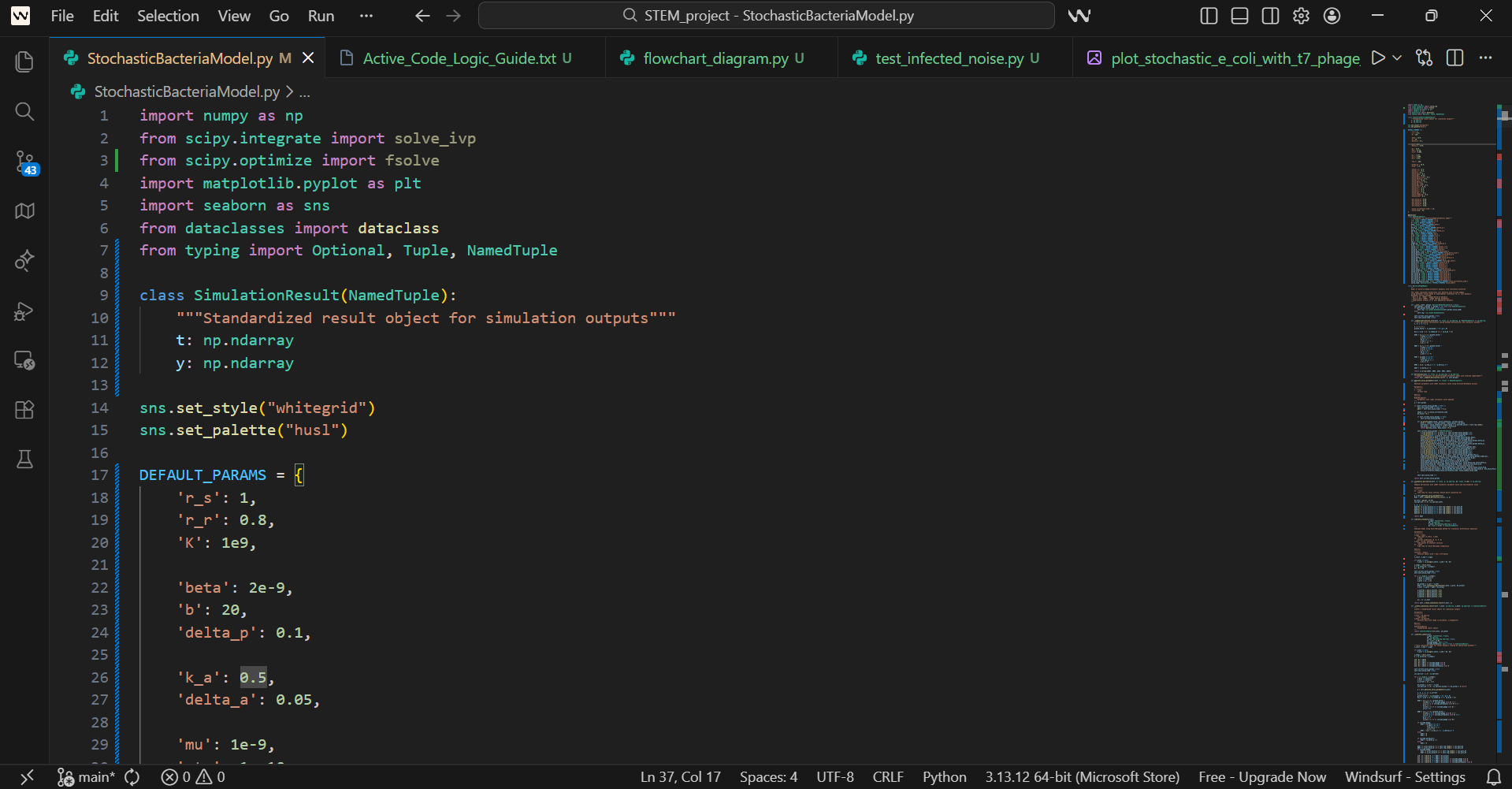
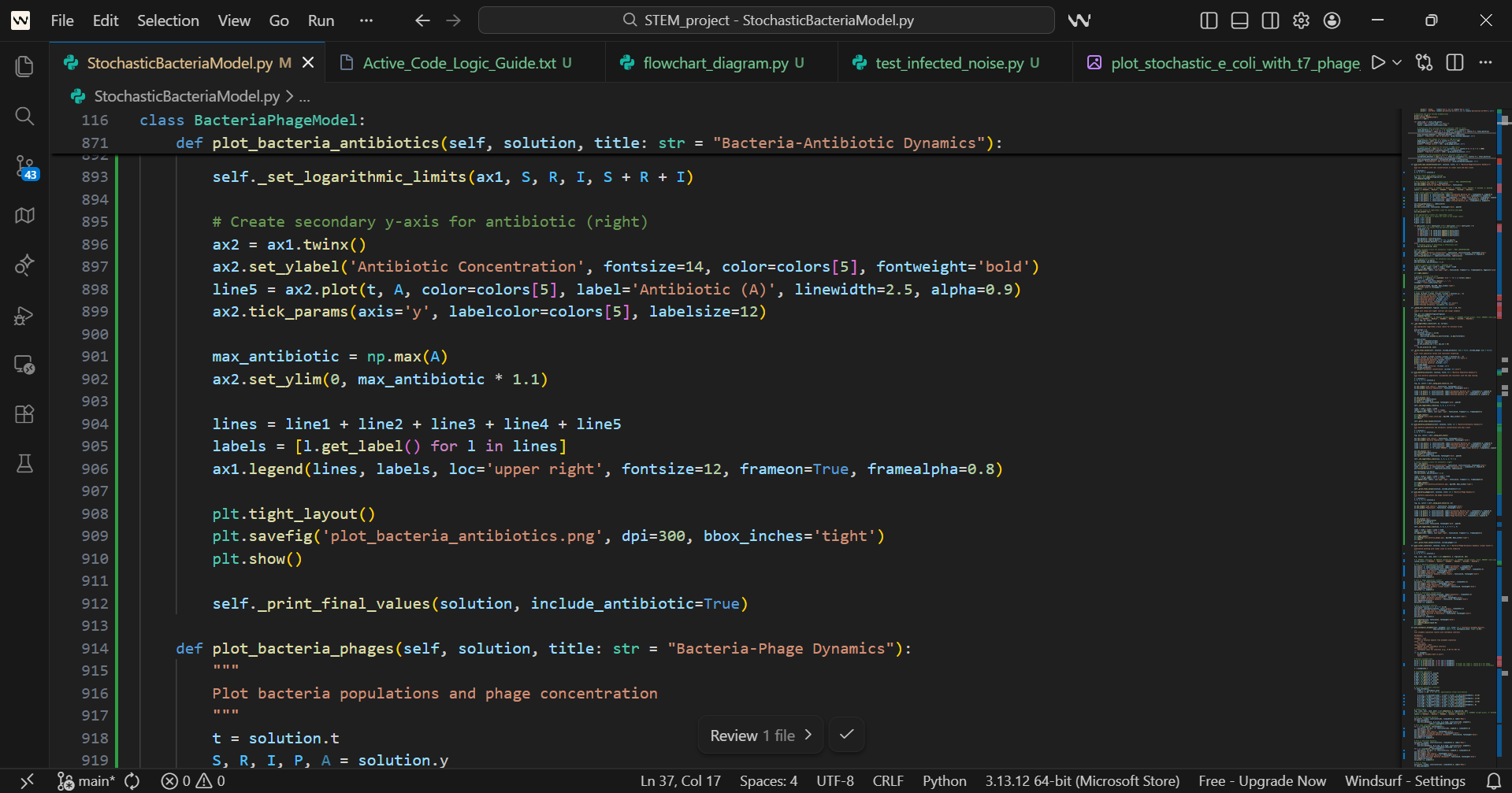
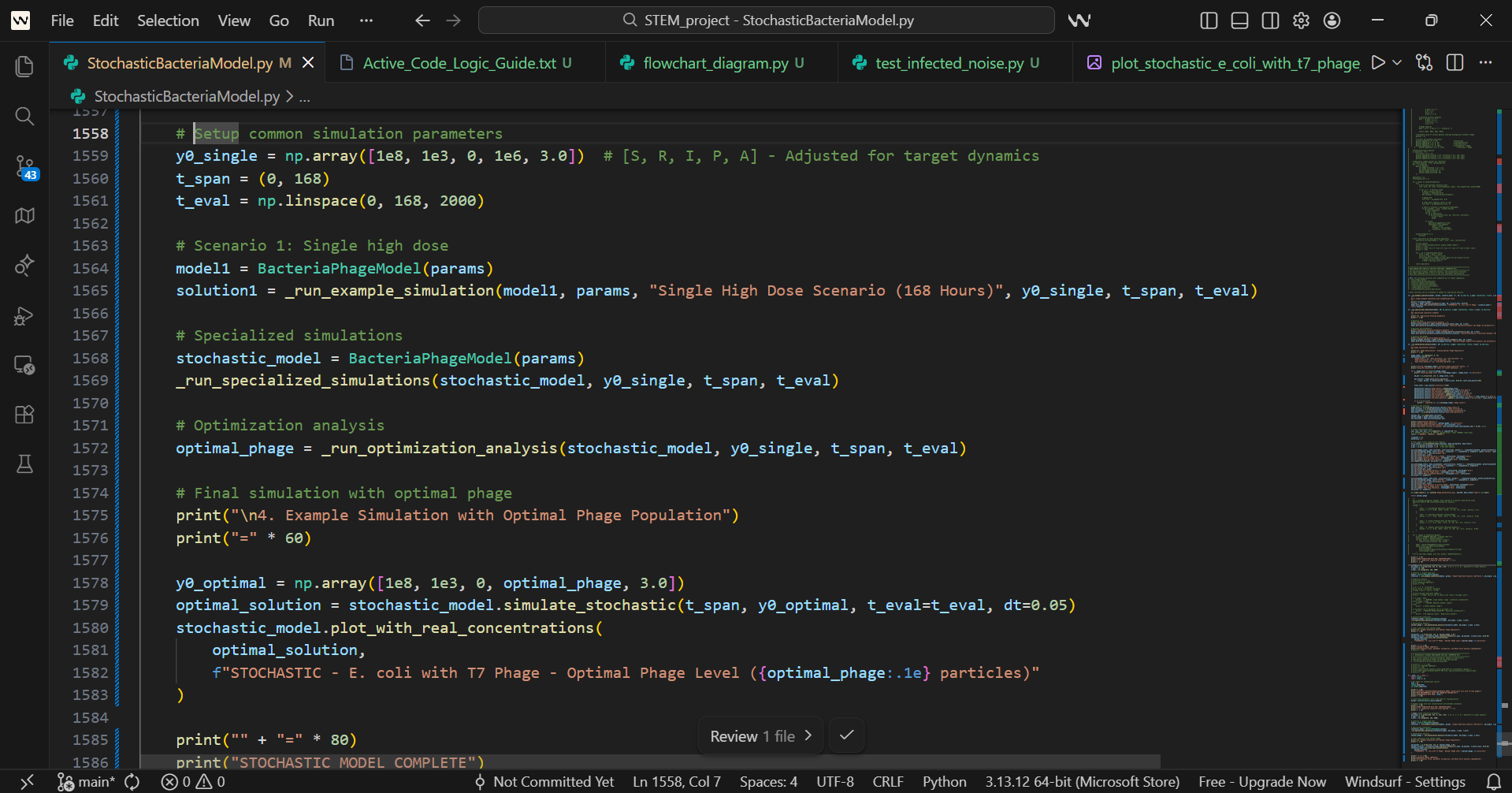
GitHub link: https://github.com/RichyYan16/STEMProject
Antibiotic resistance is becoming one of the biggest challenges in modern medicine. As bacteria evolve ways to survive antibiotics, infections that were once easy to treat are becoming more dangerous. Scientists are now exploring bacteriophages, viruses that specifically infect and kill bacteria, as a possible partner or alternative to antibiotics. But using phages isn’t simple, because they interact with bacteria in complicated ways that can also influence how resistance develops. In this project, I built a computer model to simulate how bacteria respond when treated with antibiotics, phages, or both at the same time. The model tracks different types of bacteria (those that are vulnerable to treatment and those that are resistant) and shows how their populations change over time. The simulations showed that phages can quickly reduce bacterial populations, and combining phages with antibiotics leads to oscilatory behavior. However, resistant bacteria were never completely eliminated. Interestingly, the model suggested that using a moderate amount of phage may work better than using extremely high levels, because it helps control bacteria without strongly favoring resistance. By using math and computer simulations, this project helps explore how different treatment strategies might influence both infection control and the long-term problem of antibiotic resistance. Understanding these tradeoffs could help guide smarter approaches to fighting bacterial infections in the future.
Grant proposals are used to secure funding for research projects. They contain a short introduction for the project, the objectives of the project, and a summary of existing literature that are related to the project. You can see my Grant Proposal below.