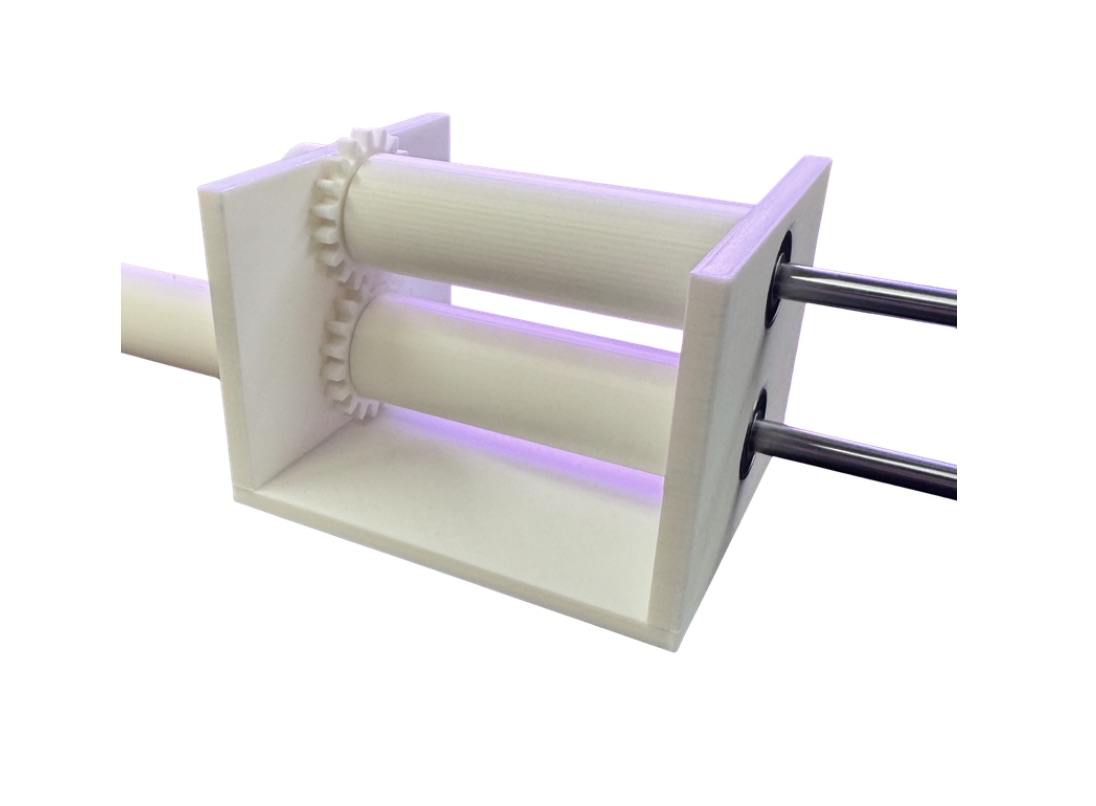
Design 2a, named Garry, introduced flat ridged rollers and a flat raised platform, reducing compression to 6mm. The ridges improved grip and prevented slipping, and the raised surface gave the user a place to rest the sponge before feeding it through, removing an average of 27.3g on the first pass and 5.35g on the second. Design 2b, named Larry, kept the same ridged roller style but tightened compression to 5mm, achieving slightly better results of 27.45g and 5.65g per pass respectively. Testing at 4.5mm caused the sponge to jam, confirming 5mm as the minimum viable compression distance. Both Design 2 variants shared the weakness of a flat, poorly angled platform that sat too high above the bottom roller and interfered with the gears.
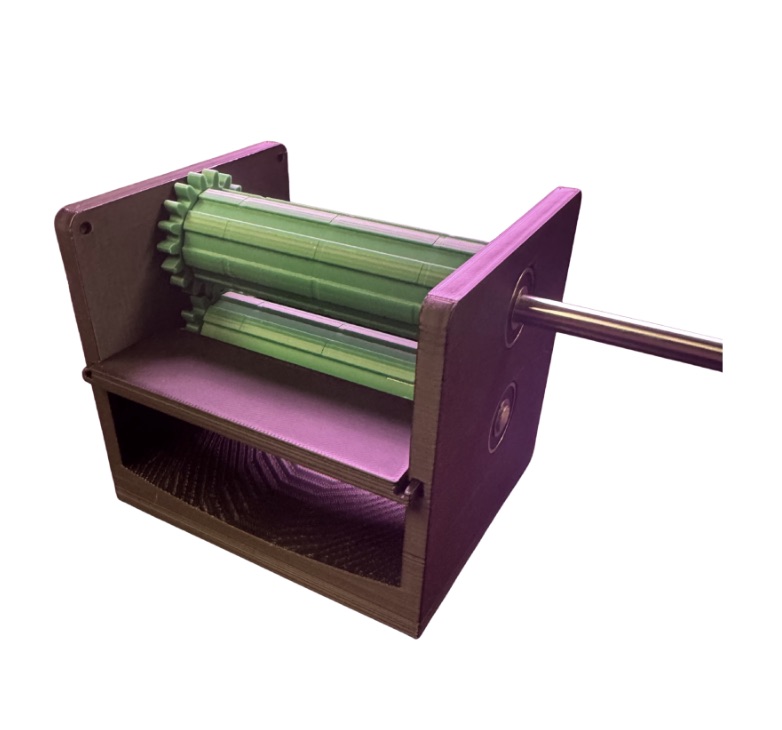
Design 3, named Mrs. Puff, introduced spiked rollers and an angled raised platform while maintaining the 5mm compression distance. The spiked rollers performed best on first pass, removing an average of 29.15g, and the angled platform allowed the sponge to slide naturally into the rollers with minimal user effort. However, the spikes were less effective on the second pass, and the sponge occasionally became lodged in the gears.
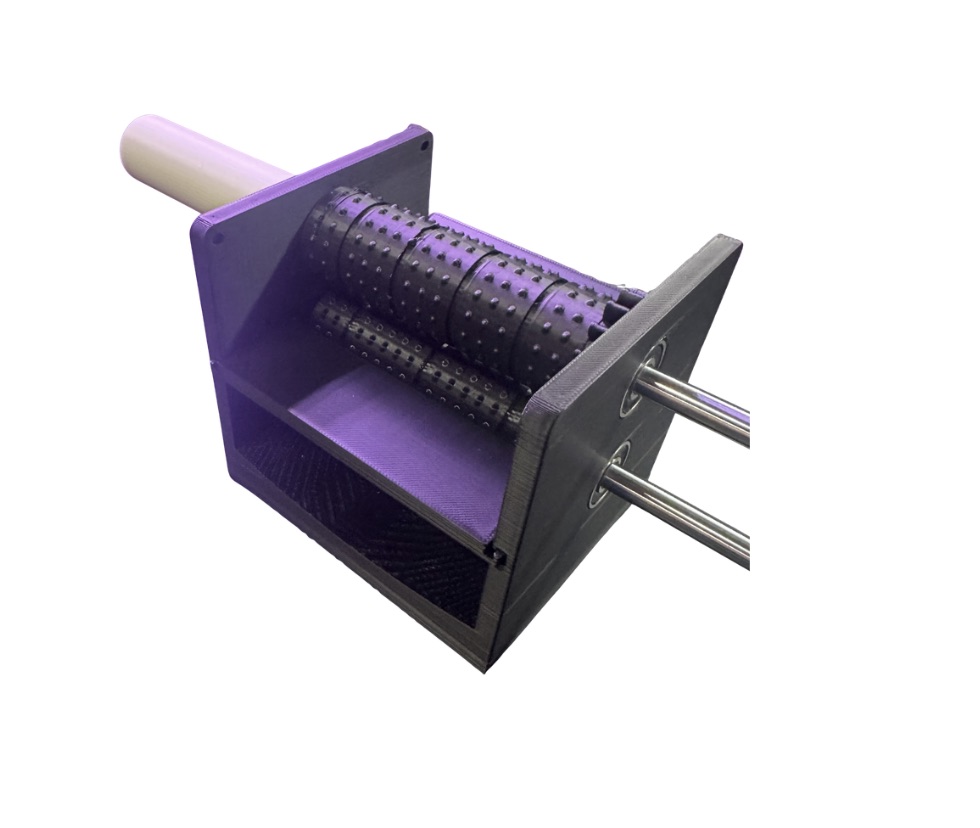
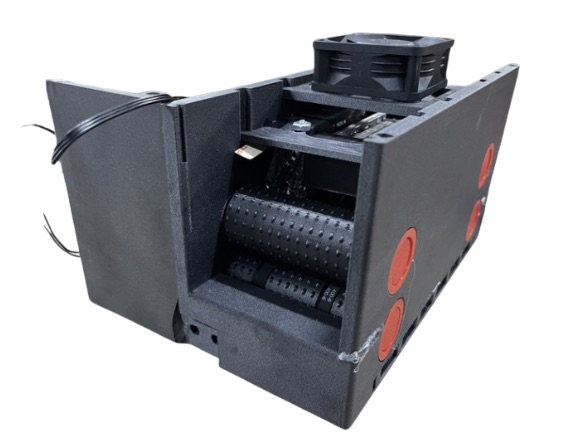
Design 4, named SpongeBob, represented the current integrated design and combined spiked rollers for the first compression and flat ridged rollers for the second, driven by an automated belt system. It also incorporated a PTC heater and fan for thermal sanitation and a UV light disinfection system enclosed within a reflective interior. This design offered multiple disinfection methods and both fast and extended cleaning cycles, though it had limited UV light reflection and only single-sided heating.