Research Question
How does the incorporation of recycled polyethylene
terephthalate (PET) affect the stiffness, rutting
resistance, flexural strength, and thermal conductivity of warm mix
asphalt, as evaluated through simulation?
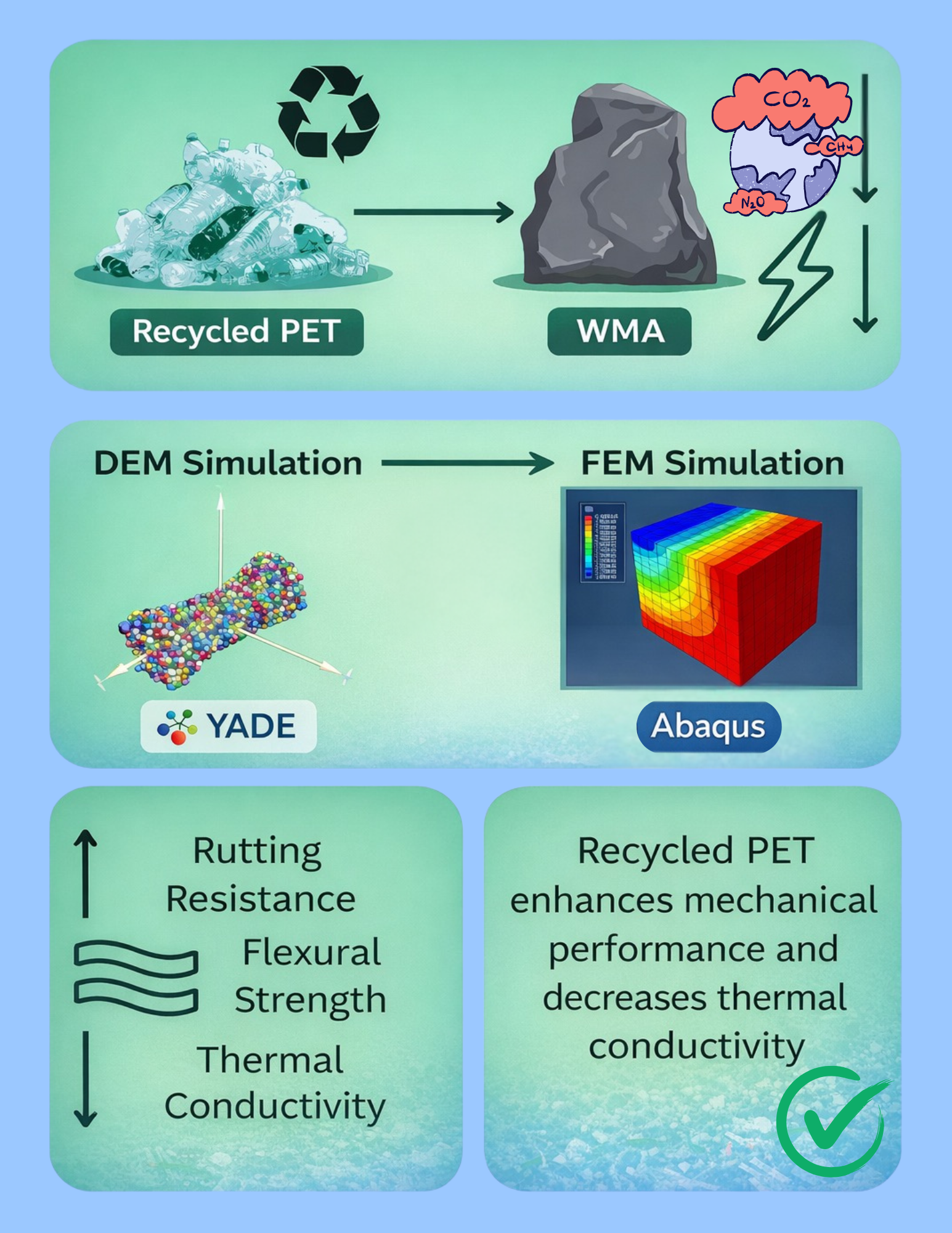
Background Infographic
Methodology
Hypothesis
Recycled polyethylene terephthalate (PET) will improve
stiffness, rutting resistance, and thermal conductivity of warm mix
asphalt while preserving deformation behavior, with optimal
performance at moderate PET contents.
Background
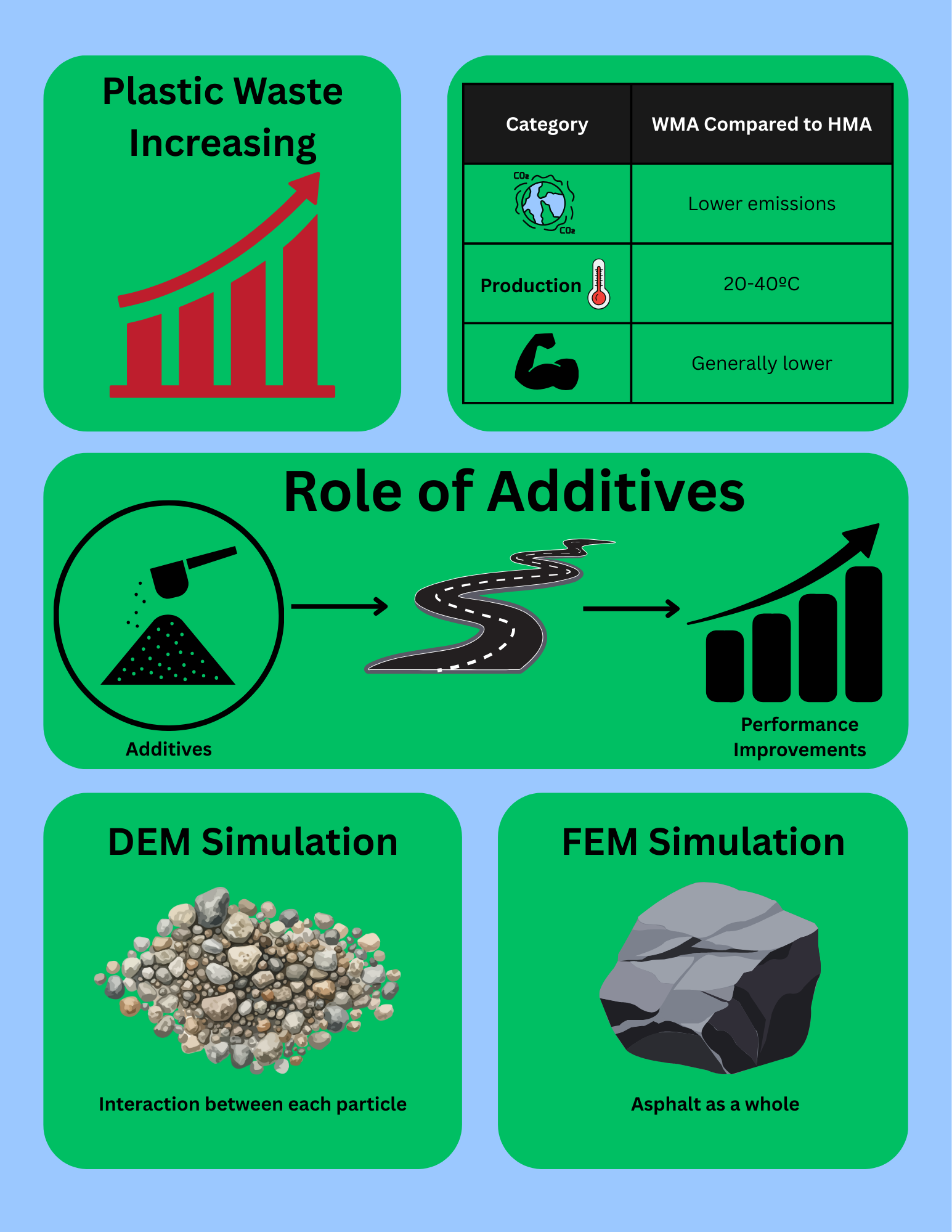
Plastic pollution is accelerating globally,
with plastic production doubling since 2000 and projected to triple
by 2060 (United Nations Environment Programme, 2025). Polyethylene
terephthalate (PET) dominates many waste streams, accounting for
approximately 60% of plastic waste and creating significant
environmental challenges (Usman & Kunlin, 2024). One promising
mitigation strategy is incorporating recycled plastics into pavement
materials. Warm Mix Asphalt (WMA) reduces production temperatures by
approximately 20–40 °C compared to Hot Mix Asphalt (HMA), leading to
decreased fuel consumption and emissions (Rubio et al., 2012).
Previous studies indicate that recycled PET can reinforce
binder–aggregate structure while diverting plastic from landfills,
and polymer additives such as high-density polyethylene have been
shown to improve asphalt durability (Usman & Kunlin, 2024;
Chegenizadeh et al., 2021). To investigate PET-modified WMA across
multiple length scales, this project integrates Discrete Element
Modeling (DEM) using YADE to capture particle-scale interactions and
Finite Element Modeling (FEM) using Abaqus to evaluate macro-scale
mechanical and thermal behavior.
Procedure
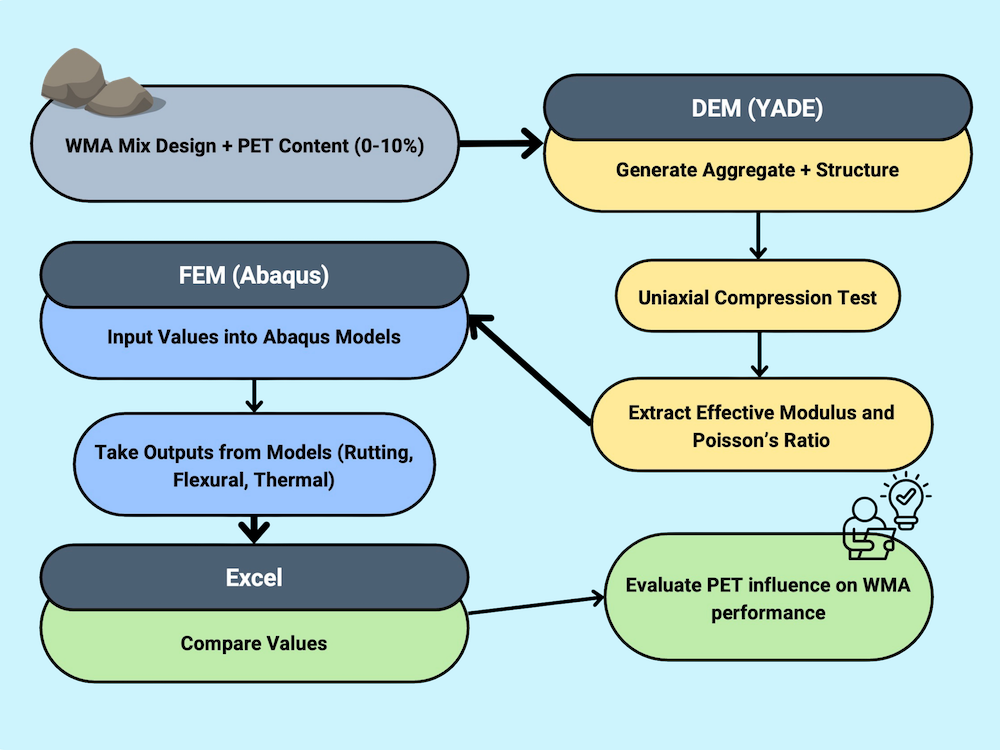
This study employs a fully computational
framework to simulate warm mix asphalt (WMA) incorporating recycled
polyethylene terephthalate (PET). The asphalt mixture is modeled as
a composite of mineral aggregates, bitumen binder, and PET
particles. Aggregates are represented in the Discrete Element Method
(DEM) as spherical particles following a dense-graded distribution,
with 55% coarse aggregate (>2.36 mm) and the remainder fine
aggregate (<2.36 mm), which is held constant across all
simulations. PET replaces the fine aggregate fraction by volume at
five dosages (0%, 1%, 2%, 5%, and 10%) and is assigned lower
stiffness, reduced density, higher ductility, and lower friction to
reflect its polymeric behavior. Asphalt binder effects are
incorporated through interparticle cohesion, viscous damping, and
rolling resistance. Particle-scale simulations are conducted using
YADE, where 50 mm cubic specimens are generated via gravity
deposition and isotropic compaction, with five independent
realizations per PET level to account for packing variability.
Mechanical testing consists of uniaxial compression to determine
effective Young’s modulus and lateral deformation tracking to
calculate Poisson’s ratio. These homogenized properties are then
passed to Abaqus for pavement-scale Finite Element Modeling (FEM),
where PET-modified WMA is treated as a homogeneous elastic material
with viscoelastic behavior introduced through a Prony series.
Rutting performance is evaluated under 800 moving load cycles
applied to a 0.1 m cubic asphalt block, while flexural strength is
assessed through three-point bending of a beam specimen. Thermal
behavior is modeled using a two-layer system subjected to a
temperature gradient from 40 °C at the WMA surface to 20 °C at the
base, enabling calculation of heat flux and temperature fields.
Outputs including stiffness, rutting depth, flexural stress, midspan
deflection, tensile strain, and surface heat flux are extracted and
compared against the 0% PET control to evaluate changes in
mechanical and thermal performance. Trends across PET content are
analyzed to identify an optimal dosage, and model validation is
performed by comparing DEM-derived elastic properties and FEM
stress–strain responses with reported values for conventional WMA.
Analysis
Simulation results indicate that
incorporating recycled PET into warm mix asphalt alters stiffness and
deformation behavior while preserving overall material integrity. DEM
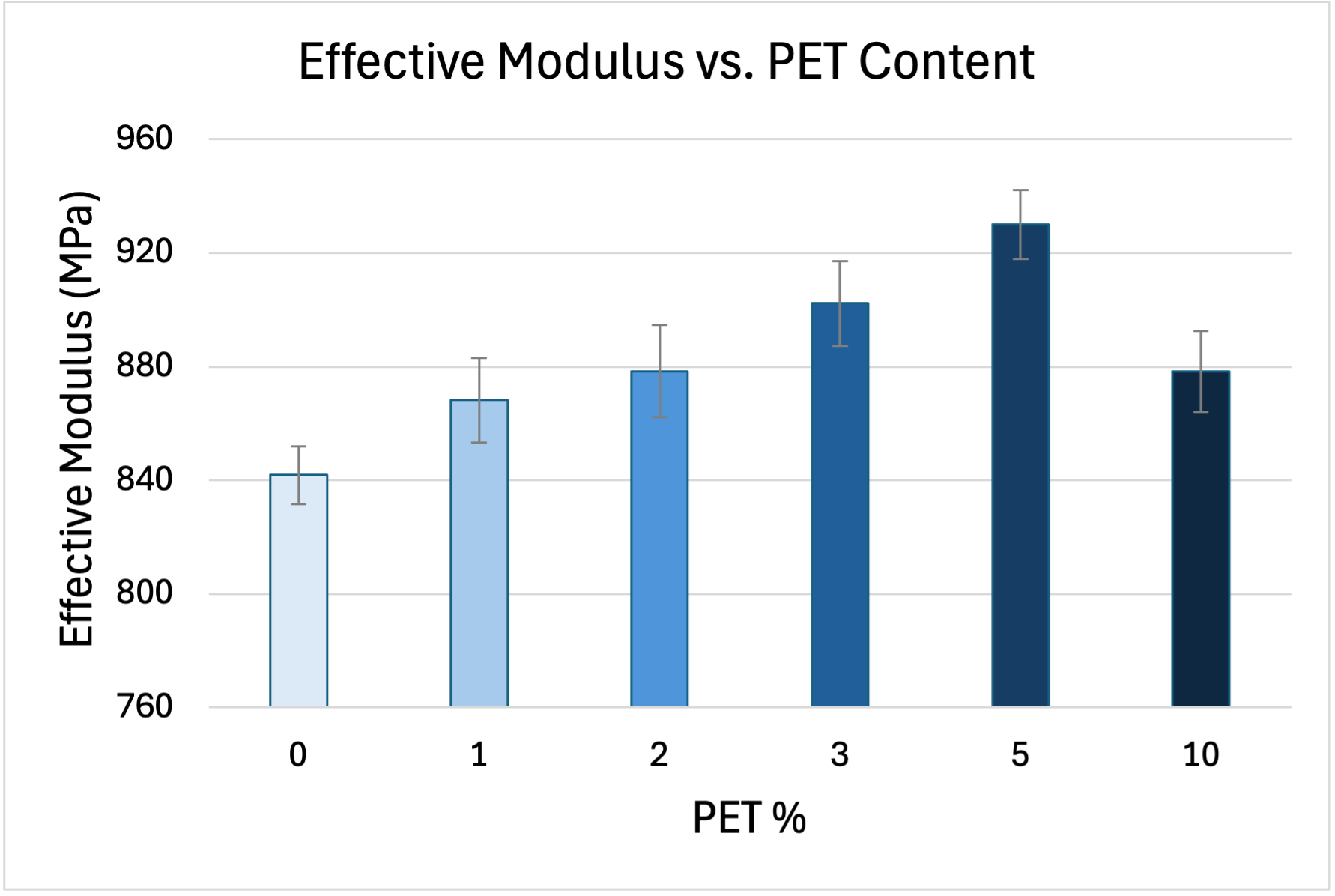
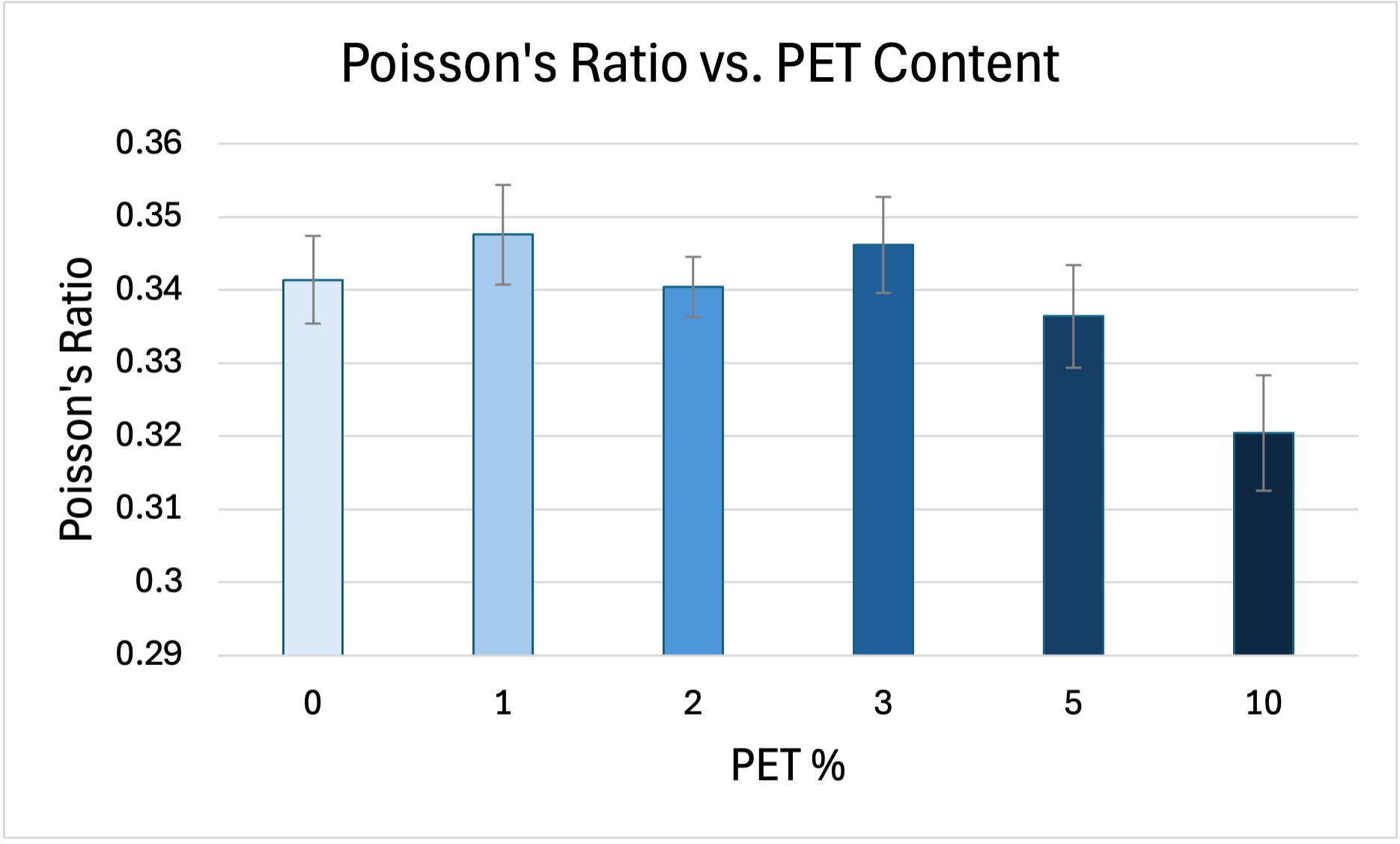
uniaxial compression showed that effective modulus increased from
approximately 842 MPa in the control mixture to about 930 MPa at 5%
PET, with statistically significant gains observed at 3% and 5% PET,
while Poisson’s ratio remained relatively constant across all
dosages. This suggests that PET primarily influences stiffness rather
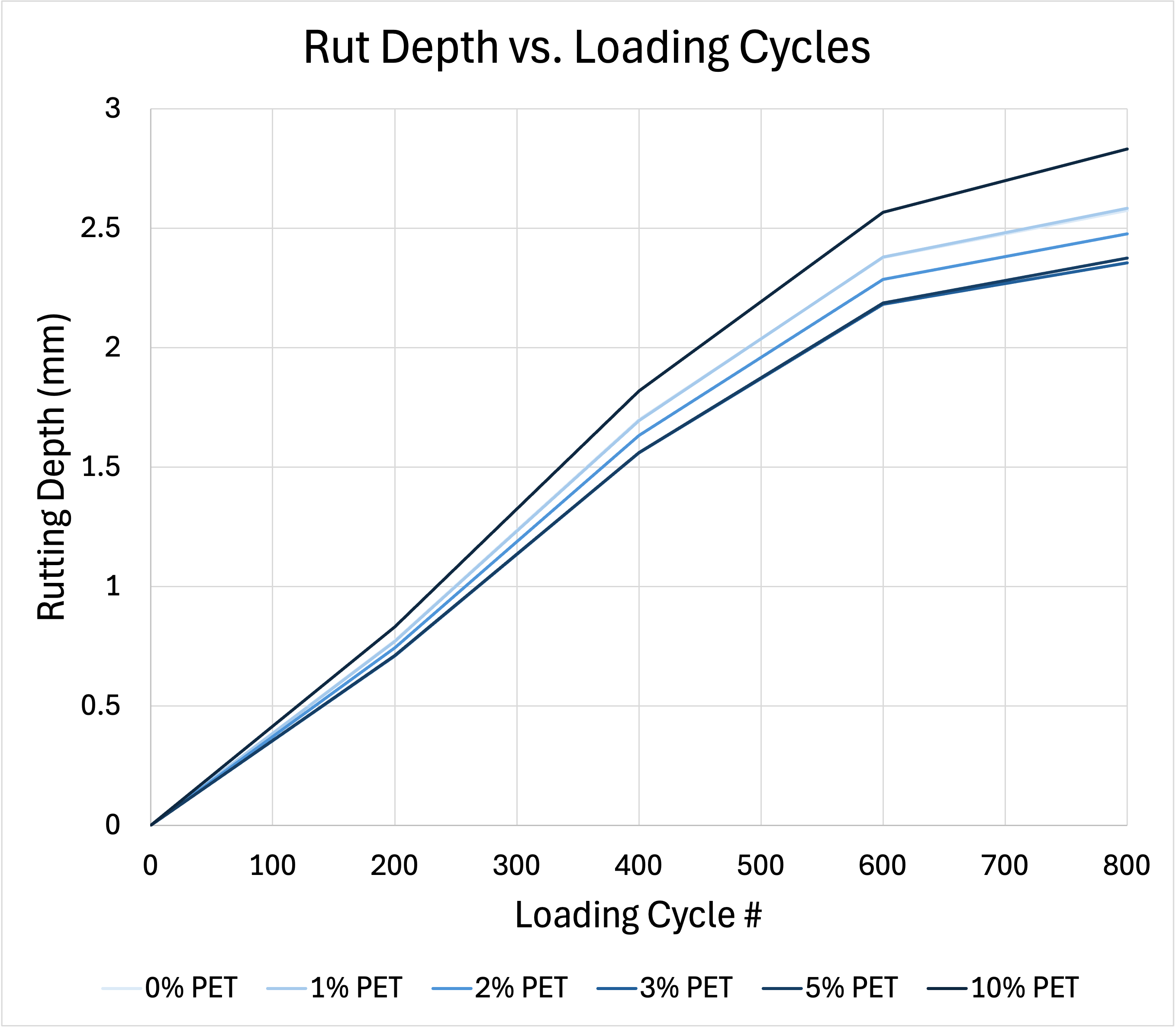
than volumetric deformation. FEM rutting simulations further
demonstrated reduced permanent deformation at moderate PET contents,
with rut depth decreasing from 2.57 mm in the control to 2.47 mm at
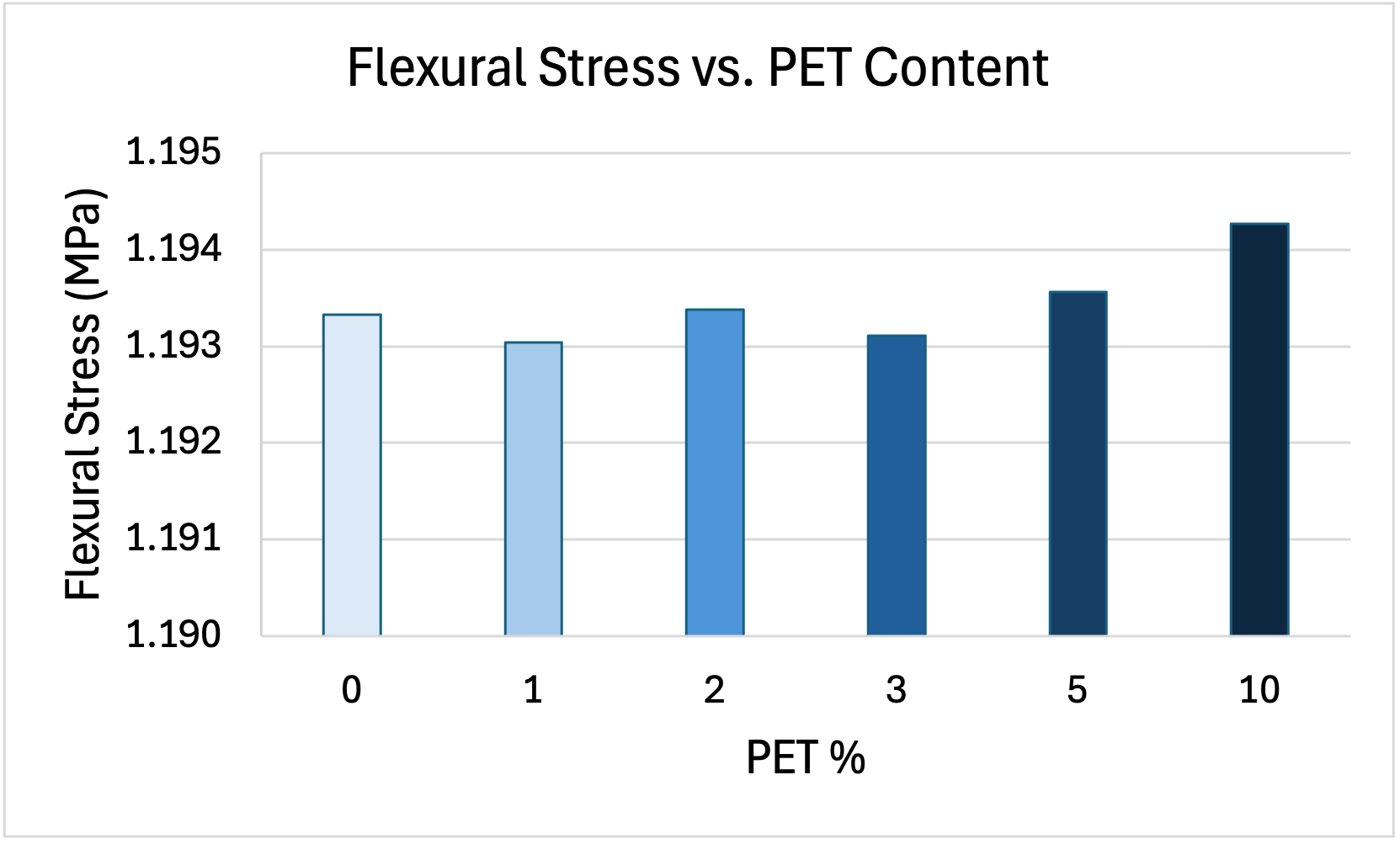
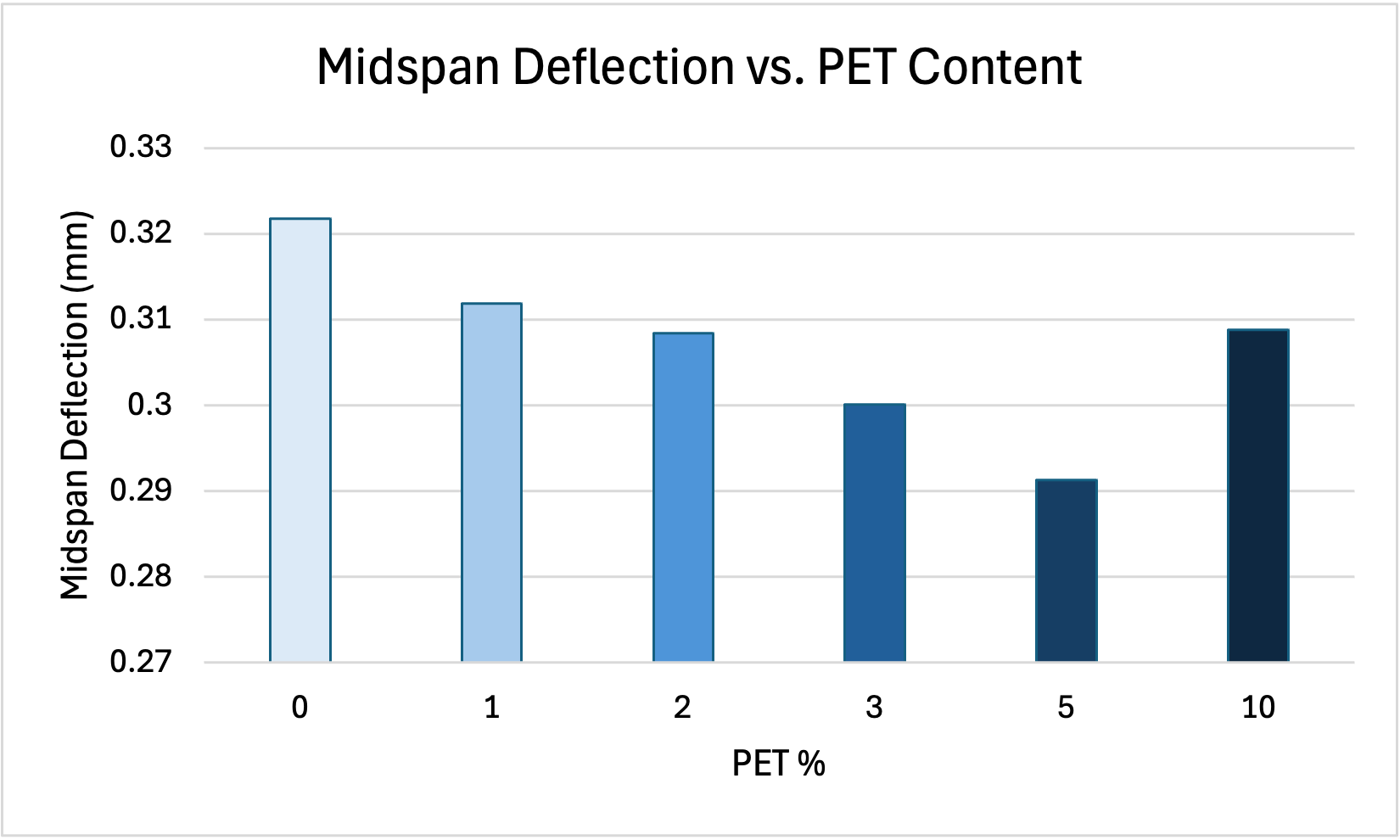
2% PET after 800 loading cycles. Flexural modeling showed that
tensile stress remained approximately constant, while midspan
deflection decreased up to 5% PET, indicating improved bending
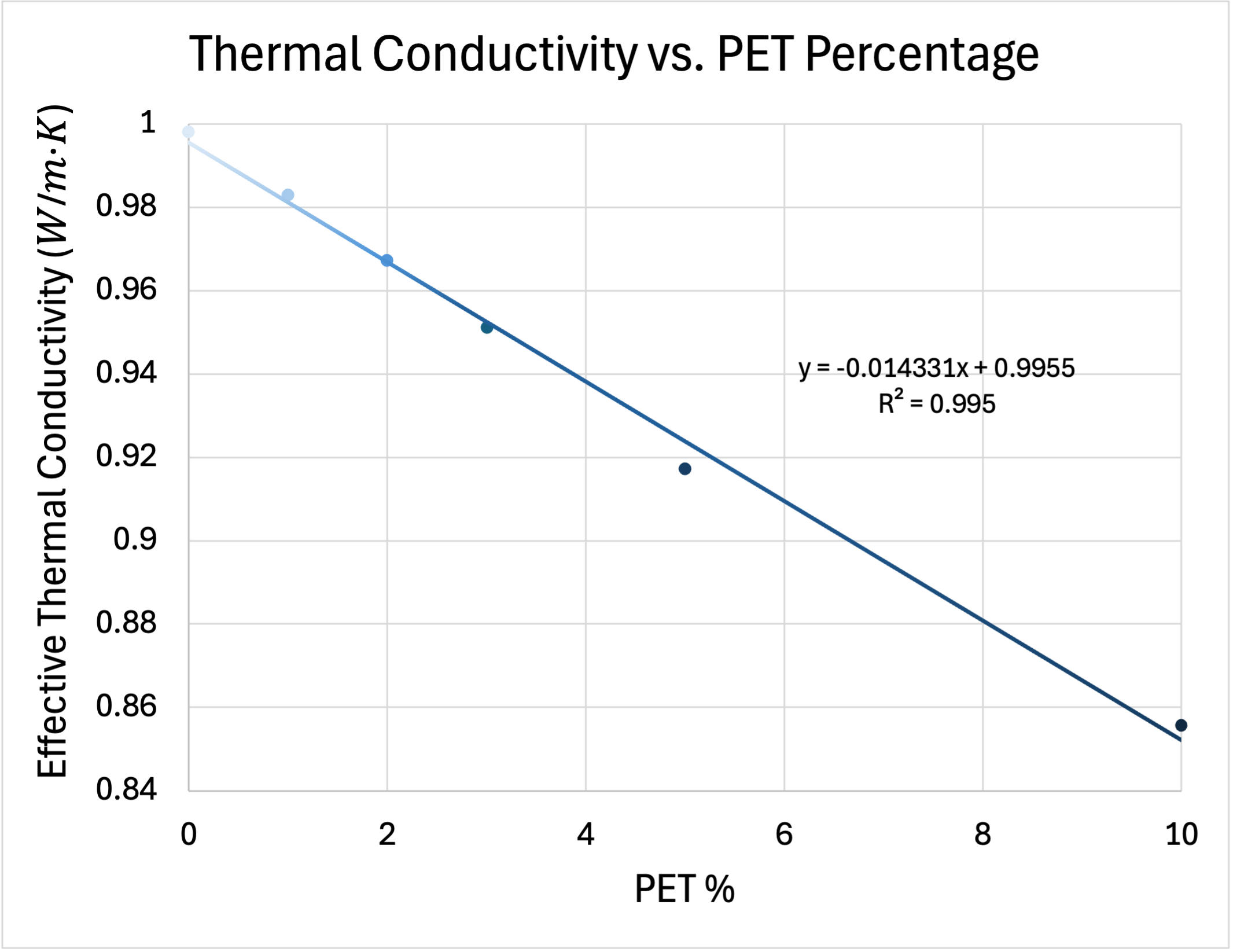
stiffness without compromising flexural strength. Thermal analysis
revealed a monotonic decrease in effective thermal conductivity with
increasing PET content, from 0.998 W/m·K (0%) to 0.856 W/m·K (10%),
consistent with PET’s lower intrinsic conductivity. Collectively,
these results identify an optimal PET range of approximately 3–5%,
which improves stiffness and rutting resistance while reducing heat
transfer, with minimal impact on flexural performance.
References
American Association of State Highway and Transportation Officials.
(2013). A policy on design standards — Interstate system.
Access Management.
https://accessmanagement.info/document/policy-design-standards%C2%97interstate-system/
Chegenizadeh, A., Peters, B., & Nikraz, H. (2021). Mechanical
properties of stone mastic asphalt containing high-density
polyethylene: An Australian case. Case Studies in Construction
Materials, 15, e00631. https://doi.org/10.1016/j.cscm.2021.e00631
Enfrin, M., Myszka, R., & Giustozzi, F. (2022). Paving roads with
recycled plastics: Microplastic pollution or eco-friendly solution? Journal
of Hazardous Materials, 437, 129334.
https://doi.org/10.1016/j.jhazmat.2022.129334
Moghaddam, T. B., Karim, M. R., & Syammaun, T. (2012). Dynamic
properties of stone mastic asphalt mixtures containing waste plastic
bottles. Construction and Building Materials, 34, 236–242.
https://doi.org/10.1016/j.conbuildmat.2012.02.054
Phoenix Technologies. (2008). PET properties [Datasheet].
https://www.phoenixtechnologies.net/media/371/PET%20Properties%202008.pdf
Rubio, M. C., Martínez, G., Baena, L., & Moreno, F. (2012). Warm mix
asphalt: An overview. Journal of Cleaner Production, 24,
76–84. https://doi.org/10.1016/j.jclepro.2011.11.053
Šmilauer, V., et al. (2021). Yade Documentation (3rd ed.). The
Yade Project. https://doi.org/10.5281/zenodo.5705394
Some useful numbers on the engineering properties of materials
(geologic and otherwise). (n.d.). GEOL 615 course handout,
Pennsylvania State University.
https://cpb-us-e1.wpmucdn.com/sites.psu.edu/dist/1/57960/files/2016/10/Some-Useful-Numbers-1g1rkuu.pdf
United Nations Environment Programme. (2025). Plastic
pollution.
https://www.unep.org/topics/chemicals-and-pollution-action/plastic-pollution
United States Department of Transportation, Federal Highway
Administration. (2014). Standard specifications for
construction of roads and bridges on Federal Highway projects
(FP-14), Section 703—Aggregate.
https://highways.dot.gov/federal-lands/specs/wfl-los/fp-14-library/703fp14.docx
Usman, I. U., & Kunlin, M. (2024). Influence of polyethylene
terephthalate (PET) utilization on the engineering properties of
asphalt mixtures: A review. Construction and Building
Materials, 411, 134439.
https://doi.org/10.1016/j.conbuildmat.2023.134439