STEM II

VIBRABELL

VIBRABELL is a wearable assistive doorbell notification system designed to help individuals with hearing impairments recognize when someone is at the door. Instead of relying only on sound, the system sends a wireless signal from the doorbell to a wrist device, which alerts the user through vibration.

Executive Summary

Worldwide, an estimated 700 million people will experience a disabling level of hearing loss by 2050 (World Health Organization, 2026). Traditionally, doorbells notify users through sound. As such, this becomes an obstacle for those who are unable to hear. A multitude of generalized smart doorbells solve half of the problem; for example, Ring doorbells propose a way to notify users without sound, but it requires the Ring application (Ring, 2026). This alienates users who do not want app-based systems, are less comfortable with smartphones, or do not want to constantly check notifications.

Despite the prevalence of hearing loss in the population as a whole, the number of different assistive doorbell designs for the hard of hearing or deaf remains minuscule. Current commercialized versions aiming to confront the problem of hearing problems utilize a light-emitting diode (LED) receiver that flashes brightly whenever the doorbell is activated (ADCO Hearing Products, 2026). This means that if the user is asleep, in another room, outside, or simply not facing the receiver, the alert may be missed.

Some studies, such as one by Paidi et al. in 2022, have suggested the use of a wearable device equipped with LEDs in order to make it more likely to be seen by the user, but current prototypes are bulky and get in the way of daily movement, as well as still may fail to alert someone if they are not looking at it. As such, the proposed device will aim to improve on these shortcomings, allowing for users to have an easier time knowing when a doorbell is pressed.

Problem Statement

Individuals with hearing impairments are often unable to react when a doorbell is rung because these systems usually rely on auditory cues. This prevents the individual from being able to respond quickly if someone is there (The Bellman Team, 2026).

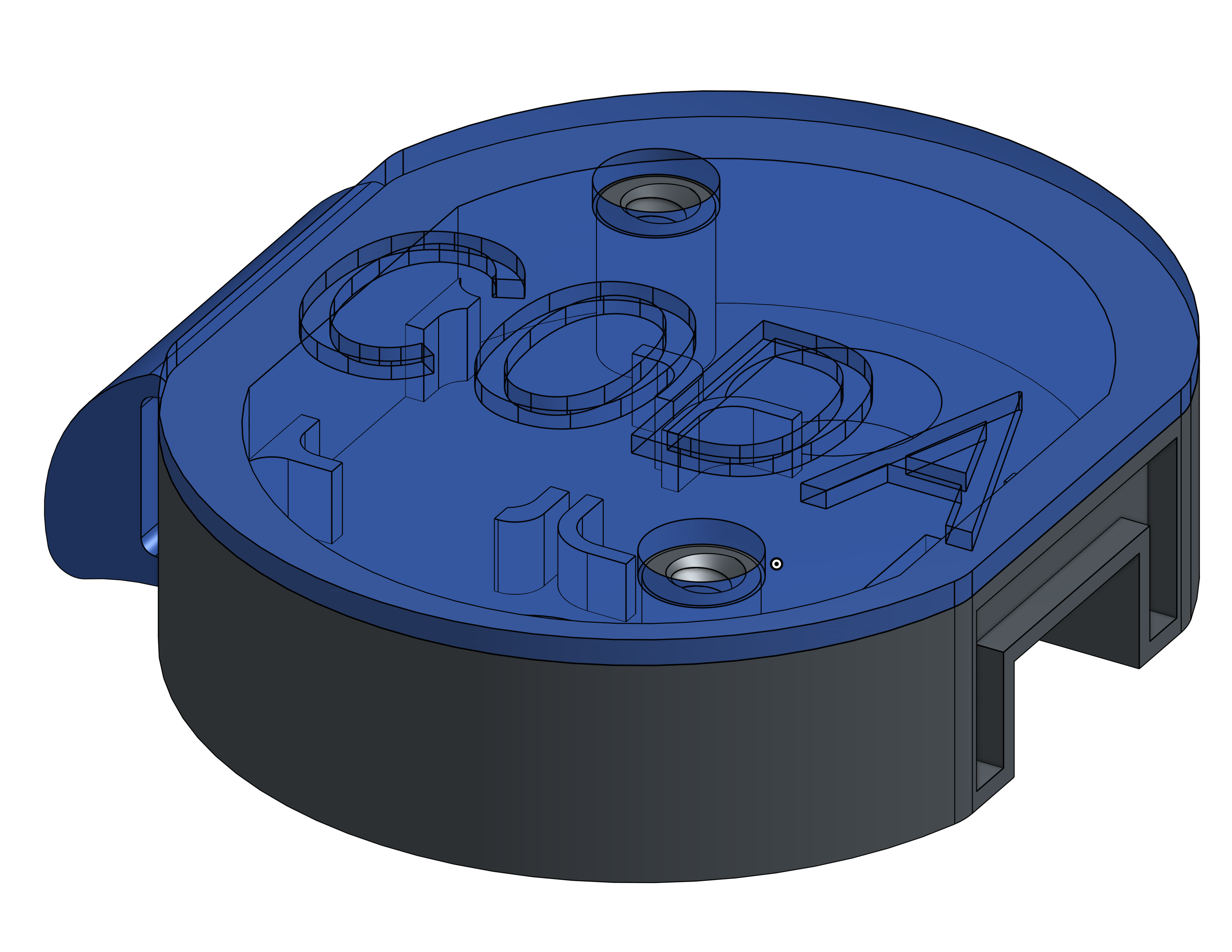
CAD Photos
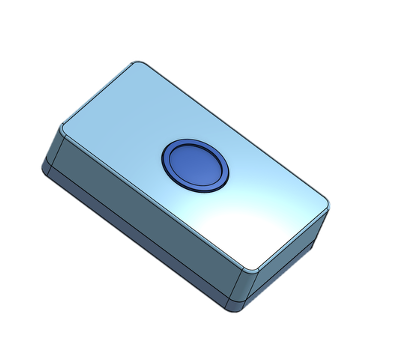
Doorbell CAD model

Wrist device CAD model

Design Approach

This design features a wrist device that connects wirelessly to a doorbell. This wrist band contains electronics of 25 mm or smaller, allowing the user to partake in daily activities without conflicts with the wrist device, along with maintaining comfort. The band on the wrist device is made from a slightly stretchy, elastic-like material. With this material, the user is able to easily slip the wrist device on and off when needed but does not fall off randomly during the day.

The main electronics of this wrist device consists of a small battery and a vibration motor. This design concept relies on the vibration motor to alert the user when the doorbell is pressed. When triggered, its system activates the doorbell circuit and produces a voltage signal. This signal tells the microcontroller that is connected to the doorbell system to interpret the signal as a button press. The microcontroller then sends that signal to the wrist receiver in the wrist device. When the wrist device receives the signal, its microcontroller tells the circuit to turn on, allowing the battery to flow through a transistor to power the vibration motor. As a result, instead of ringing a chime, this doorbell will produce a buzzing sensation through the use of a vibration motor.

The back of the doorbell will have a suction-cup-like material, allowing for easy adhesion and removal from an apartment door or wall, preventing permanent damage to the property. This makes it more convenient for elderly users or families living in apartments that cannot mount a traditional doorbell to the wall due to the permanent damage it may cause.

This design has the benefit of a vibration that causes the user to be alerted even when they are not directly looking at it. Not needing to see a phone notification to know that someone rang the doorbell can be better for users who do not want to use an app. Furthermore, it also makes sure that someone who might be blind or has bad eyesight can still react to the alerts. At the same time, though, the use of a wristband is less comfortable than a lamp because the user would have to be wearing it in order to be notified. This means that if the watch is heavy or large, it can get in the way of the user’s daily activities.

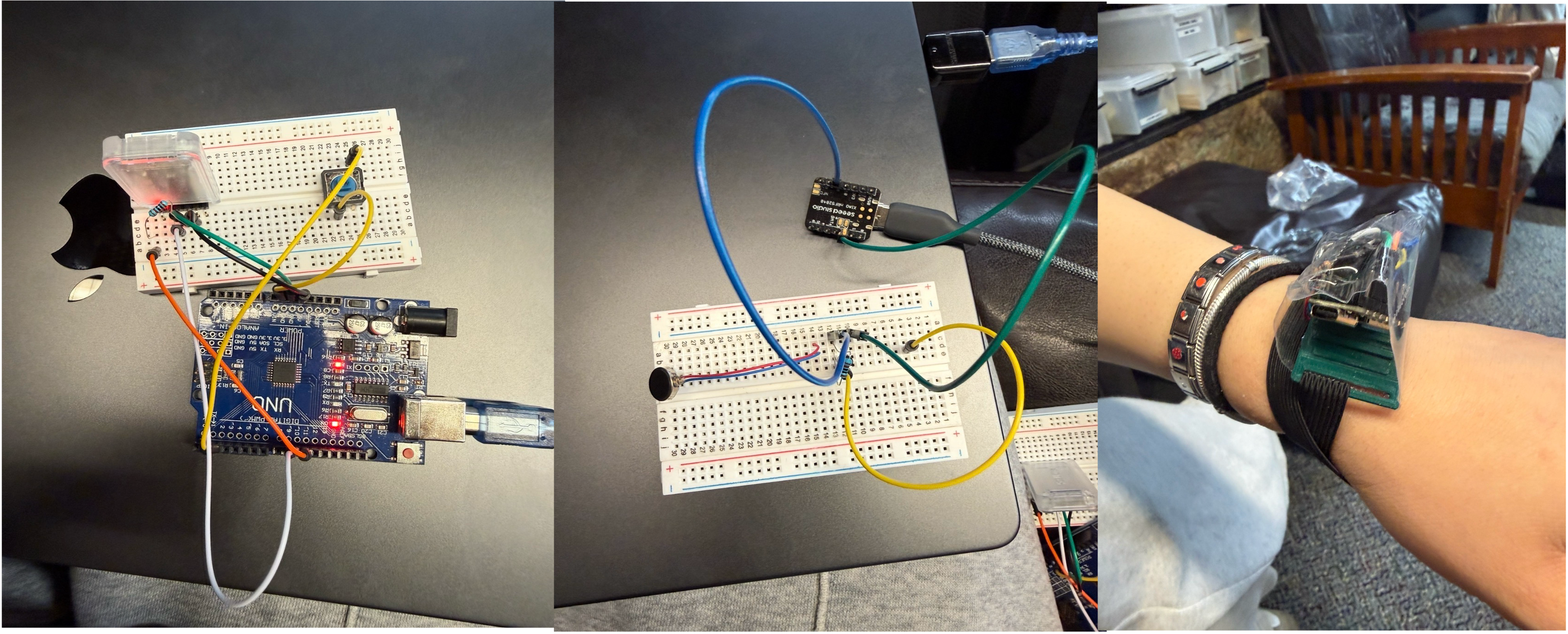
Preliminary Prototype Photos

Preliminary prototype photos

References

ADCO Hearing Products. (n.d.). Doorbell notification for deaf individuals. Retrieved May 21, 2026, from https://adcohearing.com/collections/signaling-notification-doorbell-notification

Paidi, Z., Haliza, H. E., Zain, N. M., & Othman, M. (2022). Development of a notification system using a wearable concept that allows hearing-impaired person to detect that their doorbell has been pressed using the nRF24L01 wireless module. International Journal of Academic Research in Business and Social Sciences, 12(12), 2766–2777. https://doi.org/10.6007/IJARBSS/v12-i12/16069

Ring. (n.d.). Troubleshooting notifications from Ring. Retrieved May 21, 2026, from https://ring.com/support/articles/vll73/troubleshooting-notifications-from-ring

World Health Organization. (2026, March 3). Deafness and hearing loss. https://www.who.int/news-room/fact-sheets/detail/deafness-and-hearing-loss