STEM 2 Project
PageWave: Assistive Page Flipper
Problem Statement and Target Audience
Millions of people worldwide struggle with disabilities that limit fine motor skills, making simple activities such as turning the pages of a book extremely difficult. Individuals with paralysis, tremors, amputations, arthritis, or other mobility-related impairments often rely on caregivers for assistance while reading. This dependence can reduce independence and limit access to educational and recreational reading.
The target audience for this project includes individuals with limited hand mobility, elderly adults living in assisted-care facilities, and people with physical disabilities that prevent them from independently flipping book pages. The device is also intended to assist caregivers by reducing the amount of direct assistance required during reading activities.
Design Approach
The project focused on designing an assistive technology device capable of automatically turning pages in physical books while remaining accessible, lightweight, and easy to use. The design process began with brainstorming multiple concepts and evaluating each idea based on accessibility, practicality, cost, and reliability.
Several subsystems were developed and tested independently before being integrated into the final prototype. These subsystems included the adjustable book stand, the page-holding mechanism, the automated page-flipping system, and the activation trigger. Feedback from testing and peer review was used to improve the overall functionality and accessibility of the design.
Prototype Description
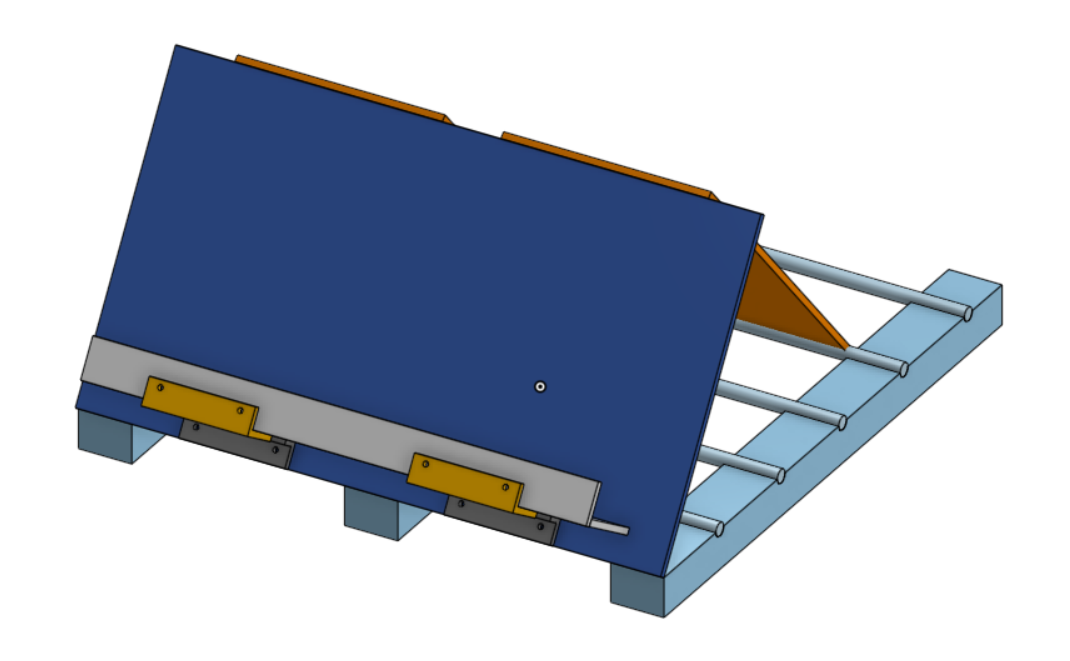
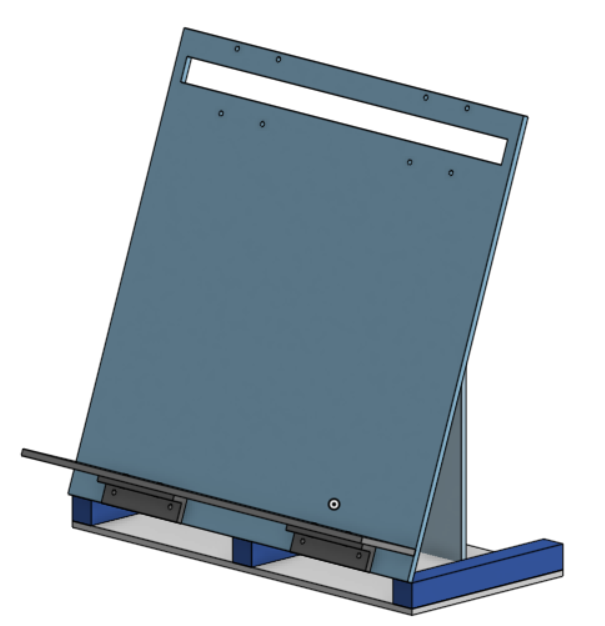
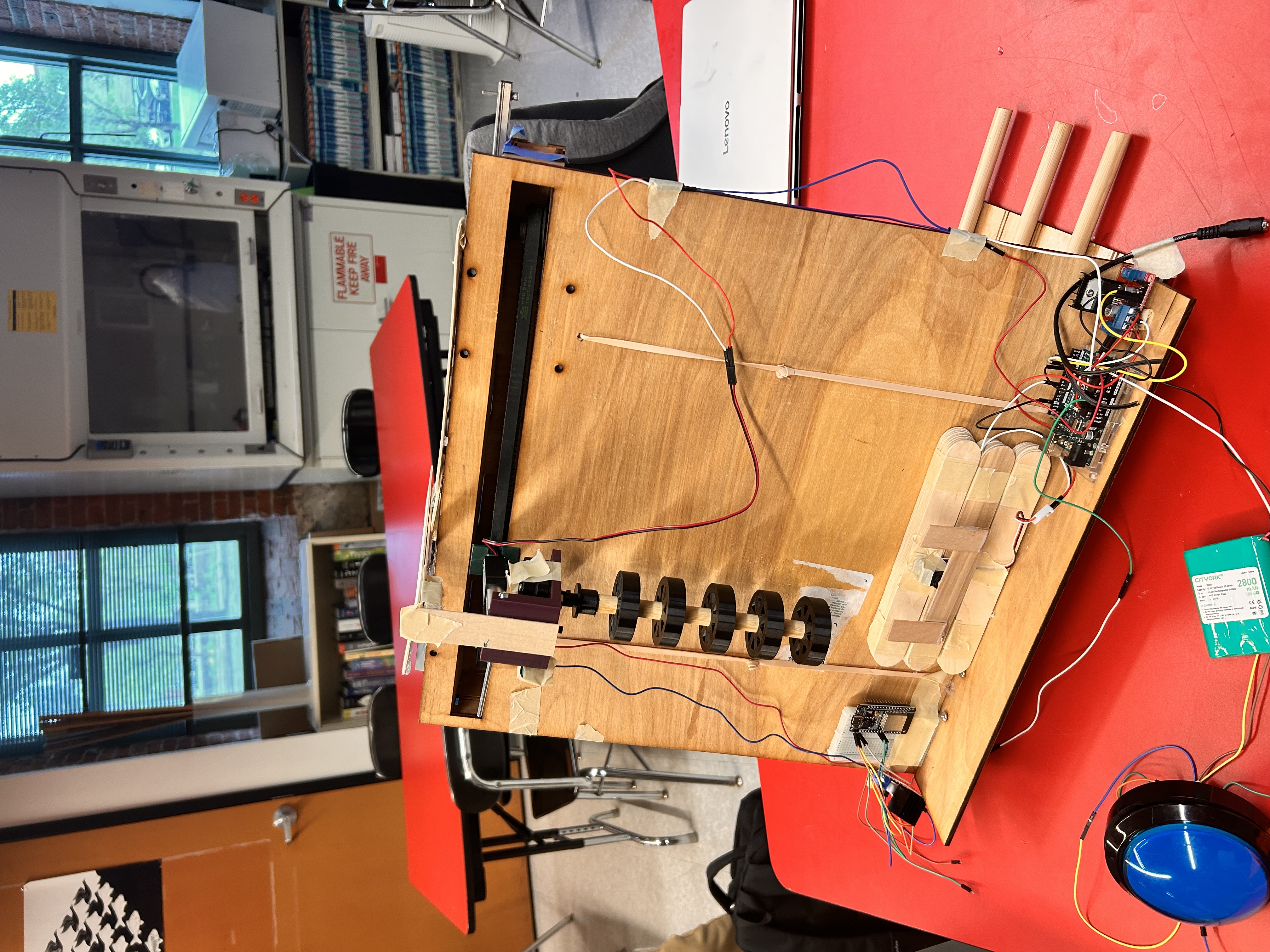
The final prototype, called PageWave, is a motorized book stand that allows users to flip pages with the press of a button. The device uses a linear actuator, rotating wheels, and a page-holding mechanism to carefully separate and turn pages one at a time. A large accessible button controls the system, making it easier for users with limited dexterity to operate the device independently.
The stand was designed to support multiple book types, including hardcover books, paperbacks, magazines, and board books. Elastic ligature holders secure the book without causing damage, while the adjustable stand allows users to position the book at different reading angles for comfort.
Implementation
The device was constructed using plywood, wooden supports, 3D-printed components, servos, and an Arduino-based control system. The page-turning mechanism was powered by a linear actuator and controlled using boolean logic programmed into the microcontroller. A servo-powered page holder stabilized the pages during flipping to improve accuracy.
Multiple wheel designs with different TPU infill percentages were tested to determine which material provided the best grip while minimizing the number of accidental page turns. Testing showed that the 1% TPU infill wheel provided the highest accuracy and best performance for the prototype.
Testing and Evaluation
Several rounds of testing were conducted to evaluate the effectiveness, usability, and durability of the device. Usability testing examined how easily users could adjust the stand and operate the controls without instruction. Weight testing confirmed that the device remained lightweight and portable.
Additional testing focused on ensuring that the ligature holders and page-turning mechanism did not damage books during use. Hardcover books, paperbacks, magazines, and board books were tested to evaluate compatibility across different formats. The team also measured page-turning accuracy, speed, and consistency throughout different sections of books.
Future Improvements
Future versions of the project will focus on improving page-turning precision, increasing the range of reading angles, and expanding accessibility options. One major planned improvement is replacing the wired button with a Bluetooth or voice-recognition control system, allowing users with more severe mobility limitations to operate the device hands-free.
Additional refinements may include softer materials to better protect book covers, improved wheel grip for more accurate single-page turning, and a more compact overall design to increase portability.
Conclusion
The PageWave assistive page flipper successfully demonstrates how engineering and assistive technology can improve independence for individuals with physical disabilities. By combining mechanical design, electronics, and user-centered testing, the project created a functional prototype capable of helping users read physical books with significantly less assistance. The project highlights the importance of accessibility and demonstrates how thoughtful engineering solutions can improve quality of life.
GitHub
Want to look at how we coded and CADed it? Here is the link to our GitHub.