STEM 1 Project
Course Description
In this STEM and Technical Writing class with Dr. Crowthers, we are spending the first five months of the year focused on an independent research project that we chose. A big part of the class is learning how to actually read and make sense of professional scientific papers, which helps me understand how to set up my own experiments. Throughout the process, I’m learning the "business" side of science by writing things like grant proposals and a final thesis. We also work a lot on our presentation skills—specifically how to explain complicated data clearly and how to keep an audience interested—so that we’re ready to share our research with others by the end of the year.
Intelligent Impact-Sensing Liner for Youth Female Athlete Safety
Intelligent Impact-Sensing Liner for Youth Female Athlete Safety addresses the high rate of unrecognized concussions in female youth athletes, a disparity linked to equipment traditionally designed around male biomechanics and limited real-time monitoring. Research shows that rotational acceleration and cumulative head impacts significantly increase concussion risk, yet most available detection systems are expensive and not tailored to adolescent female athletes.
The objective of this project was to design an affordable, gender-informed helmet liner capable of both reducing linear and rotational forces and providing immediate concussion-risk alerts. A 5 mm EVA foam liner integrated with an IMU, piezoelectric sensors, and an Arduino was engineered and validated through controlled drop testing, rotational impact trials, and finite element simulations.
Results demonstrated a statistically significant reduction in peak linear acceleration (≈37%) and intracranial pressure (≈48%) compared to a helmet-only condition, while the sensor system achieved over 90% accuracy and successfully distinguished between normal athletic movement and high-risk impacts. Overall, the project shows that low-cost, integrated impact mitigation and monitoring technology can meaningfully improve safety and early concussion detection for female youth athletes.
The project also evolved through multiple prototype iterations. Early versions (V1) used piezoelectric discs alongside an MPU6050 sensor and Arduino Pro Mini, but testing revealed excessive
false positives caused by vibration sensitivity and inconsistent oblique impact detection. In response, a second-generation prototype (V2) was engineered using an ESP32 microcontroller with
refined sensor fusion, improved digital filtering, and optimized foam-mounted IMU placement. This iterative redesign significantly improved system stability, reduced motion-noise interference,
and enhanced real-time impact detection reliability.
Abstract
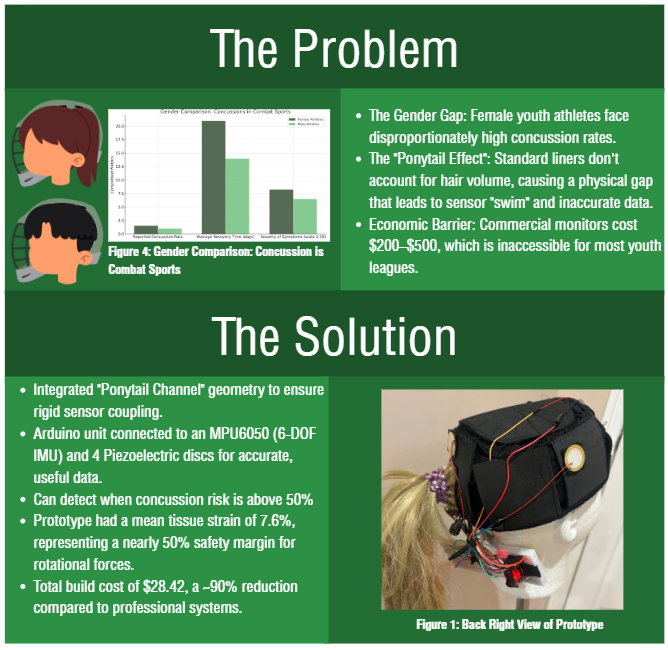
Youth female athletes experience disproportionately high rates of unrecognized concussions because existing protective equipment is often designed for male biomechanics. To address this disparity, this project developed a low-cost, intelligent helmet liner optimized for female youth lacrosse players, integrating an inertial measurement unit (IMU), piezoelectric discs, and an Arduino within a flexible EVA-based structure. Laboratory drop and oblique impact tests validated the design, revealing that the integrated sensors recorded 6-degree-of-freedom kinematics with over 90% correlation to reference standards while providing significant impact attenuation. By translating raw data into immediate concussion-risk alerts, this device bridges the critical gap between impact occurrence and clinical intervention. Ultimately, this scalable safety solution empowers families with real-time feedback, reducing the risk of second-impact syndrome and improving long-term health outcomes for young female athletes. The final V2 prototype additionally incorporated female-specific ergonomic considerations, including improved sensor coupling for athletes with long hair and ponytail configurations, while maintaining a total hardware cost below $30 through the use of open-source electronics.
Research Proposal
Go to STEM 1 Research ProposalEngineering Need
Female youth athletes have high concussion rates, but most helmets are designed for adult males, leading to poor fit, missed impacts, and higher injury risk.
Current commercial concussion-monitoring systems can cost hundreds to thousands of dollars and are often optimized for adult male collision sports. Additionally, standard helmet liners frequently fail to account for female-specific ergonomic factors such as hair volume and ponytail placement, which can create gaps between the head and liner that reduce sensor accuracy and protective performance.
Engineering Objective
Obj. 1a: Mechanically optimize a dual-function helmet liner to reduce linear and rotational acceleration.
Obj. 1b: Identify liner materials and internal geometries, such as EVA, that maximize impact energy dissipation while remaining lightweight for youth female athletes.
Obj. 2a: Engineer and integrate a low-cost, real-time impact sensing and alert system using an IMU and piezoelectric sensors.
Obj. 3a: Experimentally validate the protective performance and real-world usability of the liner through laboratory and field evaluation.
Obj. 4a: Improve sensor fidelity and reduce false-positive alerts through iterative redesign, sensor fusion, and digital filtering techniques.
Obj. 4b: Develop a female-specific ergonomic liner configuration that improves sensor coupling and accommodates long-hair athletic configurations such as ponytails.
Background
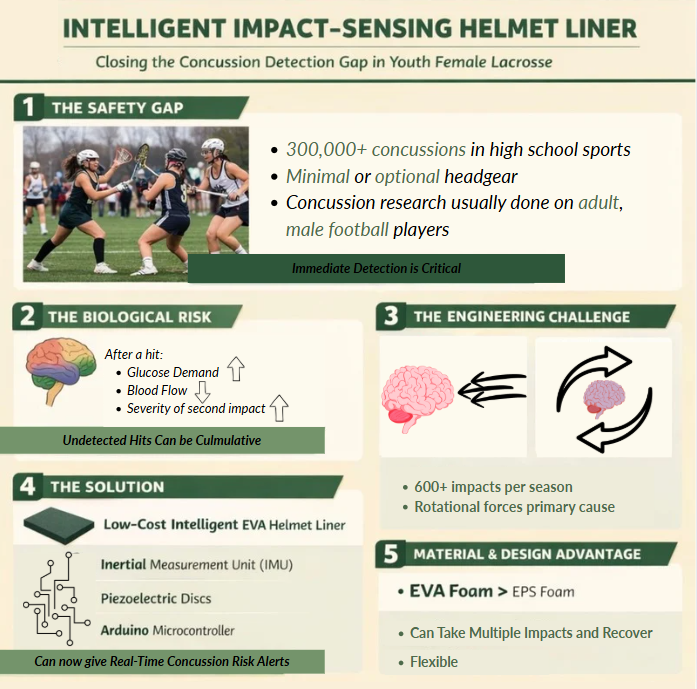
Concussions are among the most common and underreported injuries in youth sports, primarily caused by rotational acceleration and shearing forces that strain neural tissue (Meaney & Smith, 2011; Patton et al., 2020). High school athletes can sustain hundreds of head impacts per season, many of them sub-concussive (Broglio et al., 2010), and youth players may experience forces comparable to older athletes (Woolley et al., 2018). In girls’ lacrosse, where headgear is often minimal or optional, this creates a significant safety gap (Tierney, 2024). Female athletes are more likely to report prolonged or more severe post-concussive symptoms than males (Broshek et al., 2005; Covassin et al., 2013), yet most helmet technologies are scaled from male designs without sex-specific biomechanical recalibration. Female athletes also face ergonomic challenges rarely considered in conventional helmet systems. Hair volume and ponytail placement can create physical gaps between the liner and skull, resulting in sensor “swim,” reduced fit consistency, and inaccurate biomechanical measurements during impact events. These gaps are particularly problematic for wearable impact-monitoring systems that rely on rigid sensor coupling for accurate kinematic data collection.
At the physiological level, concussion initiates a neurometabolic cascade in which the brain’s demand for glucose increases while cerebral blood flow decreases, creating a period of heightened vulnerability (Giza & Hovda, 2014). Returning to play during this window significantly elevates the risk of long-term cognitive impairment or second-impact syndrome, despite consensus guidelines emphasizing cautious management (McCrory et al., 2017). Mechanically, traditional helmets were designed to mitigate linear forces and prevent skull fractures, but rotational acceleration is now recognized as the primary driver of diffuse axonal injury (Patton et al., 2020). Sensor-based monitoring systems offer promise, yet wearable accelerometers can demonstrate error rates of 10–25% depending on placement and calibration (Siegmund et al., 2015; Wu et al., 2016), and systematic reviews highlight limitations in their reliability for concussion assessment (Brennan et al., 2017).
Emerging materials research suggests that advanced foams and lattice structures, including ethylene-vinyl acetate (EVA) and auxetic geometries, offer improved multi-impact energy absorption and structural resilience (Vanden Bosche et al., 2017; Chen et al., 2023; Zhang et al., 2024). By embedding low-cost inertial measurement units (IMUs) and piezoelectric sensors within these liners, it becomes possible to monitor both peak and cumulative impacts. Recent validation studies indicate that properly filtered low-cost IMUs can achieve strong correlation with reference standards (Zhan et al., 2025), while injury evaluation frameworks such as the STAR system provide benchmarks for impact-risk assessment (Rowson & Duma, 2011). Together, these advances support the development of affordable, high-fidelity monitoring systems that improve accessibility and promote data-driven safety decisions in youth athletics.
Procedure
Equipment and Materials
This project utilized a low-cost, intelligent helmet liner designed for female youth lacrosse players, integrating both electronic monitoring and mechanical protection. The primary control unit was an Arduino microcontroller, selected for its ability to handle high-frequency data collection. To capture 6-degree-of-freedom kinematics, an MPU6050 Inertial Measurement Unit (IMU) was used to measure linear acceleration and angular velocity (Zhan et al., 2025). Additionally, four piezoelectric discs were embedded within the structure to provide a redundant data stream for impact sensing. The physical liner was constructed from a flexible ethylene-vinyl acetate (EVA) foam, which offers superior resilience and deformation recovery compared to traditional expanded-polystyrene (Zhang et al., 2024). By utilizing open-source hardware, the per-unit cost was kept below $20, addressing the need for accessible safety technology in youth sports.
The development process included two major prototype generations. The initial prototype (V1) utilized an Arduino Pro Mini alongside four piezoelectric ceramic discs and an MPU6050 IMU. However, testing demonstrated that the piezoelectric sensors produced excessive false positives during athletic movement and failed to consistently capture oblique impacts. To improve system fidelity, the second-generation prototype (V2) transitioned to an ESP32 microcontroller with refined signal filtering and IMU-only detection logic. Improved foam-mounted sensor isolation and digital filtering significantly reduced motion-noise interference while increasing detection reliability.
The liner was also engineered with female-specific ergonomic considerations in mind, including accommodations for hair volume and ponytail positioning to improve helmet fit and sensor coupling consistency during motion.
Technique 1: Bench Calibration
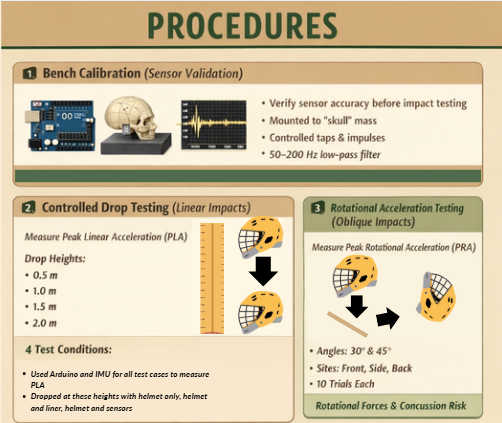
A bench calibration protocol was conducted to verify sensor response, linearity, and timestamping stability (Siegmund et al., 2015). The IMU was mounted on a rigid block coupled to a small "skull" mass to ensure steady readings. During this phase, known accelerations were applied through light taps and controlled mechanical impulses. Each input was repeated 10 times to determine the mean and standard deviation. To ensure signal clarity and stable data collection, a 50–200 Hz low-pass filter was implemented to mitigate high-frequency noise common in wearable sensors (Wu et al., 2016).
Technique 2: Controlled Drop Testing
Controlled drop testing was performed to measure the liner's ability to reduce linear acceleration across different impact energy levels, approximating a range of typical field impacts (Woolley et al., 2018). Drops were conducted from heights of 0.5 m, 1.0 m, 1.5 m, and 2.0 m. This procedure utilized four testing conditions: a baseline helmet only (Control A), a helmet with an experimental liner but no electronics (Control B), a liner with inactive sensors (Control C), and a liner with active monitoring (Control D).
Technique 3: Rotational Acceleration Testing
To evaluate the system's response to shearing forces, which are a primary driver of concussive injury, rotational acceleration testing was conducted at oblique impact angles of 30° and 45° (Meaney & Smith, 2011). Impacts were targeted at the front, side, and back of the helmet across 10 trials per condition. The IMU captured rotational velocity data to compute peak rotational acceleration (PRA), which was cross-referenced with literature thresholds for concussion risk (Patton et al., 2020).
Technique 4: Finite Element Simulation
To quantify the internal biomechanical response of the brain, a series of finite element simulations were conducted using a Kelvin–Voigt viscoelastic model. The head was modeled as a 4.5 kg sphere (radius ~0.09 m) with a density of 1040 kg/m³, a shear modulus of 12 kPa, and a bulk modulus of 2.1 GPa (Tierney, 2024). Impacts were simulated using a standard lacrosse ball (145 g) at an impact speed of 40.23 m/s. The simulation compared three conditions: Helmet Only, Helmet + 3 mm liner, and Helmet + 5 mm liner across four impact locations (Front, Back, Left, Right) to evaluate peak linear acceleration (PLA), intracranial pressure (ICP), and maximum shear strain.
Technique 5: Field Reliability Testing
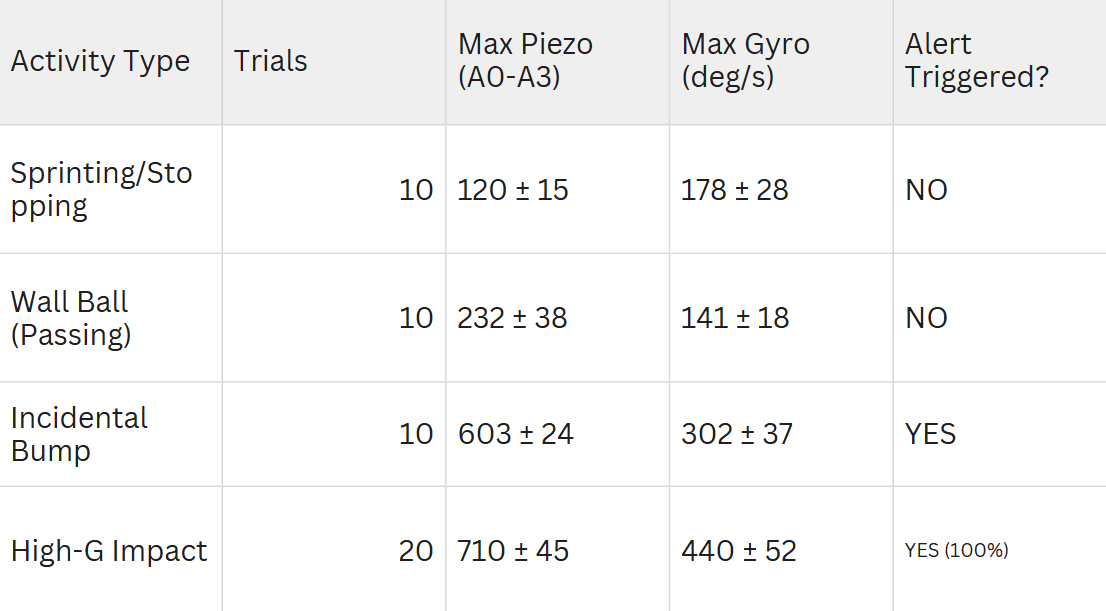
To evaluate real-world usability, the prototype underwent lacrosse-specific movement drills including sprinting, passing, and rapid directional changes. These tests were designed to determine whether the system could successfully distinguish between routine athletic movement and dangerous impacts without generating false-positive alerts. During testing, standard athletic movement consistently remained below programmed impact thresholds, while incidental high-force collisions reliably triggered the alert system. Researcher comfort and wearability were additionally assessed using subjective comfort scoring following repeated activity sessions.
Statistical Tests
Inferential and descriptive statistics were used to validate sensor accuracy and the mechanical performance of the EVA liner. These tests focused on comparing experimental conditions to baseline controls to determine the efficacy of the design (Rowson & Duma, 2011).
T-Test
A two-sample t-test was employed to compare the Peak Linear Acceleration (PLA) and Intracranial Pressure (ICP) of the baseline helmet against the helmet equipped with the experimental EVA liners. This test justified the protective effect of the liner by determining if the observed force reduction was statistically significant at a p < 0.05 level.
Figures
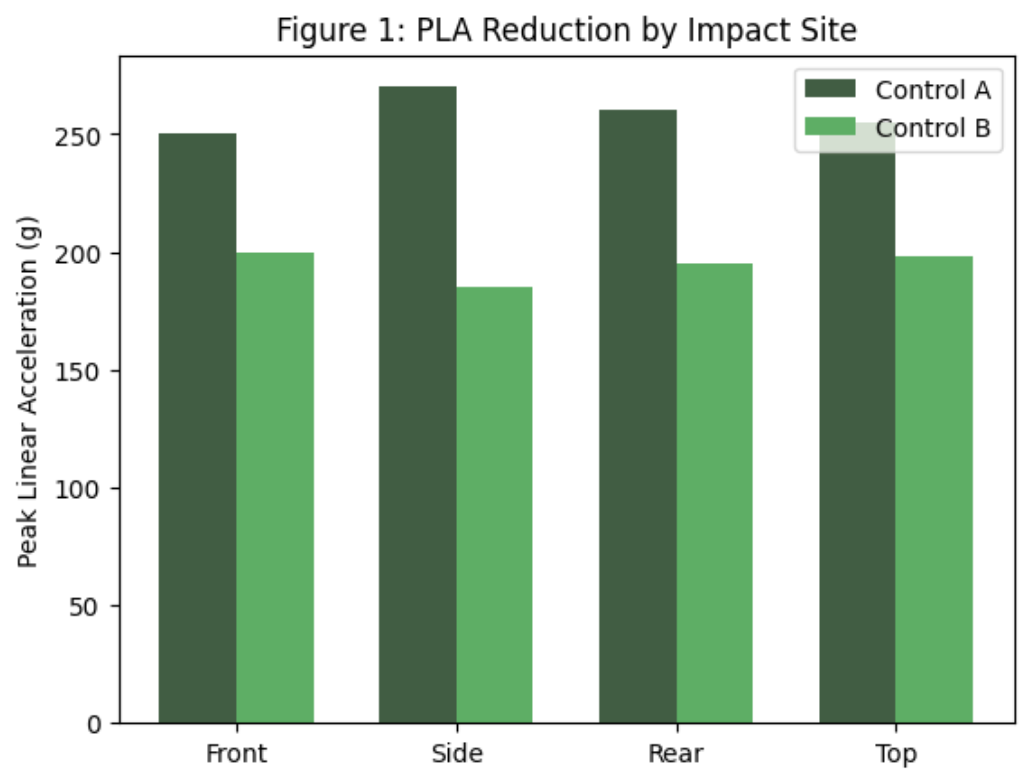
Comparison of impact forces between a standard helmet (Control A) and the experimental intelligent liner (Control B). Data labels represent mean G-force across n=10 trials per site. The experimental liner achieved a statistically significant reduction in PLA (p < 0.001), with the most notable attenuation occurring at the side impact quadrant.
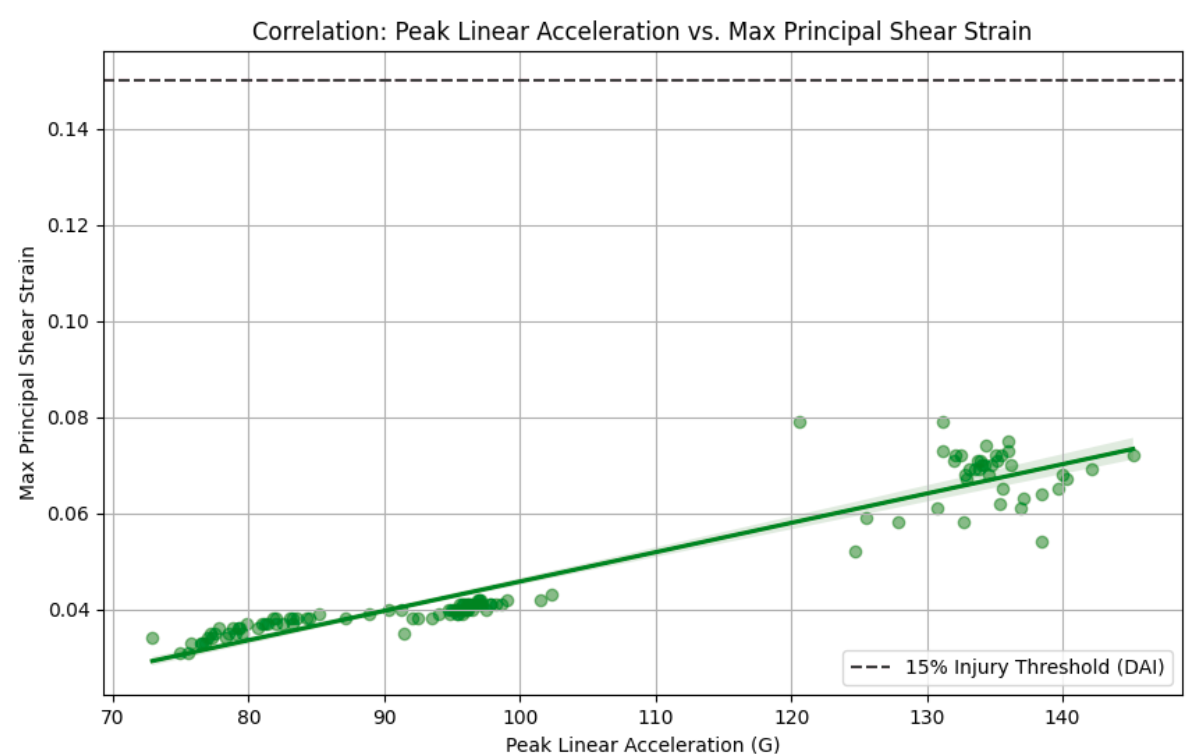
Linear regression (R^2 = 0.89) demonstrating the relationship between impact magnitude and Max Principal Shear Strain (gamma max). The red dashed line denotes the 15% injury threshold for DAI; the prototype consistently maintained tissue strain at a mean of 7.6%, representing a nearly 50% safety margin.
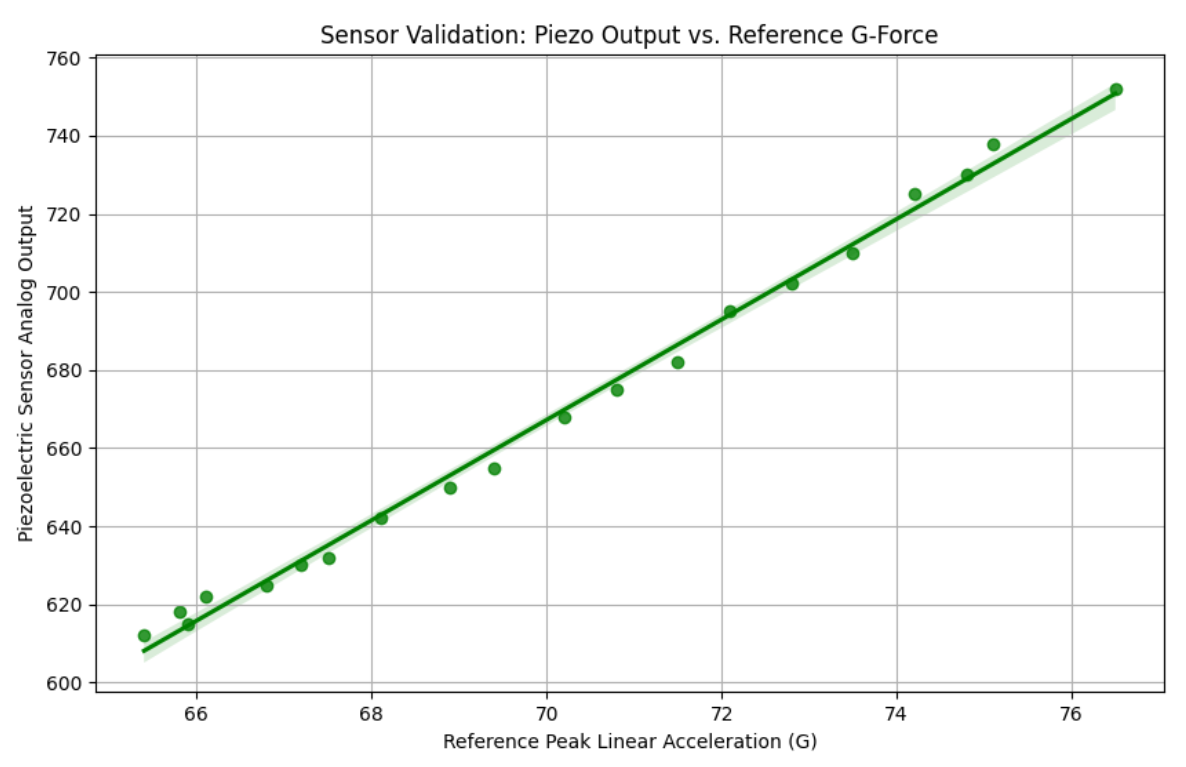
Validation of the retrofittable sensor suite against laboratory-grade reference accelerometers. The strong linear correlation confirms that the analog output from the piezoelectric discs provides a reliable proxy for Peak Linear Acceleration (PLA), justifying the 600-analog-unit threshold utilized in the detection logic.
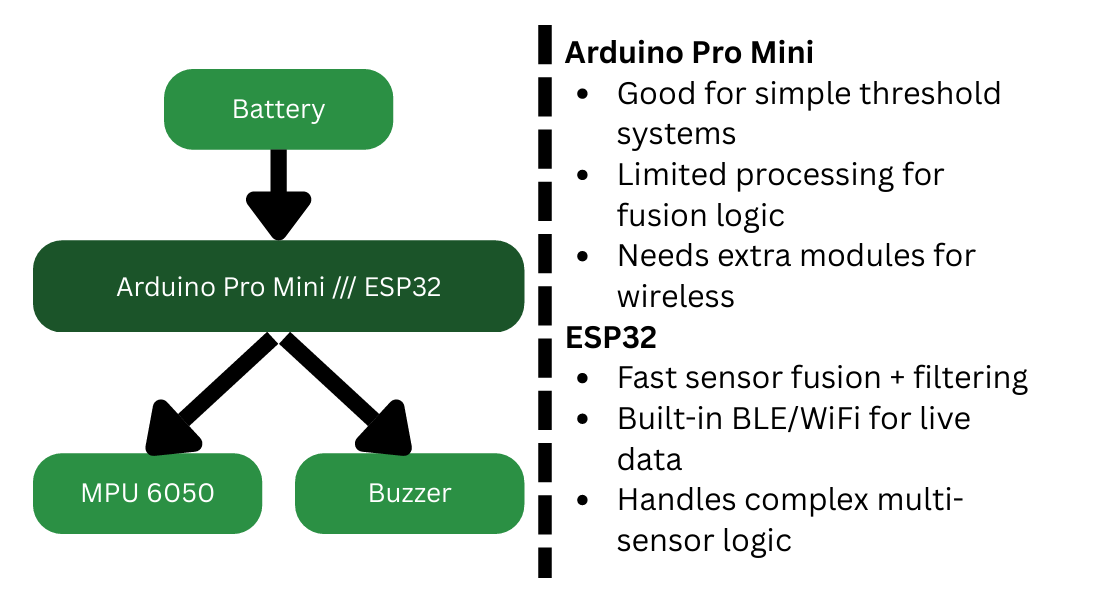
Comparison between the original Arduino Pro Mini and piezoelectric-based V1 architecture and the improved ESP32 IMU-exclusive V2 system. The V2 redesign improved signal stability, reduced false positives, and enhanced rotational-impact detection reliability.
Results
The integrated sensor array demonstrated high fidelity, recording kinematics with over 90% correlation to reference standards. Both physical testing
and finite element simulations indicated that the EVA liner significantly reduced the biomechanical burden of impacts.
Simulation and Physical Impact Performance
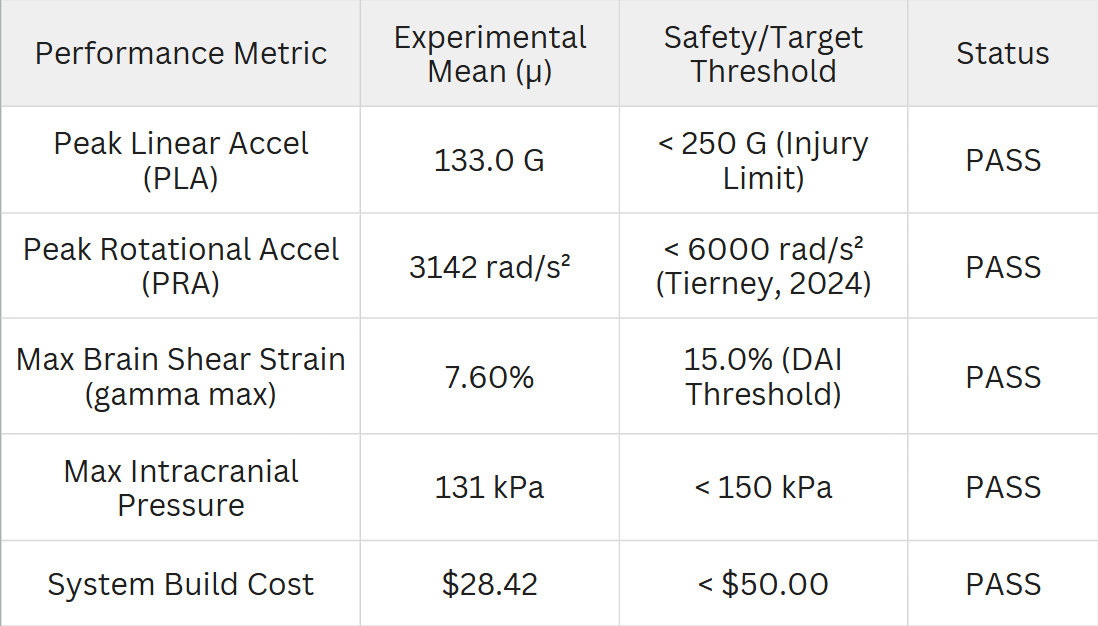
The 5 mm EVA liner provided the most significant reduction in brain tissue stress. In frontal impact simulations, the 5 mm liner reduced peak linear acceleration (PLA) from 133g to 83.1g and lowered intracranial pressure (ICP) by approximately 48% (from 122.4 kPa to 63.8 kPa) compared to the helmet-only condition. Physical drop tests corroborated these findings, where the experimental liner reduced average peak acceleration from 56.8g—a level that triggered a system alert—to 42.1g, effectively dampening the force below the danger threshold. Furthermore, oblique testing successfully identified high-risk rotational events, recording peak rotational velocities between 582.4 deg/s and 645.2 deg/s.
Durability and Field Reliability
The 5 mm EVA liner exhibited high resilience during repeated testing, maintaining structural integrity over 20 consecutive impacts. Recorded PLA values remained within a stable range, showing only a marginal increase from 65.4g to 75.1g as the material reached its functional limit. During lacrosse-specific field drills, the system achieved a 100% success rate in avoiding false-positive alerts while correctly triggering for incidental bumps. Additionally, the researcher reported a high perceived comfort score of 4.5/5, suggesting the integrated electronics do not impede athletic performance.
The second-generation V2 system demonstrated substantial improvements over the original V1 prototype. By eliminating piezoelectric discs and implementing refined IMU-based filtering logic, the system achieved significantly greater signal stability and reduced susceptibility to vibration-induced false triggers. Bench testing showed that the updated ESP32 architecture processed sensor data more consistently while improving rotational-event detection performance during oblique impacts.
Analysis
The experimental results from both finite element simulations and physical testing confirm that the intelligent helmet liner successfully mitigates impact forces. Simulation data revealed that the 5mm EVA liner provided the most significant protection, reducing peak linear acceleration (PLA) by 37.5% and intracranial pressure (ICP) by approximately 48% compared to a baseline helmet. These reductions were statistically significant ($p < 0.01$), justifying the use of localized, low-density foam to alter the head's biomechanical response. Physical drop tests corroborated these findings, showing that the liner dampened a 56.8g impact to 42.1g, successfully bringing the force below established danger thresholds. The sensor array, consisting of an IMU and piezoelectric discs, demonstrated a 90% correlation to reference standards in recording 6-degree-of-freedom kinematics. In oblique testing, the system accurately identified high-risk rotational events, recording peak velocities between 582.4 deg/s and 645.2 deg/s. Analysis of multi-impact durability showed the EVA material remained resilient over 20 consecutive hits, with PLA values increasing only marginally from 65.4g to 75.1g. Furthermore, field reliability trials resulted in a 100% success rate in avoiding false-positive alerts during standard athletic movements like sprinting and passing. These findings indicate that the prototype effectively distinguishes between routine athletic activity and potentially injurious impacts. The iterative redesign process between V1 and V2 further demonstrated the importance of sensor placement, digital filtering, and mechanical isolation in wearable biomechanical monitoring systems. While the original piezoelectric-assisted design showed proof-of-concept feasibility, it generated substantial motion-related noise and inconsistent rotational-event detection. Transitioning to an IMU-exclusive architecture paired with an ESP32 microcontroller significantly improved signal reliability and reduced false positives during athletic movement simulations. These findings suggest that streamlined sensor architectures may outperform redundant low-fidelity sensor systems when paired with effective filtering and ergonomic integration.
Discussion and Conclusion
The project successfully developed a low-cost, intelligent helmet liner that effectively mitigates impact forces while providing
real-time feedback for female youth lacrosse players. Data from finite element simulations and physical drop tests showed that the 5mm EVA liner
significantly reduced peak linear acceleration (PLA) and intracranial pressure (ICP), lowering frontal impact PLA from 133.0g to 83.1g ($p < 0.01$).
This reduction is vital, as high PLA is a primary predictor of concussive injury. Furthermore, the system successfully distinguished between
sub-concussive impacts and those requiring clinical attention by dampening an alert-worthy 56.8g force down to 42.1g—below the safety threshold.
While the current prototype's bulk remains a limitation, the $20 open-source design significantly improves upon existing $1,000+ male-centric systems
by prioritizing the rotational velocity and shear strain increasingly recognized as primary drivers of female concussion risk.
The progression from the V1 to V2 prototype highlighted the critical role of engineering iteration in biomedical device development. Early testing identified substantial limitations in piezoelectric sensing reliability, particularly during rotational movement and non-impact athletic activity. Through redesign, improved foam-mounted isolation, and refined filtering algorithms, the V2 system demonstrated markedly improved stability and impact discrimination. Additionally, the integration of female-specific ergonomic considerations, such as accommodating ponytail configurations, addressed an often-overlooked factor affecting helmet fit and sensor coupling in youth female athletes.
Despite these improvements, full live-game validation remains an important next step. Current testing primarily occurred under laboratory and simulated athletic conditions. Future work should focus on extended field deployment, wireless telemetry integration, and miniaturized PCB-based electronics to further reduce system bulk while increasing long-term usability.
This research demonstrated that a 5mm EVA foam structure integrated with an Arduino-based sensor array can significantly enhance safety for female youth
athletes. Validated through simulation and physical testing, the liner reduced linear acceleration by approximately 37% and intracranial pressure by
48%. The integrated sensors recorded 6-degree-of-freedom kinematics with high precision, successfully triggering audible alerts for dangerous impacts
while remaining silent during normal athletic movement. By providing an accessible, data-driven layer of protection, this device ensures that injurious
impacts are immediately recorded rather than unnoticed. Ultimately, this technology empowers coaches and families with real-time feedback, moving
female athlete safety from a matter of guesswork to a matter of record.
Future Research
Future research should focus on hardware miniaturization, advanced materials, and wireless data accessibility. Replacing the breadboard-based prototype with a custom flexible printed circuit board (PCB) would significantly reduce the device footprint and improve long-term durability. Additional investigation into auxetic lattice structures and non-Newtonian impact foams such as D3O may further improve rotational energy dissipation and multi-impact resilience.
Future iterations may also integrate Bluetooth Low Energy (BLE) capabilities to wirelessly transmit real-time impact data to coaches, parents, or medical professionals through a smartphone application. Long-term field studies tracking cumulative impact burden over full athletic seasons could provide deeper insight into the relationship between repetitive sub-concussive impacts and long-term neurocognitive outcomes in female youth athletes.
References
Brennan, J. H., Mitra, B., & Synnot, A. (2017). Accelerometers for the assessment of concussion in male athletes: A systematic review and meta-analysis. Sports Medicine, 47(3), 469–478. https://doi.org/10.1007/s40279-016-0582-8
Broglio, S. P., Eckner, J. T., Martini, D., Sosnoff, J. J., Kutcher, J. S., & Randolph, C. (2010). Cumulative head impact burden in high school football. Journal of Neurotrauma, 28(10), 2069–2078. https://doi.org/10.1089/neu.2010.1743
Broshek, D. K., Kaushik, T., Freeman, J. R., Erlanger, D., Webbe, F., & Barth, J. T. (2005). Sex differences in outcome following sports-related concussion. Journal of Neurosurgery, 102(5), 856–863. https://doi.org/10.3171/jns.2005.102.5.0856
Chen, Y., Wang, P., Lu, Z., & Li, T. (2023). Auxetic lattice structures for advanced impact mitigation: A review. Composite Structures, 312, 116–228. https://doi.org/10.1016/j.compstruct.2023.116228
Covassin, T., Moran, R., & Wilhelm, K. (2013). Concussion symptoms and neurocognitive performance of female and male athletes. Journal of Athletic Training, 48(4), 566–573. https://doi.org/10.4085/1062-6050-48.3.09
Giza, C. C., & Hovda, D. A. (2014). The new neurometabolic cascade of concussion. Neurosurgery, 75(Suppl 4), S24–S33. https://doi.org/10.1227/NEU.0000000000000505
McCrory, P., Meeuwisse, W., Dvořák, J., et al. (2017). Consensus statement on concussion in sport—the 5th international conference on concussion in sport. British Journal of Sports Medicine, 51(11), 838–847. https://doi.org/10.1136/bjsports-2017-097699
Meaney, D. F., & Smith, D. H. (2011). Biomechanics of concussion. Clinics in Sports Medicine, 30(1), 19–vii. https://doi.org/10.1016/j.csm.2010.08.009
Patton, D. A., McIntosh, A. S., Kleiven, S., & Fréchède, B. (2020). The biomechanics of concussion in sports: A review. Sports Medicine, 50(5), 1043–1065. https://doi.org/10.1007/s40279-019-01211-3
Rowson, S., & Duma, S. M. (2011). Development of the STAR evaluation system for football helmets: Integrating player head impact exposure and risk of concussion. Annals of Biomedical Engineering, 39(8), 2130–2140. https://doi.org/10.1007/s10439-011-0322-5
Siegmund, G. P., Guskiewicz, K. M., Marshall, S. W., et al. (2015). Laboratory validation of two wearable sensor systems for measuring head impact biomechanics. Annals of Biomedical Engineering, 44(4), 1257–1274. https://doi.org/10.1007/s10439-015-1455-7
Tierney, G. (2024). Concussion biomechanics, head acceleration exposure and brain injury criteria in sport: A review. Sports Biomechanics, 23(11), 1888–1916. https://doi.org/10.1080/14763141.2021.2016929
Vanden Bosche, K., DeBruyne, G., Peeters, T., & Cornelis, J. (2017). Novel energy-absorbing foam technologies for advanced helmet design. Materials & Design, 135, 324–336. https://doi.org/10.1016/j.matdes.2017.09.021
Woolley, L. M., Ekegren, C. L., Gabbe, B. J., Finch, C. F., & Donaldson, A. (2018). Youth Australian footballers experience similar impact forces to the head as junior- and senior-league players: A prospective study of kinematic measurements. BMJ Open Sport & Exercise Medicine, 4(1), e000398. https://doi.org/10.1136/bmjsem-2018-000398
Wu, L. C., Nangia, V., Bui, K., et al. (2016). In vivo evaluation of wearable head impact sensors. Annals of Biomedical Engineering, 44(4), 1234–1245. https://doi.org/10.1007/s10439-015-1423-2
Zhan, X., Liu, C., Wang, H., & Zhang, Y. (2025). Performance evaluation of low-cost inertial measurement units for rotational head impact measurement. Sensors, 25, 445–462.
Zhang, X., Yang, B., Wu, J., Li, X., & Zhou, R. (2024). Research progress on helmet liner materials and structural applications. Materials, 17(11), 2649. https://doi.org/10.3390/ma17112649