STEM I

STEM with Scientific and Technical Writing, taught by Dr. Crowthers, combines scientific research, engineering, and advanced writing skills. During the first part of the year, we complete an independent research project, where we analyze existing studies, design experiments, collect data, and communicate our results. This work prepares us to present at the February school-wide science fair, with opportunities to advance to regional, state, and even international competitions. During this period, we also are assigned with a small assistive device project that introduces us to the skills such as prototyping, engineering, and quantitative testing needed for the AT project at the second half of the year.

QUAD CHART

Quad Chart

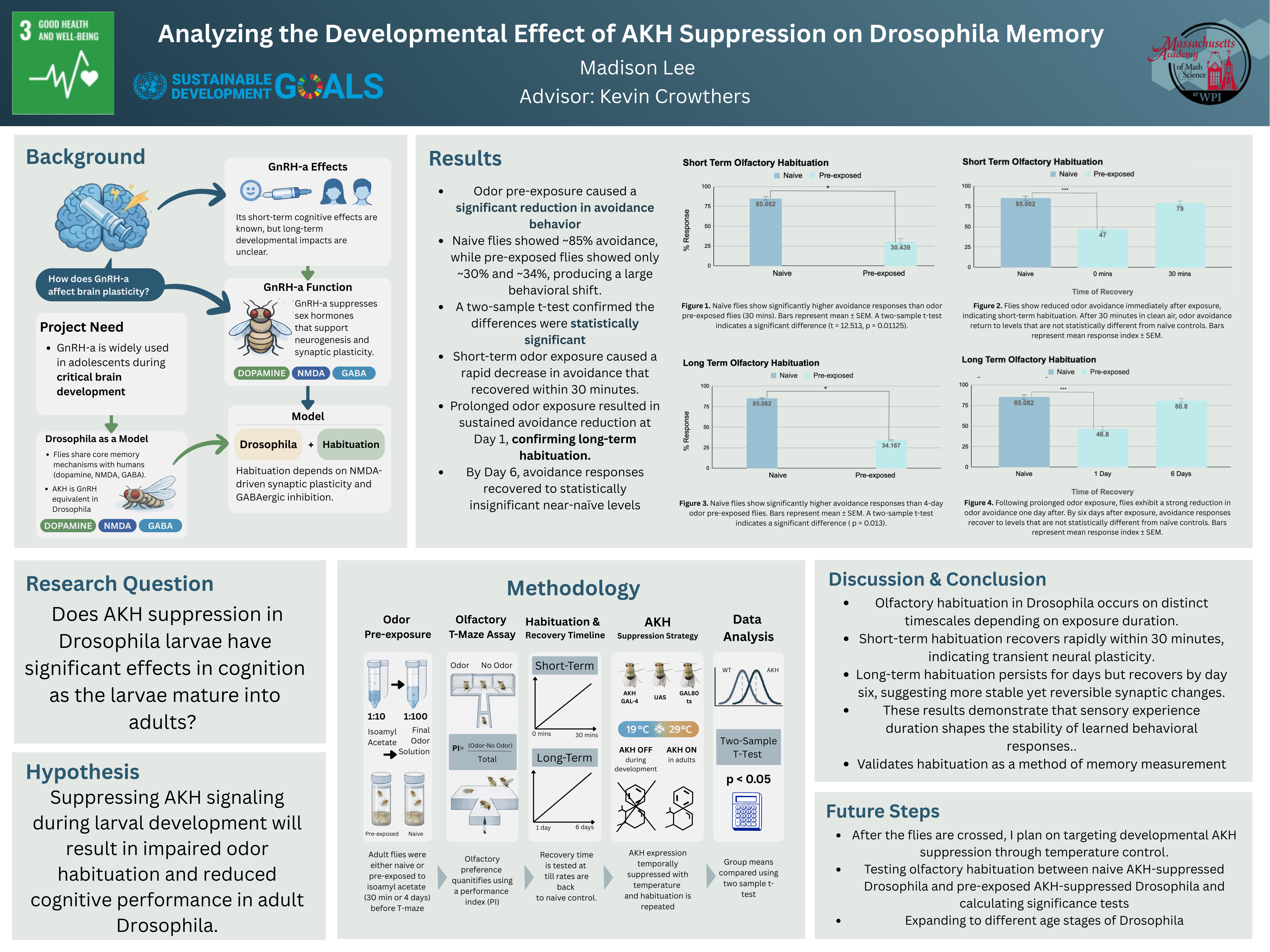
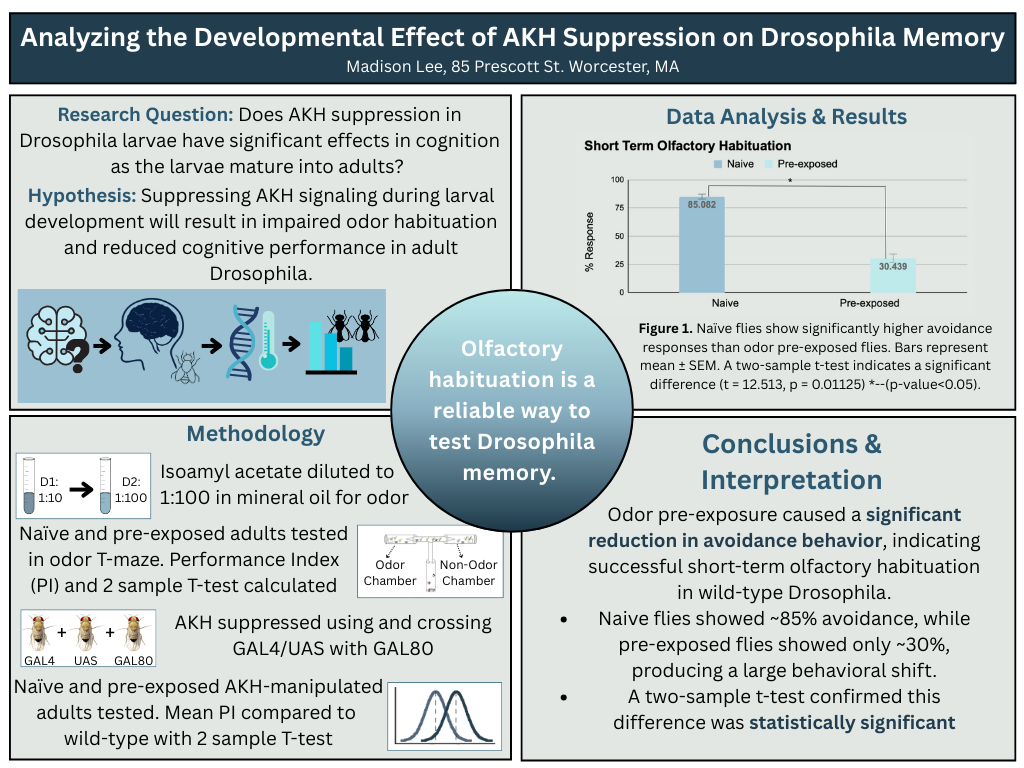
My independent research project is biology related with focus on the controversy surrounding hormone blockers and their potential effects on memory. Because the long-term developmental impacts are still unknown, despite evidence of short-term memory loss, I wanted to investigate this question using a controlled model. I chose to study this through Drosophila in order to avoid ethical concerns and confounding variables associated with human research. This quad chart was assigned by Dr. C to showcase all the details of our independent research project so far—including our research question, hypothesis, methodology, preliminary data, etc. Click on the image for a bigger look at my quad chart!

Analyzing the Developmental Effect of AKH Suppression on Drosophila Memory

OVERVIEW

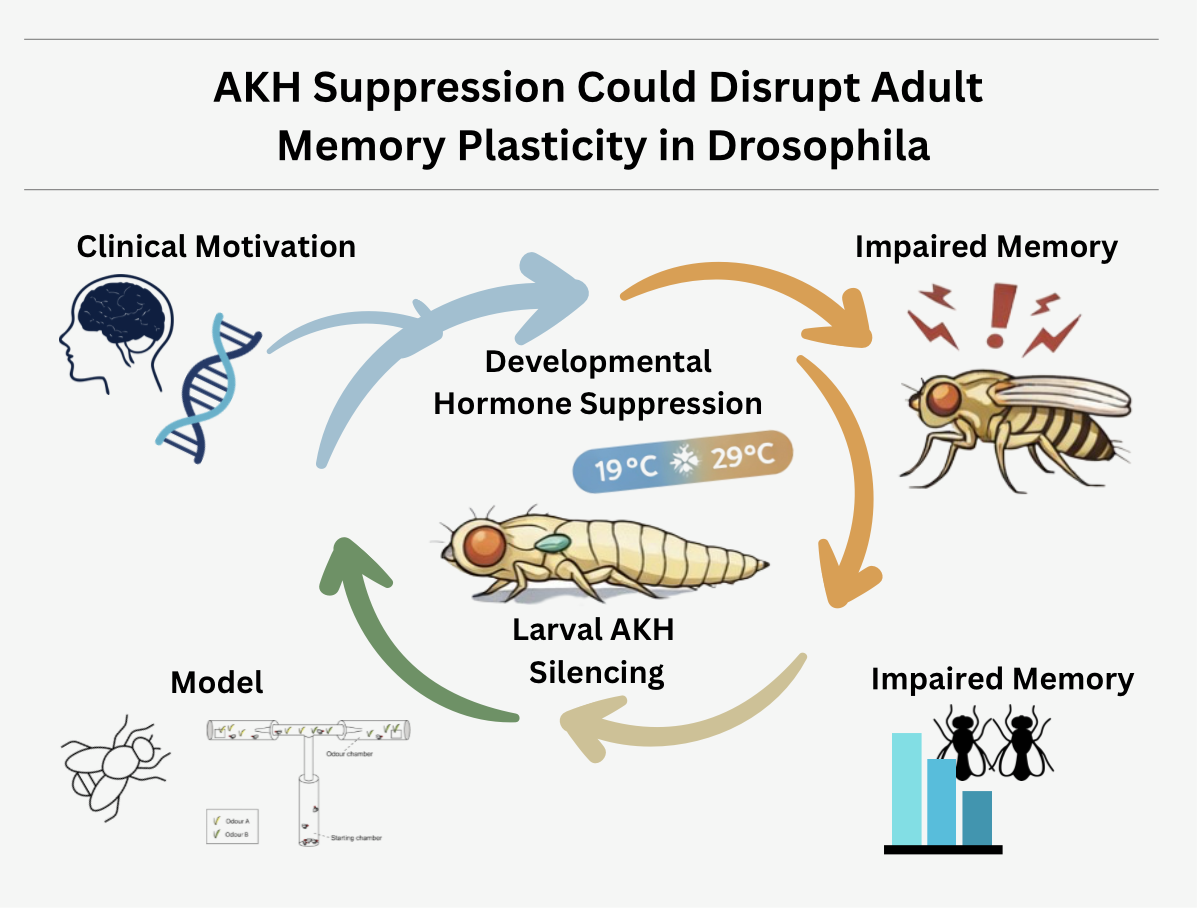
This project investigates how suppressing adipokinetic hormone (AKH), a functional analog of GnRH, during larval development affects memory formation in Drosophila melanogaster. By measuring short-term habituation, long-term habituation, and recovery time using a T-maze olfactory assay, the study evaluates whether developmental hormonal disruption produces lasting changes in adult neural plasticity.

ABSTRACT

Abstract image

Gonadotropin-releasing hormone agonists (GnRH-a) are standard treatments for various clinical conditions, yet their long-term impact on cognitive maturation remains a critical concern. While transient cognitive fluctuations are documented during treatment, it remains unclear whether developmental hormonal suppression induces persistent alterations in learning and memory circuitry.

This study investigates these neurodevelopmental effects using Drosophila melanogaster, focusing on Adipokinetic Hormone (AKH)—a functional GnRH analog that modulates dopaminergic pathways. To isolate developmental influence, AKH suppression is restricted to the larval window, modeling the timing of adolescent GnRH-a exposure. Adult cognitive performance is evaluated using an olfactory habituation assay, a robust measure of experience-dependent plasticity mediated by NMDA receptor signaling and GABAergic inhibition. Memory performance is precisely quantified by comparing behavioral response indices across naïve, pre-exposed, and recovery conditions to distinguish between sensory fatigue and genuine associative learning.

Preliminary experiments in wild-type flies establish a baseline for short-term and long-term olfactory habituation, demonstrating robust odor-specific suppression and time-dependent recovery of avoidance behavior. These results validate the assay’s sensitivity to shifts in memory retention. We hypothesize that flies subjected to developmental AKH suppression will exhibit impaired long-term habituation and altered recovery dynamics in adulthood, reflecting permanent disruptions in inhibitory neural circuitry. By establishing normative profiles prior to genetic manipulation, this research provides a foundational framework for evaluating the safety of GnRH-based interventions and furthers our understanding of how early-life hormonal shifts permanently reshape neural plasticity.

RESEARCH QUESTION

Does adipokinetic hormone suppression in Drosophila larvae have significant effects in cognition as the larvae mature into adults?

HYPOTHESIS

Suppressing AKH signaling during larval development will result in impaired odor habituation and reduced cognitive performance in adult Drosophila.

RESEARCH PROPOSAL

BACKGROUND

Abstract image

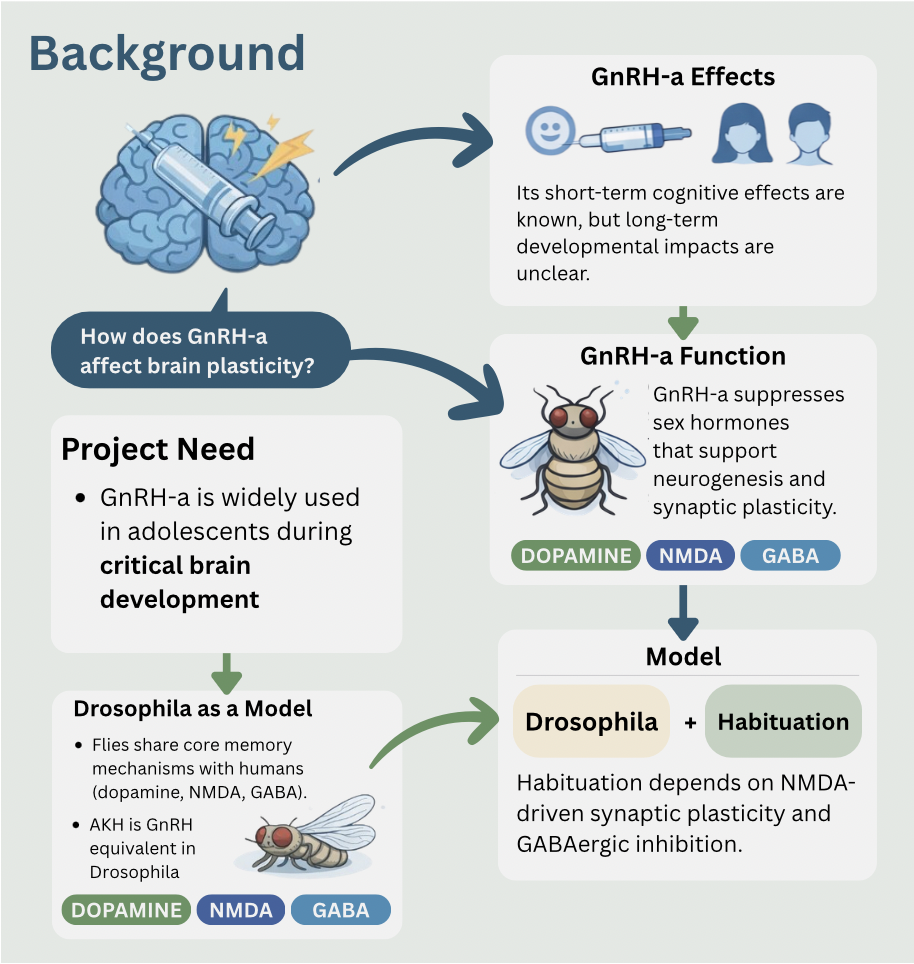
The need for this project stems from the controversy regarding the widespread medical use of GnRH agonists. Concerns are specifically for its use in children and teens because as adolescents, they are still going through essential brain development. Although this drug is extremely effective for endometriosis, gender affirming care, and precocious puberty (the delay of puberty in children who are developing too early) (Casati et al., 2023), this treatment may have side effects on cognition. One side effect of GnRH-a is short-term memory loss, which has been shown through a study where perceived memory decreased throughout subjects during treatment (Newton et al., 1996). Despite widespread clinical use of GnRH agonists in pediatric populations and researched short-term cognitive effects, there remains limited mechanistic understanding of how hormonal suppression during critical developmental periods could have long term effects.

Gonadotropin-releasing hormone (GnRH) is mainly associated with regulating the release of sex hormones through its action on the hypothalamic pituitary axis. GnRH is produced in the hypothalamus, where it to GnRH receptors and stimulates the release of sex hormones such as estrogen and testosterone (Casati et al., 2023). However, GnRH receptors are also found in the hippocampus and the preoptic cortex parts of the brain which are essential for cognition, suggesting that it has functions and effects that go beyond reproduction.

In certain illness, cancer and illnesses that rely on sex hormones, GnRH is a widespread treatment. The treatment works by first overstimulating the pituitary gland and gradually desensitizing the receptors and stopping the release of gonadotropin hormones and sex hormones. This ultimately plays a crucial role in our reproductive systems (Casati et al., 2023). While this treatment is extremely affective, sex hormones that are regulated by GnRH promote neurogenesis, regulates synaptic plasticity, and memory formation (Kim & Casadesus, 2011; Celec et al., 2015). As a result, GnRH is a factor in cognition and suppressing GnRH indirectly alters the hormonal environment that influences cognition.

If the suppression of GnRH occurs during a developmental window when new neurons are forming and synapses are being strengthened; it could have the ability to change how the learning circuits originally form. Thus, the concern about GNRH-a is both about how it affects memory during treatment as well as whether temporary developmental disruption can lead to long lasting changes even after hormone levels return to normal.

To investigate whether developmental suppression of hormone signaling can result in lasting changes to memory circuit, a genetically reliable and comparable model organism is required. Drosophila melanogaster, a fruity fly, is widely used to study how the brain learns because of its memory mechanisms and processes that are similar than to those in humans. Although the brain of Drosophila is smaller and less complex than the human brain, it uses the same types of neurons and molecules including dopamine for reinforcement learning, NMDA receptors for synaptic plasticity, and GABAergic neurotransmitter for inhibition, all of which are imperative to building and modifying memory. Although drosophila does not possess the GnRH gene, it still provides as a comparable model for this project because it has a structural equivalent, the adipokine tic hormone (AKH) (Beh-Manahem, 2021). While AKH is not genetically homologous to GnRH, it serves as a functional endocrine analog that modulates dopaminergic learning circuits in a comparable manner.

Flies show a similar process to how GnRH affects cognition through AKH. AKH is released into the blood by endocrine cells in the corpora cardiaca (neuroendocrine glands that function similarly to the vertebrate pituitary gland) and travels to neurons in the suboesophageal zone that expresses AKH receptors. As the AKH binds to these neurons, it alters how they activate dopaminergic neurons and how much dopamine is released during learning (Meschi et al., 2024). Recent studies showed that AKH can change how dopamine can neurons respond during aversive learning which allowed how hunger altered the memories of drosophila. Because dopamine driven learning in flies depends on the synaptic plasticity in the mushroom body, drosophila’s primary learning center, AKH’s influence on dopamine affects the synaptic plasticity that is required for memory.

NMDA (N-methyl-G-aspartic acid) receptors that are activated by the NMDA molecule and is an essential factor of synaptic plasticity. Synaptic plasticity is the process where the connections of the neurons change as they get more experienced. Because synaptic plasticity is how the neurons adapt to new experiences or respond with repetition, it can be drawn into memory formation and the process of habituation, a non-harmful, repeated stimuli which results in decreased behavioral responses (Paoletti et al., 2013).

Habituation uses non stressful stimulus and directly reflects synaptic plasticity. Essentially, habituation reflects the maturation and flexibility of the neural circuits. As such, habituation provides as a sensitive behavior for detecting subtle disruptions in synaptic plasticity. In Drosophila, habituation depends on synaptic plasticity which is influenced by NMDA receptors and GABAergic interneurons that lessen neural responses over time (Larkin et al., 2010; Das et al., 2024). Human mechanisms also use the NMDA plasticity and GABAergic inhibition. Habituation is also a better choice than aversive learning tests for this project due to the fact that aversive conditioning requires electric shock, which activates reactions like stress, pain, etc. Because there are so many factors that go into aversive learning it is more difficult to observe if any differences are due to memory circuits or other systems. Therefore, examining habituation learning in Drosophila following developmental AKH suppression provides an approach to isolating long-term effects on memory related plasticity.
PROCEDURE

Abstract image

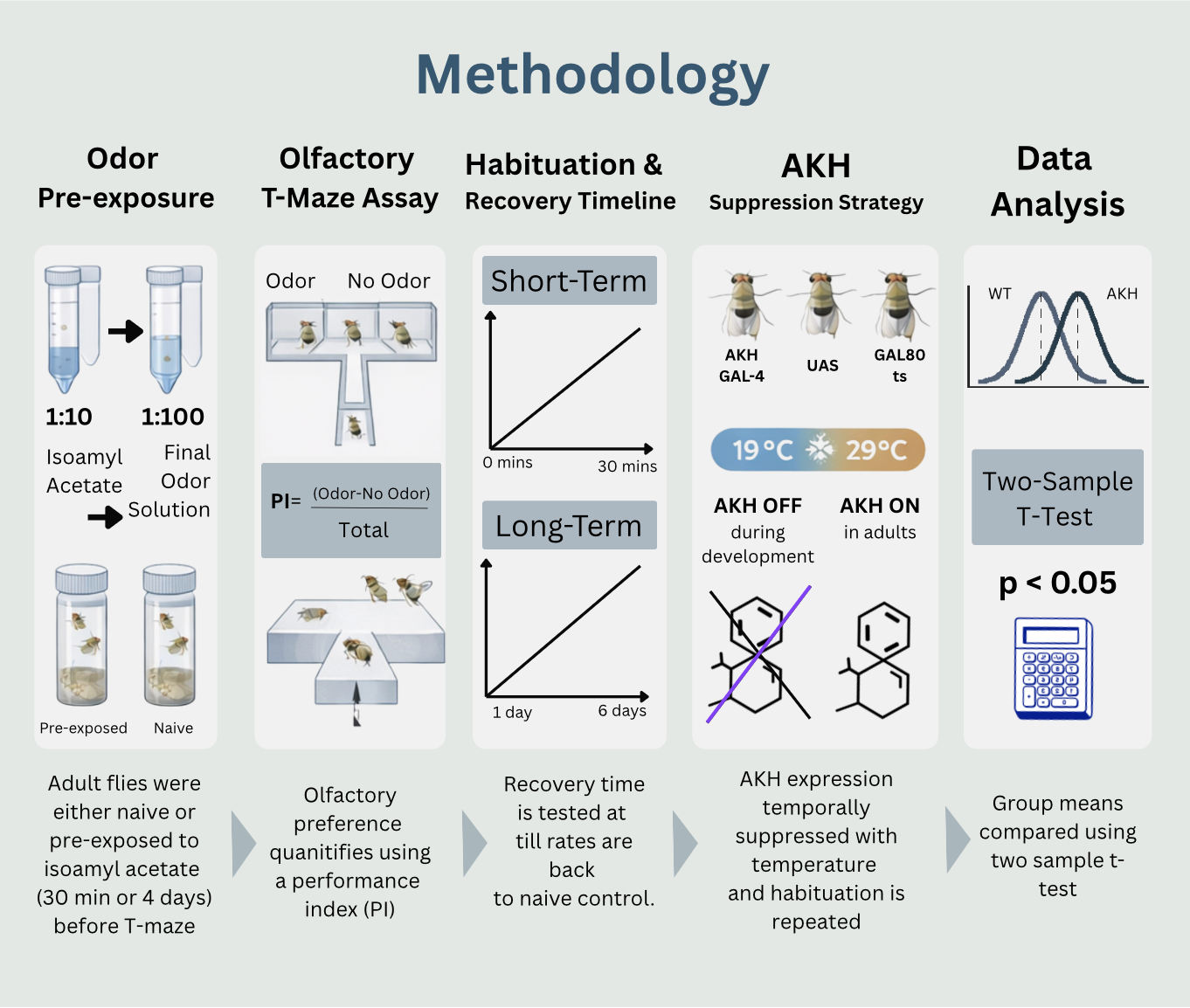
To establish a baseline reference for olfactory habituation and memory performance, I will first measure short-term habituation, long-term habituation, and recovery time in healthy, wild-type adult Drosophila melanogaster. Isoamyl acetate will be used as the habituation odorant. Because isoamyl acetate is only slightly soluble in water, all dilutions will be prepared in mineral oil. To prepare the 1:100 working concentration, I will first create a 1:10 stock solution by mixing 1 mL of isoamyl acetate with 9 mL of mineral oil. From this stock solution, 100 µL will then be diluted with 900 µL of mineral oil to produce the final 1:100 isoamyl acetate solution. This standardized concentration will be used across all trials to maintain experimental consistency.

Behavioral responses will be measured using a standard T-maze assay to quantify odor preference in naïve flies and flies after odor pre-exposure. For naïve testing, groups of more than 30 adult flies will be introduced into the T-maze, with one arm containing 100 µL of isoamyl acetate applied to a cotton substrate and the other arm containing mineral oil as a control. After a fixed decision period, flies in each arm will be counted. A Response Index (RI) will be calculated as the number of flies in the odor arm minus the number in the control arm, divided by the total number of flies. Each condition will be repeated 2–3 times to generate an average response index.

To assess short-term habituation, flies will first undergo continuous pre-exposure to isoamyl acetate for a defined period before being transferred to the T-maze. Immediately following exposure, their odor preference will be measured using the same protocol described for naïve flies. A reduced response index relative to naïve controls will indicate successful habituation. To measure recovery time, additional groups of pre-exposed flies will be allowed to rest for increasing intervals (for example, 5, 15, 30, and 60 minutes) before being retested in the T-maze. Response indexes will be recorded at each time point to determine how quickly odor responsiveness returns to baseline levels. Recovery curves will be generated by plotting response index against recovery interval, allowing quantification of memory persistence and decay.

To evaluate long-term habituation, flies will undergo repeated or prolonged odor exposure across a longer time window designed to induce persistent behavioral suppression. Following long-term exposure, flies will be tested in the T-maze at delayed intervals (e.g., 24 hours post-exposure) to determine whether reduced odor responsiveness persists beyond short-term sensory adaptation. Recovery measurements will also be performed at extended intervals to assess the stability of long-term memory traces. Comparing recovery rates between short-term and long-term paradigms will allow differentiation between transient sensory adaptation and circuit-level plasticity.

After establishing baseline habituation and recovery profiles in wild-type flies, I will manipulate adipokinetic hormone (AKH) signaling using the GAL4/UAS system. AKH-GAL4 flies will be crossed with UAS lines to suppress AKH expression, and temperature-sensitive GAL80 will be incorporated to allow developmental control of suppression. At lower temperatures, GAL80 will inhibit GAL4, maintaining normal AKH levels. During the larval developmental stage, flies will be shifted to the restrictive temperature to suppress AKH signaling specifically during development. Once adults, flies will be maintained under permissive conditions to restore normal signaling. These developmentally manipulated flies will then undergo the same T-maze habituation and recovery time assays. Naïve and pre-exposed response indexes will be compared between wild-type and AKH-suppressed groups. Statistical analysis, including two-sample t-tests, will be performed to determine whether differences in habituation strength, recovery rate, or long-term persistence are significant. Significant differences would suggest that developmental AKH signaling plays a role in shaping memory circuit plasticity and long-term habituation in Drosophila.

RESULTS

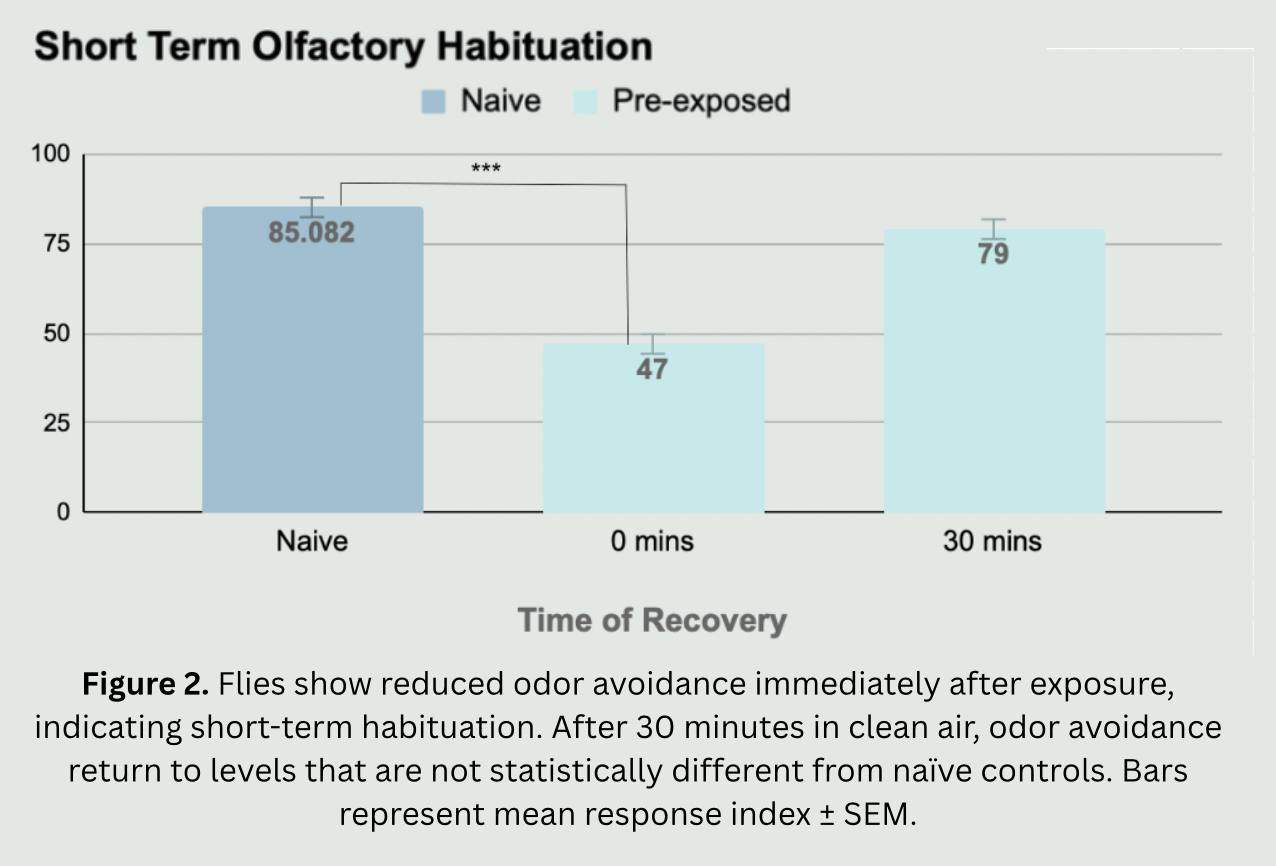
Figure 1
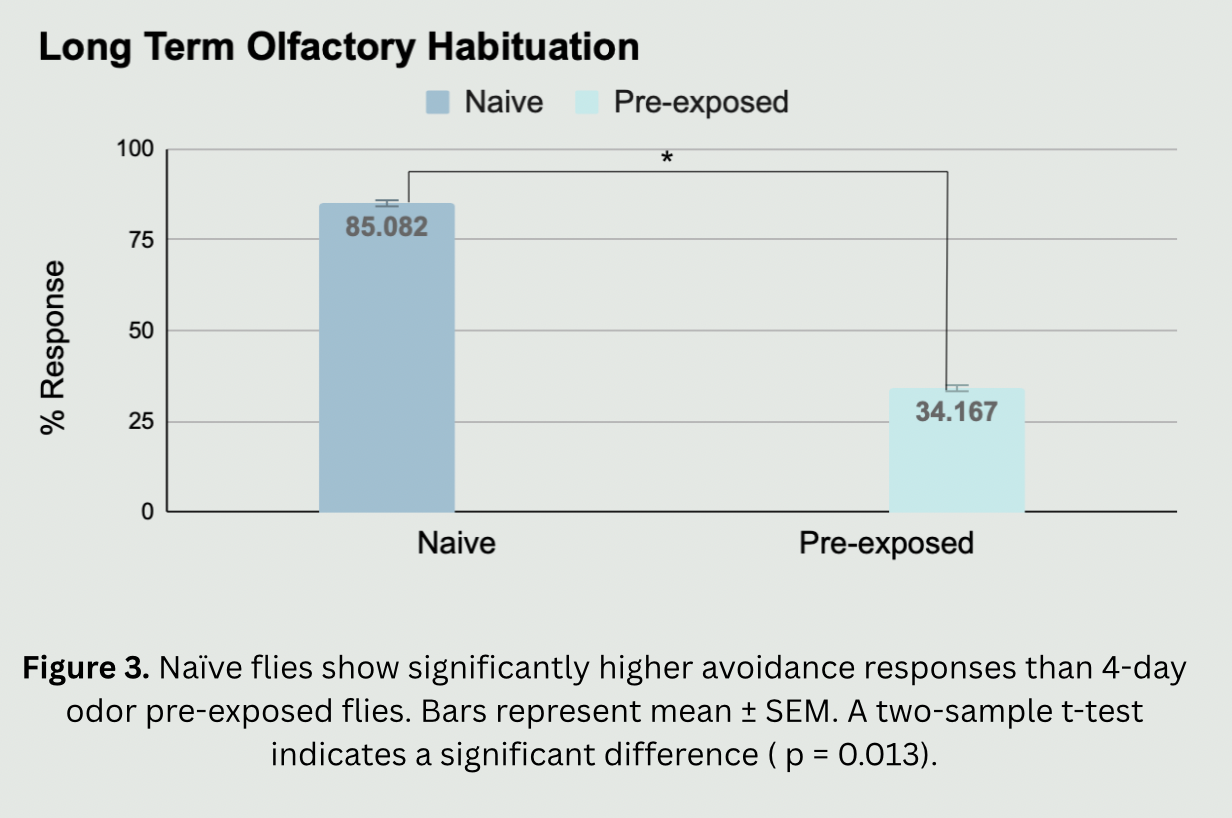
Figure 2
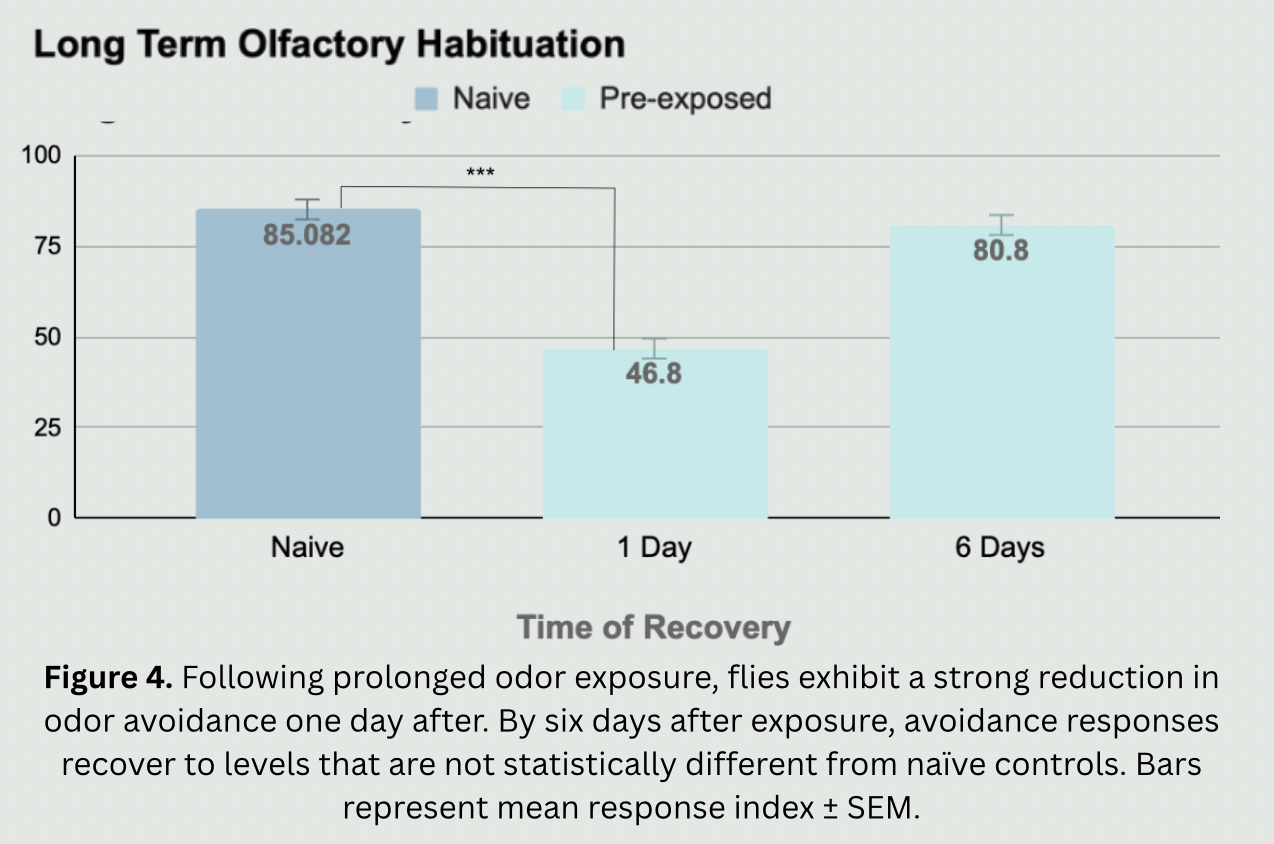
Figure 3
Figure 4

ANALYSIS

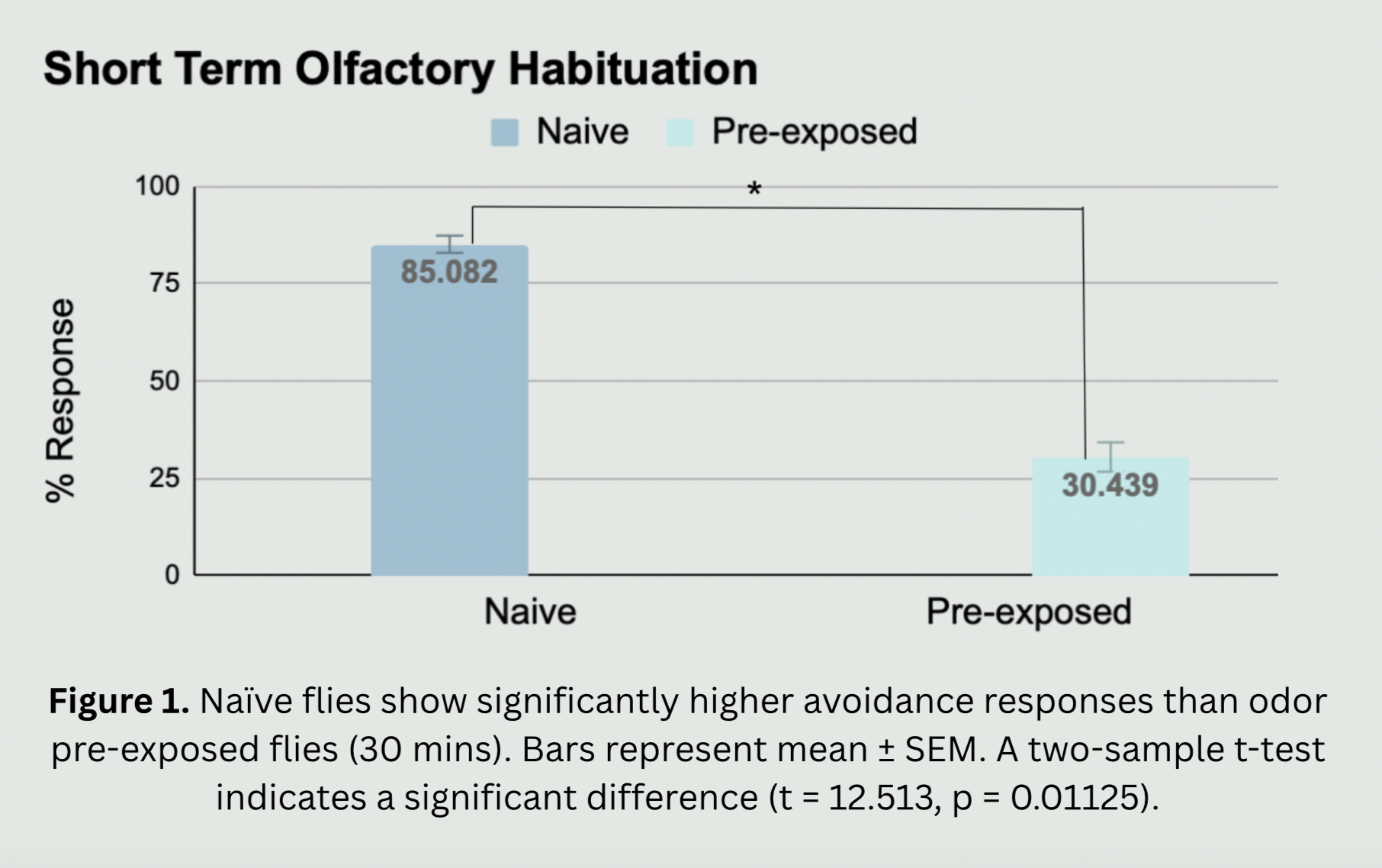
The results demonstrate that the olfactory habituation assay reliably detects experience-dependent changes in neural plasticity. Naïve wild-type flies consistently showed strong odor avoidance (~85%), confirming intact baseline sensory responsiveness. Following short-term odor pre-exposure, avoidance behavior significantly decreased, and statistical testing (two-sample t-test, p < 0.001) confirmed that this reduction was not due to random variation. Recovery within 30 minutes indicates that short-term habituation reflects transient synaptic modifications rather than permanent circuit alterations. In contrast, prolonged 4-day exposure produced a more persistent reduction in avoidance that remained significantly suppressed one day after exposure and required up to six days to return to baseline. This extended recovery period suggests involvement of longer-lasting synaptic or molecular plasticity mechanisms. Collectively, these findings validate the assay’s sensitivity to both short-term and long-term memory processes and provide a quantitative foundation for detecting potential disruptions caused by developmental AKH suppression.

DISCUSSION

The primary objective of this study was to establish baseline measures of short-term and long-term olfactory habituation in wild-type Drosophila melanogaster and to use this behavioral paradigm to evaluate whether developmental suppression of adipokinetic hormone (AKH) produces persistent alterations in adult memory-related plasticity. The results successfully validated the habituation assay and supported the first hypothesis (Hyp. 1a). Pre-exposed wild-type flies demonstrated significantly reduced odor avoidance compared to naïve controls following both short-term (30-minute) and prolonged (4-day) exposure periods. Statistical analysis using two-sample Student’s t-tests confirmed that these differences were unlikely due to chance (p < 0.001).

Importantly, recovery experiments revealed distinct temporal patterns between short-term and long-term habituation. After 30 minutes of odor-free recovery, short-term habituation returned to baseline levels, consistent with transient synaptic modifications. In contrast, prolonged 4-day exposure resulted in suppression of odor avoidance that persisted one day after exposure and only returned to naïve levels after six days. This extended recovery window is consistent with mechanisms underlying long-term plasticity, which involve structural or molecular modifications rather than transient synaptic fatigue (Paoletti et al., 2013; Pavlowsky et al., 2018). These findings confirm that the experimental design successfully distinguishes between short-term and long-term habituation processes in Drosophila.

These results align with previous literature demonstrating that olfactory habituation in Drosophila depends on NMDA receptor activity and GABAergic interneuron modulation within the mushroom body (Larkin et al., 2010; Das et al., 2011). Because NMDA-mediated plasticity is conserved across species, including humans (Paoletti et al., 2013), habituation serves as a translationally relevant behavioral assay. By establishing a validated baseline model, this study provides the necessary framework for testing whether developmental hormonal disruption alters synaptic maturation.

The broader significance of this work lies in its mechanistic modeling of GnRH agonist exposure. While Drosophila do not possess GnRH, AKH serves as a functional endocrine analog that modulates dopaminergic learning circuits (Ben-Menahem, 2021; Meschi et al., 2024). Dopamine signaling is critical for reinforcement learning and memory consolidation, and hormonal modulation of these pathways during development could influence long-term circuit formation. In vertebrates, GnRH-regulated sex hormones are known to promote neurogenesis and synaptic plasticity (Kim & Casadesus, 2010; Celec et al., 2015). Thus, temporary suppression during sensitive developmental windows could theoretically produce enduring structural changes.

Although Objective 1a was accomplished, Objective 1b—direct behavioral comparison between developmentally suppressed AKH flies and controls—represents the next critical phase. The established baseline now allows for meaningful detection of deviations in habituation strength or recovery time. If AKH-suppressed flies exhibit persistently elevated odor avoidance after pre-exposure, this would suggest impaired synaptic plasticity rather than transient hormonal effects.

REFERENCES

POSTER

Science Fair Poster