|

Computer science is taught by Ms.Tarrico. In this class, we began by learning web development with HTML and CSS. After that, we started to learn Java through labs and exercises, which were often challenging and covered topics such as Arrays, Arraylists, Iterations, and Decisions. Most of the curriculum aligns with the AP Computer Science Applications course. Additionally, we participate in the American Computer Science League (ASCL) competition throughout the year.

Line Art

This line art project demonstrates the power of computational geometry and pattern generation. By utilizing loops to iterate through coordinates, arrays to store geometric data, and mathematical formulas to calculate line positions and angles, this program creates intricate patterns of intersecting lines. The algorithm systematically generates lines based on geometric principles, showcasing how simple programming constructs can produce visually complex and aesthetically pleasing designs through the careful manipulation of angles, positions, and spacing.
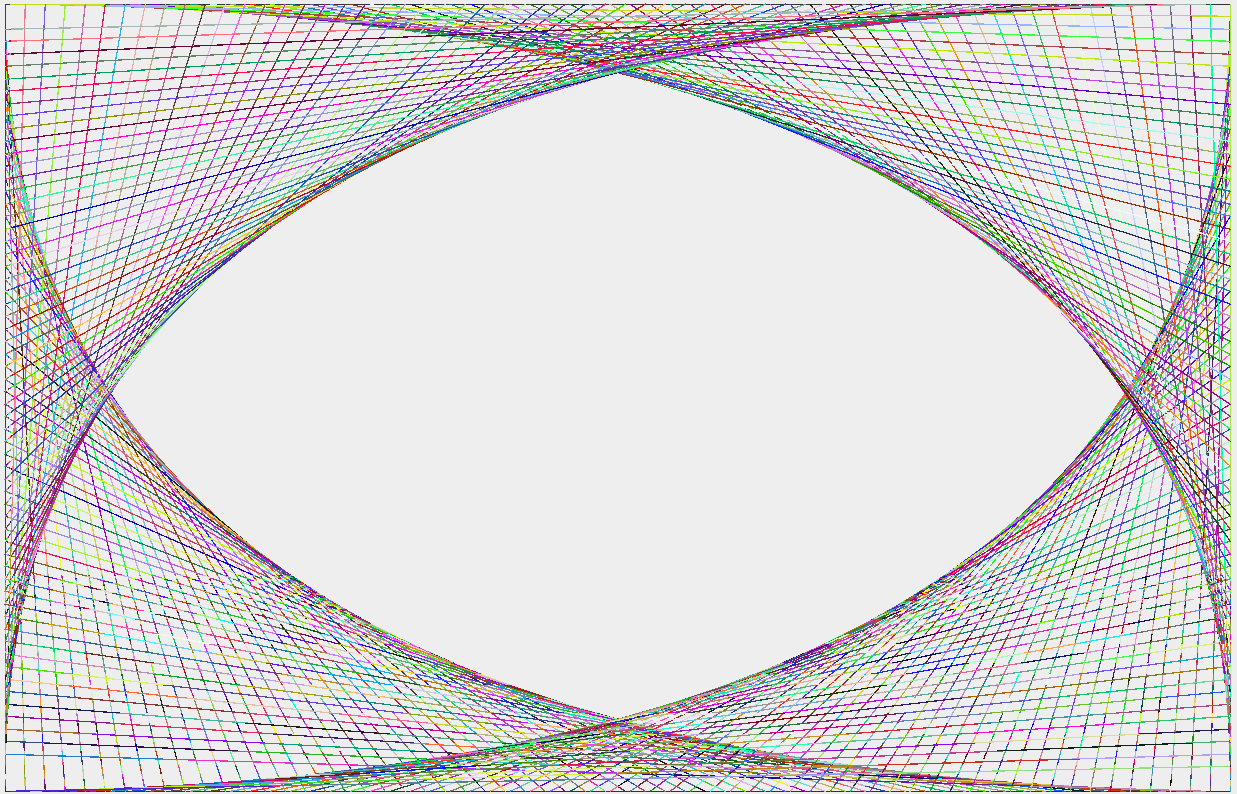

Line Art Pattern

Your browser does not support PDFs. Download the PDF instead.

Stars

This program is a part of the types of problem sets we commonly complete to learn CS topics. This program is meant to use static arrays and loops to randomly generate stars with randomized position and number of sides. By using many Java classes such as Graphics, Math, Color, and others, we were able to learn how to create and use objects of different classes as well. Overall, by doing this exercise, we learned how to apply geometry to coding logic with static arrays.

Stars

Your browser does not support PDFs. Download the PDF instead.

Apps for Good!

Apps for Good is a long-term group project with specialized roles, focused on developing an app solution with a specific problem, target audience, and solution.

STEM events, internships, clubs, and enrichment programs often go unnoticed by students and parents. Information is scattered across school newsletters, organization websites, social media, and magazines, making it difficult to reliably discover high-quality opportunities in a specific town or region.

The target audience is students aged 5-24, who will benefit most from opportunities such as clubs, events, and internships, as well as parents of young students who want to enrich their children's lives with STEM. The target audience would also consist of organizations that want more participation in their events.

Our solution is an application that aggregates verified STEM opportunities for K-12 students in Massachusetts. Students can search by location, age group, subject interest, and event type (volunteering, attending, internships, clubs). Additionally, organizations can manually submit opportunities and events, which are verified before being published.

The MVP is an application that works across many platforms built using Flutter for the frontend and Firebase (Firestore and Authentication) for backend services and infrastructure. It provides a user-friendly interface that supports two primary user flows: organizations and students. Verified STEM organizations can create accounts, pass an initial verification process, and then use an organization dashboard to add, edit, and delete events that are stored in a centralized Firestore database. Students can browse these events through a clean interface with filters, where they can sort and search based on tags such as category, event type, and age range. User preferences are stored locally to avoid users having to make accounts.

Your browser does not support PDFs. Download the PDF instead.