
STEM I, run by Dr. C, is the most novel out of all the courses at MAMS. It is a course that is solely dedicated to a research project of our choice. We have to research, perform experiments, do data analysis, write formal papers such as the grant proposal and thesis, and present at events such as the practice event December fair and the final February fair. The project can be challenging at times, however working through the difficulties helps with resilience and makes the final result all the more rewarding.
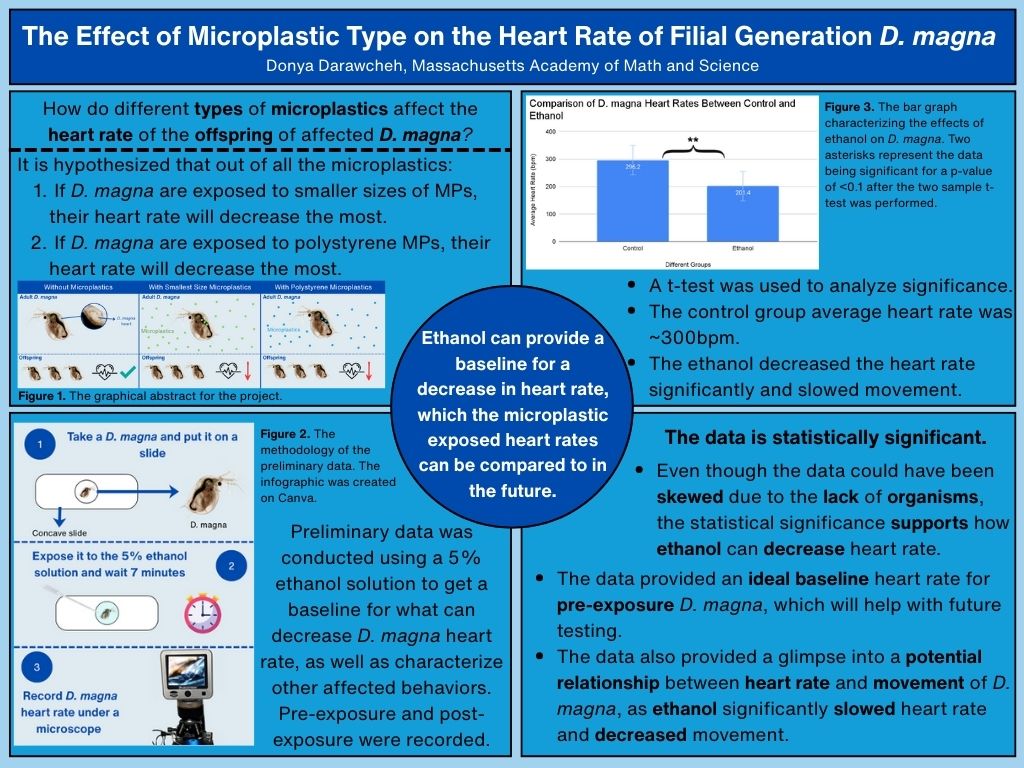
This quad chart is a summary of all the work I have done so far for my project! It is divided up into four quadrants, with the middle being the main takeaway of the board. The first quadrant on the left is for the research question and hypotheses, the second quadrant below it is for the methodology of the preliminary data, the third quadrant next to the first quadrant is for results, and the fourth quadrant underneath the third quadrant is for limitations and conclusions.
With the increasing prevalence of microplastic research and how they affect human organ systems, it is important to try and connect these effects in order to get a more holistic view on the toxicity of microplastics. This project aims to investigate how different sizes and polymers of microplastics affect the heart of filial generation organisms to try and connect effects in the reproductive system with effects in the cardiovascular system. So far, it has been found that microplastics primarily end up in the gut for parent generation exposure, as well as polyethylene decreasing the heart rate more than polypropylene.
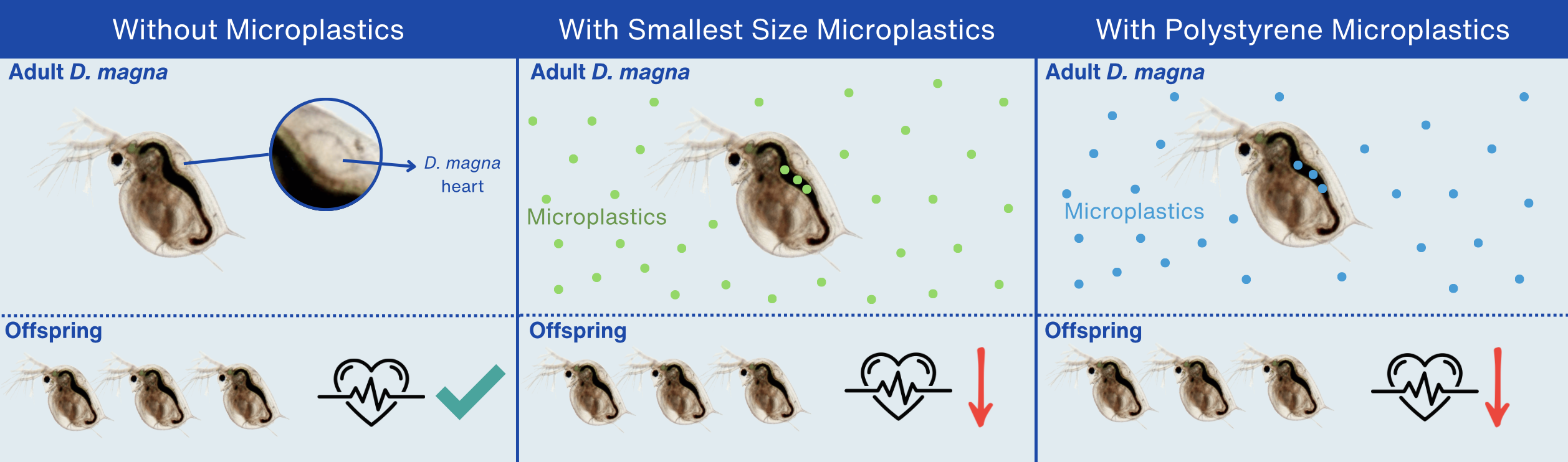
Microplastics are a persistent issue in the environment as they have had hundreds of years to form as much as they do right now. Due to this long period of development, marine organisms have consumed microplastics, which along with the inhalation of microplastics and consumption of bottled water has led to microplastics being found in humans. Microplastics have been shown to have negative effects on the cardiovascular and reproductive systems separately, however, not much has been done to look at how transferred microplastics can affect organ systems in offspring or how different microplastics types can affect these results, which is what this project aims to analyze. It was hypothesized that the smallest size of microplastic and polystyrene microplastics would decrease the heart rate the most. So far, polyethylene and polypropylene suspensions of 1µL/mL and 0.2µL/mL were administered to D. magna for an acute period of 24 hours and a chronic period of 48 hours with their heart and mortality rates being recorded each 24 hours. Both polymers of concentration 1µL/mL and polypropylene of 0.2µL/mL were found to significantly decrease the heart rate in acute exposure, as well as all suspensions having significantly decreased heart rates compared to day 0 in chronic exposure with polyethylene 1µL/mL having a 20% survival rate. These results provide evidence that microplastics can affect the heart rate and life expectancy of an organism, so it would be worthwhile to continue to investigate how these effects translate to polystyrene and different microplastic sizes in filial generation organisms.
How do different types of microplastics affect the heart rate of the offspring of affected D. magna?
1. If D. magna are exposed to smaller sizes of MPs, their heart rate will decrease the most.
2. If D. magna are exposed to polystyrene MPs, their heart rate will decrease the most.
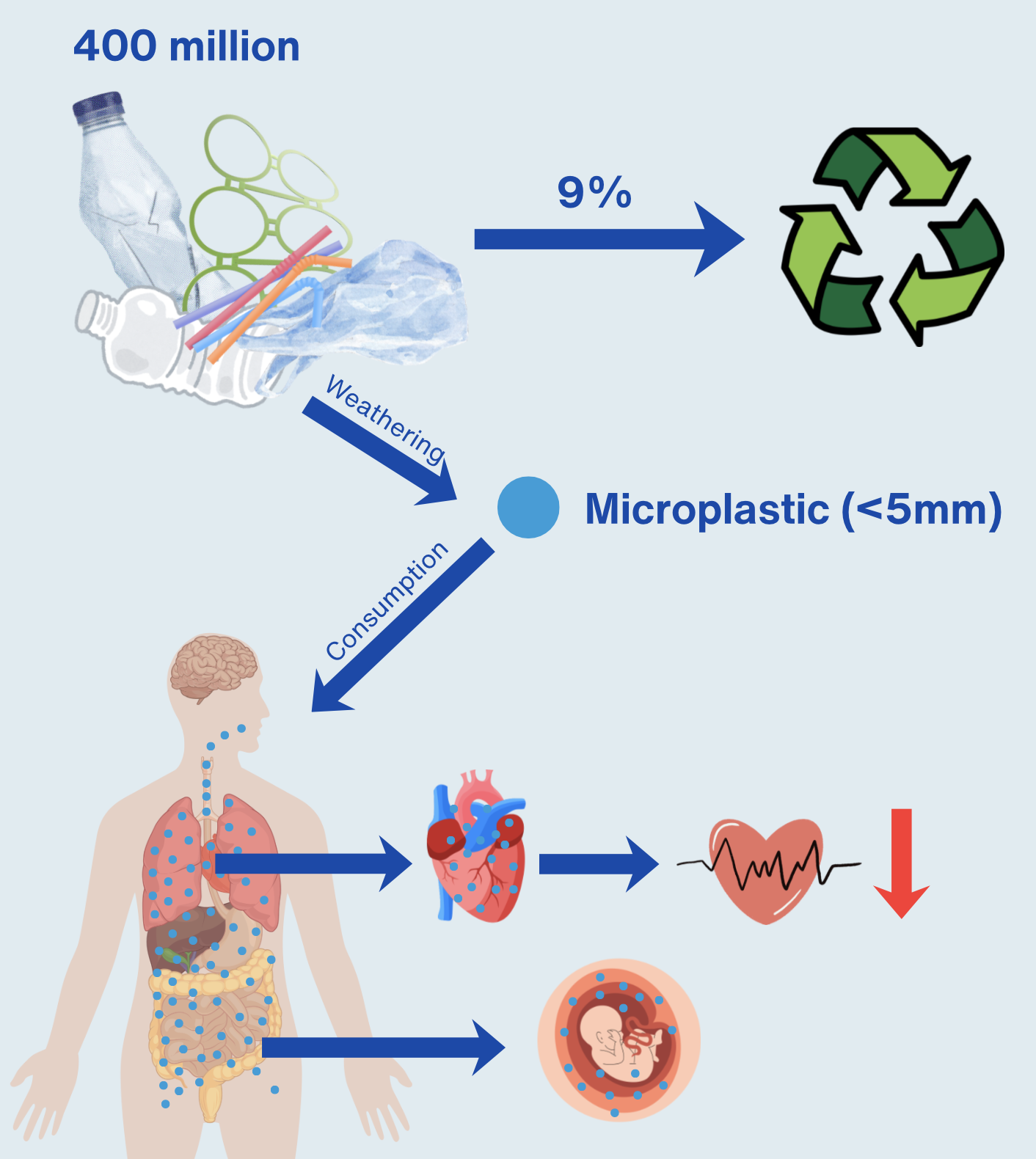
- 400 million tons of plastic is produced each year, only 9% recycled (Yu et al., 2024).
- MPs classified as less than 5mm in size and can be grouped by size, shape, polymer, etc. (Yu et al., 2024).
- Can be consumed or inhaled into our bodies (Roslan et al., 2024).
- MPs have been found in 8/12 organ systems (Roslan et al., 2024).
- MPs have been found in vein plaque and have been correlated to an increased risk of cardiovascular issues (Marfella et al., 2024).
- MPs have been found in the reproductive system and have been shown to transfer down into the organs of offspring rats (Yu et al., 2024).
- Daphnia magna (D. magna) are microcrustaceans that are common primary consumers in freshwater ecosystems (Nunes et al., 2022).
- They are sensitive to changes in environment and important in food webs, making them good for toxicity tests in freshwater environments (Nunes et al., 2022).
- They are also easy to work with (Nunes et al., 2022), can reproduce quickly, and are good as a model organism for human heart rate due to their heart being similar to a human heart (Kurien et al., 2018).
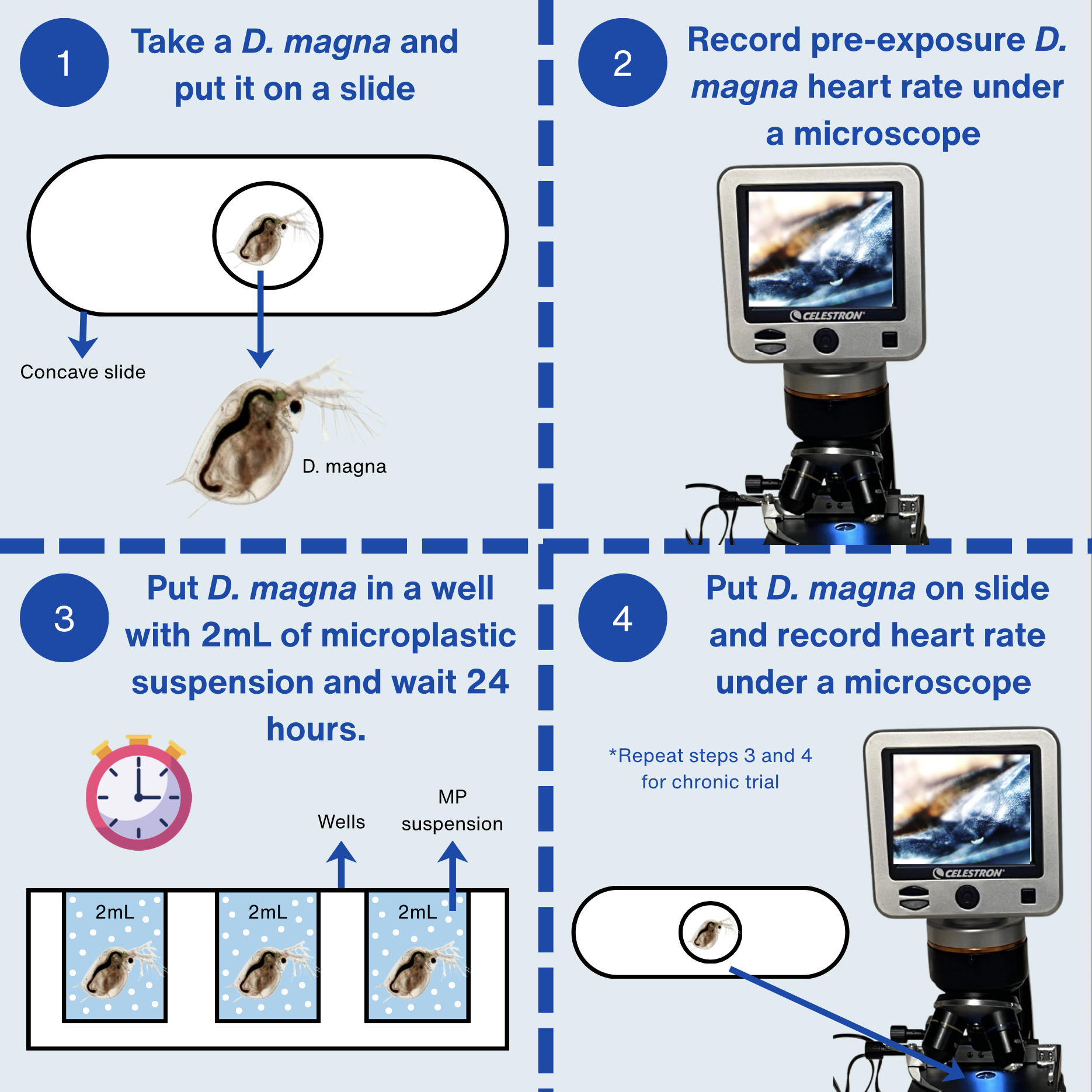
1. Take a D. magna and put it on a concave microscope slide before removing all of the excess water.
2. Put the microscope slide under a microscope and record the heart rate for pre-exposure.
3. Transfer D. magna to a well in the well plate with 2mL of microplastic suspension in each well.
4. Wait 24 hours before taking D. magna out of the well and transferring it to a microscope slide.
5. Remove excess water and record the heart rate for post-exposure.
6. Repeat steps 1-5 for one microplastic polymer, record steps 3-4 for chronic experiments.
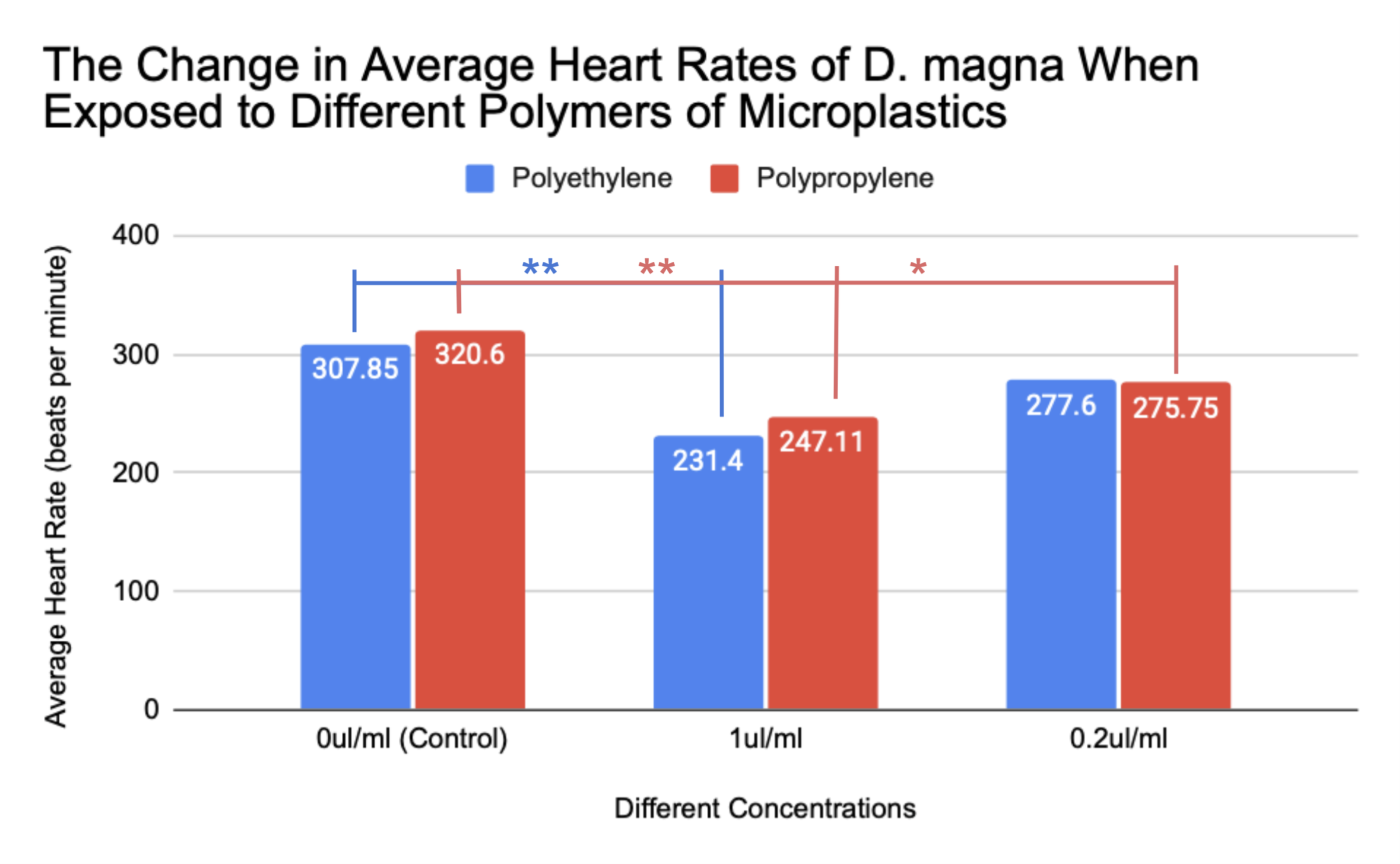
Figure 1. A bar graph that compares the average heart rates between the different concentrations of polyethylene and polypropylene microplastics in the acute test. Compared to the control, the polyethylene and polypropylene 1µl/ml concentrations were significant by p value of less than 0.01 (p=0.002 and p=0.009), while the polypropylene concentration of 0.2µl/ml was significant by a p value of less than 0.05 (p=0.03).
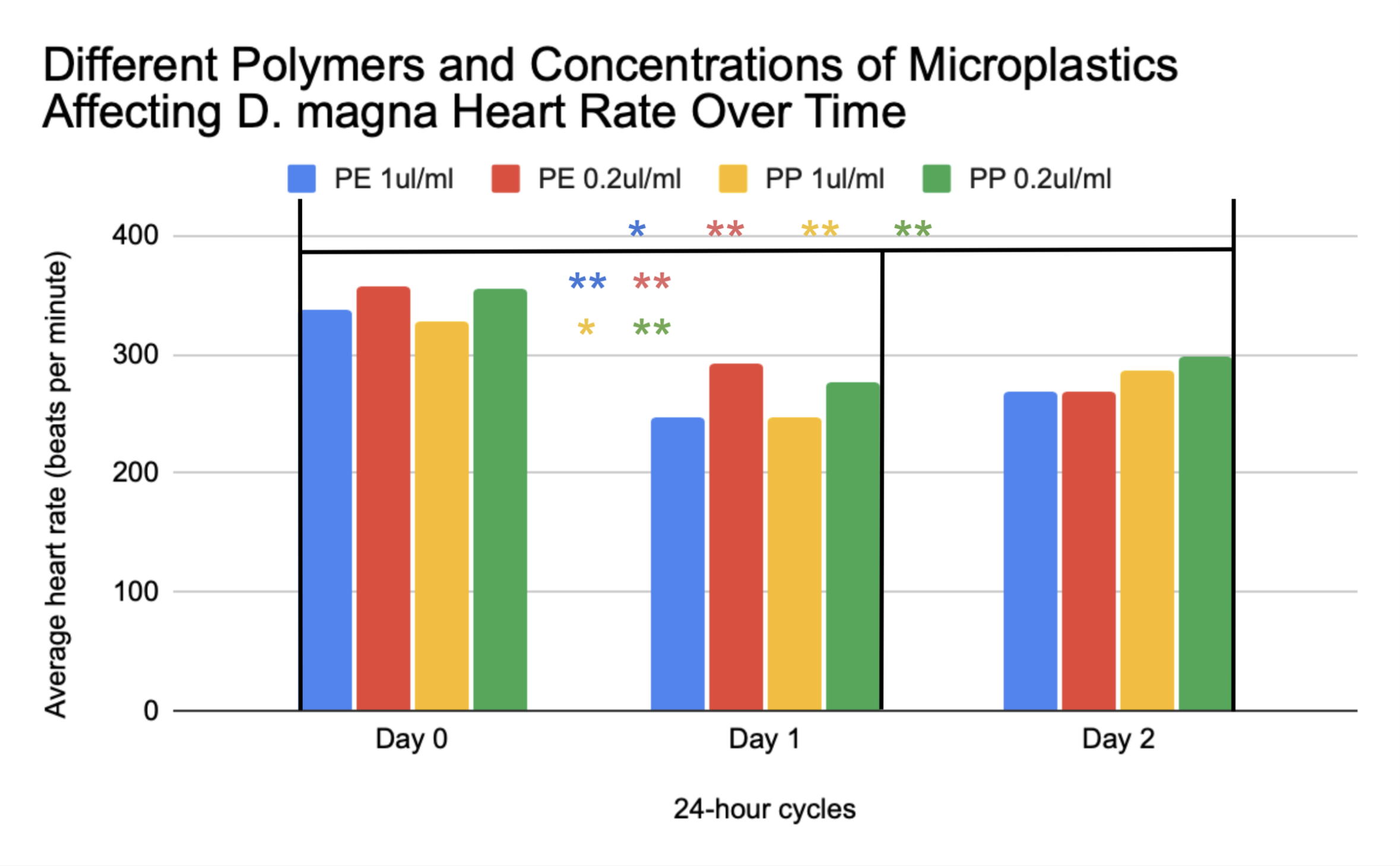
Figure 2. A bar graph showing the change in the average heart rate of a D. magna over time in 24-hour periods when exposed to the different microplastic polymers and concentrations in the chronic test. Compared to Day 0, all suspensions in Day 1 and Day 2 were significant by a p value of less than 0.01 except for Day 1 polypropylene 1µl/ml and Day 2 polyethylene 1µl/ml, which were significant by a p value of less than 0.05.
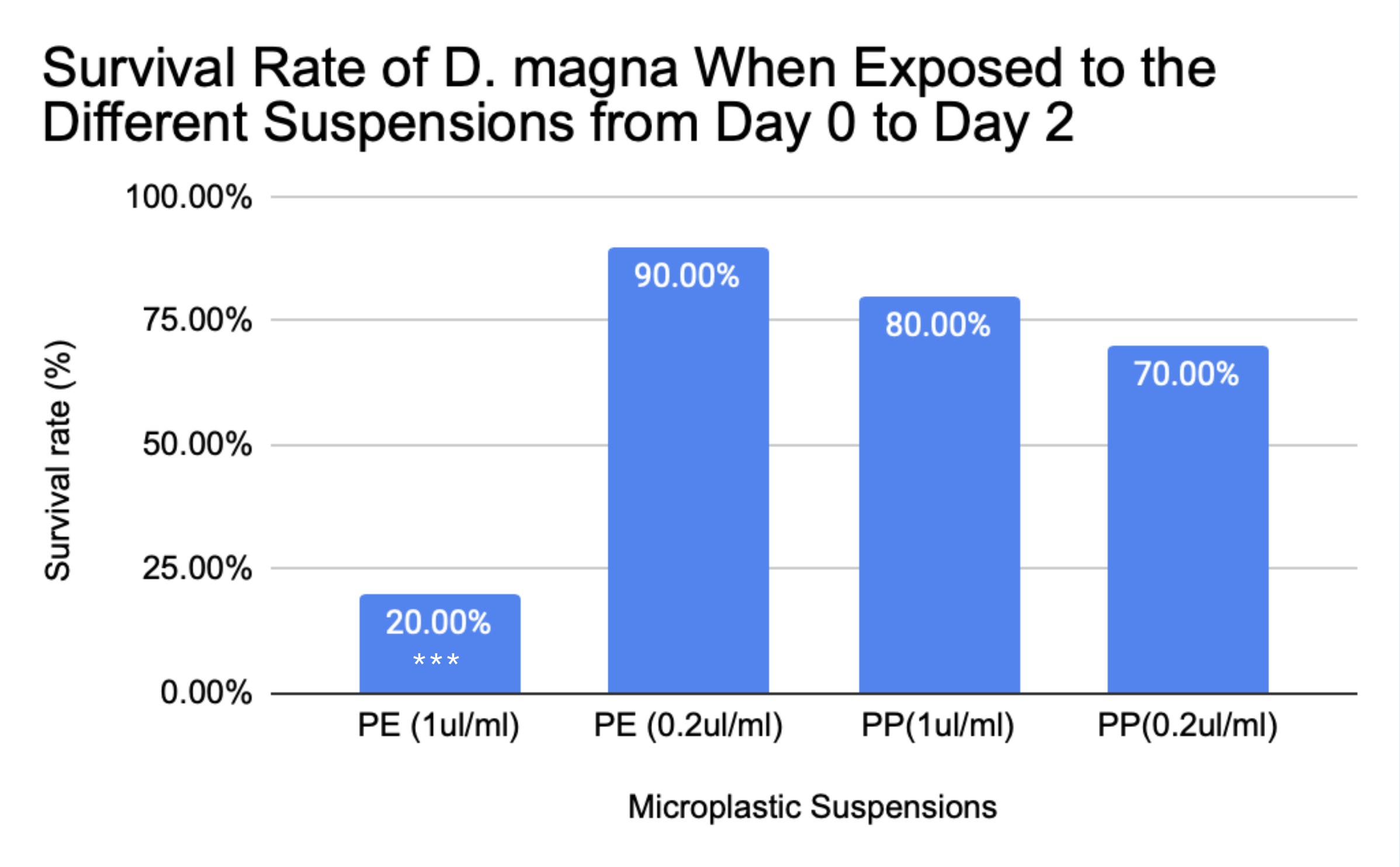
Figure 3. A bar graph that represents the survival rate of D. magna after being exposed to the different suspensions from Day 0 to Day 2. Only the 1µl/ml polyethylene suspension had a p value of less than 0.001 (1.13x10^-5).
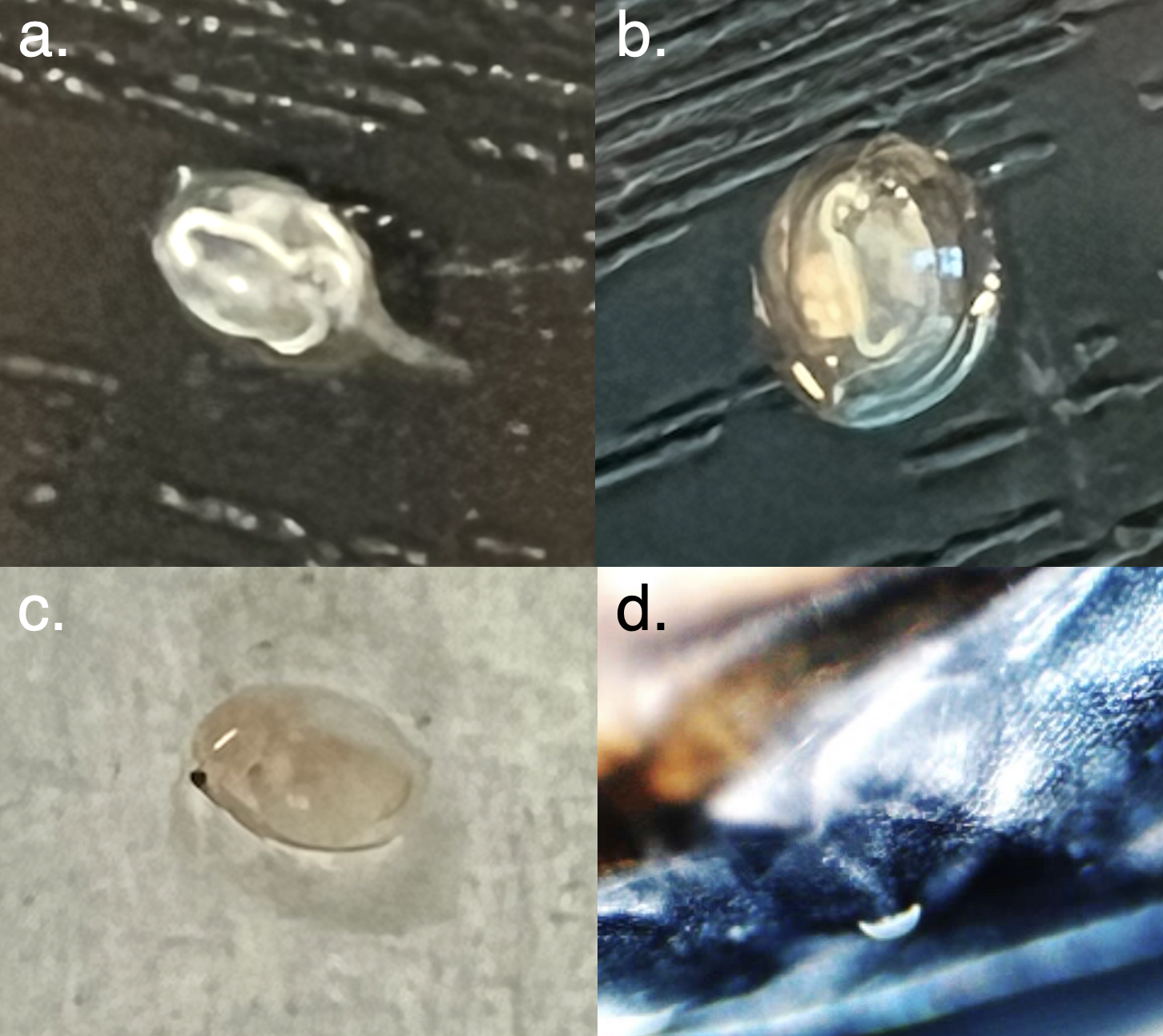
Figure 4. Images a-c depict qualitative data, where image c is a control D. magna whereas images a and b are D. magna post exposure to a microplastic suspension. The gut in image c is darker than the guts in images a and b, which are white. Image d is a D. magna heart under the microscope.
Overall, the heart rate graphs show a decrease in heart rate when microplastics are introduced. All statistical tests for this project were ANOVA tests. An ANOVA test gives a p value, and if the p value is less than the alpha value, then the null hypothesis can be rejected and it can be said that the data is not due to random chance. When looking at the acute tests compared to the control, both 1µL/mL suspensions were significant by a p-value less than 0.01, while the polypropylene concentration of 0.2µL/mL was significant by a p value of less than 0.05. For the chronic tests compared to the control of Day 0, all suspensions were significant by a p value of less than 0.01 except for polypropylene 1µL/mL concentration which was significant by 0.05 on Day 1. On Day 2 compared to Day 0, all concentrations were significant by a p value of less than 0.05 except for polyethylene 1µL/mL, which was significant by a p value of less than 0.05. Finally, in terms of the mortality test, polyethylene at 1µL/mL compared to the control was the only significant survival rate, being 20% with a p value of less than 0.0001.
The data suggests that microplastics can decrease the heart rate of D. magna, with polyethylene decreasing the heart rate more than polypropylene. The data also suggests that microplastics do have an effect on mortality, and that when consumed microplastics primarily end up in the gut. This specifically aligns with what Wang et al. found in 2022, as when investigating polyethylene microplastic toxicity on D. magna, they also found that the microplastics primarily ended up in the gut. This data provides initiative to continue to investigate microplastic effects, such as how different sizes of microplastics can affect heart rate and mortality, how different sizes and polymers of microplastics can affect egg production, and how different sizes and polymers of microplastics can affect the heart rate of filial generation D. magna.
Click for the pdf here!
Click for the pdf here!