STEM I Subpage - Back to Stem Page

Simulating Recycled Polyethylene Terephthalate-Modified Warm Mix Asphalt

Lay Description

Plastic waste, especially from bottles made of polyethylene terephthalate (PET), is a growing environmental problem. At the same time, roads made from asphalt wear down over time due to traffic and temperature changes. This project explores whether recycled PET plastic can be used to make asphalt stronger and more environmentally friendly. Instead of running physical lab experiments, this study uses computer simulations to model how warm mix asphalt behaves when small amounts of recycled PET are added. Warm mix asphalt is produced at lower temperatures than traditional asphalt, which already helps reduce energy use and pollution. The simulations first examine how individual particles of asphalt and PET interact, then use that information to predict how an entire road layer would respond to traffic loads and heat. The results show that adding moderate amounts of recycled PET can make asphalt stiffer, reduce permanent deformation (rutting), and improve thermal insulation, while still maintaining bending strength. These improvements suggest that recycled plastic could help create longer-lasting roads while also reducing plastic waste. Overall, this project demonstrates that computer modeling can be a powerful tool for designing more sustainable infrastructure and shows that recycled PET has real potential as a pavement material.

Grant Proposal

Having trouble viewing the file? See here!

Models

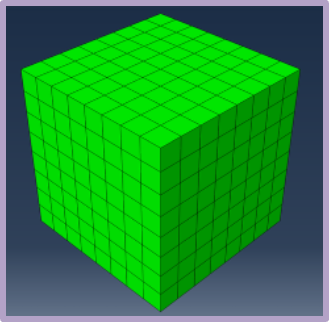
Basic FEM model

Basic FEM model for stress-strain response (0.1 m x 0.1 m x 0.1 m)
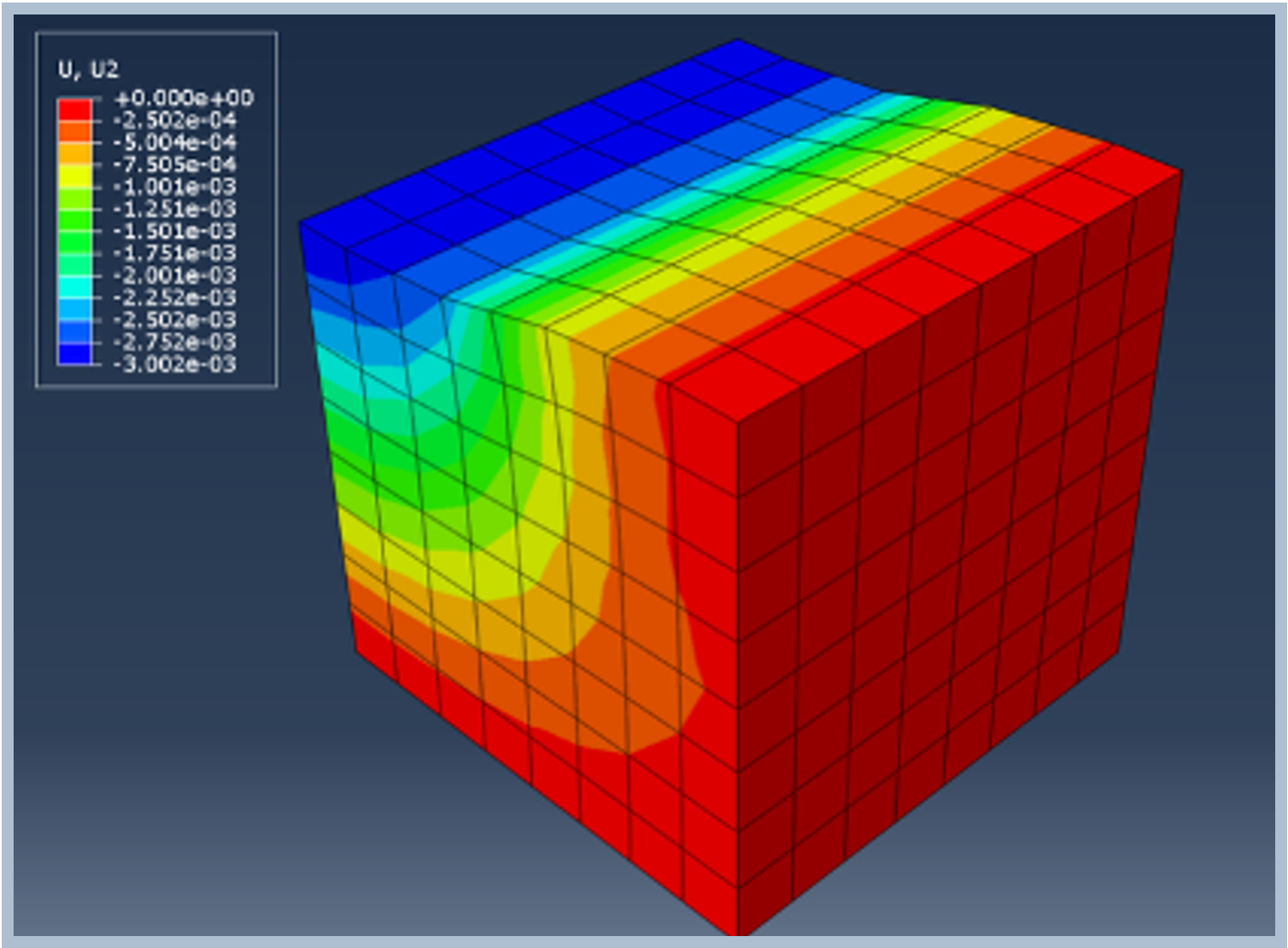
FEM rutting model

FEM visualization of accumulated vertical displacement used to quantify rutting depth in the WMA pavement model under repeated loading. (0.1 m x 0.1 m x 0.1 m)
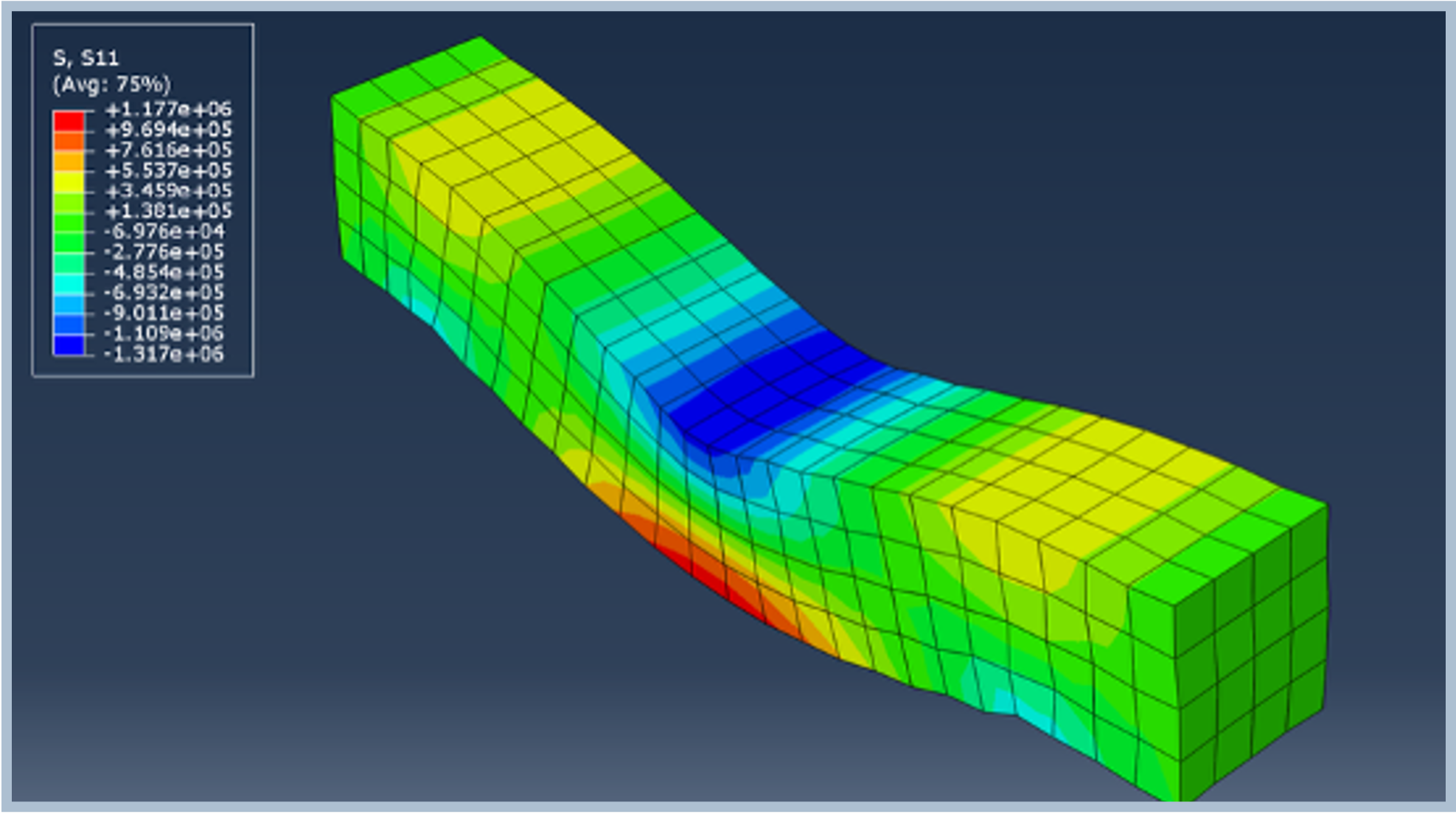
FEM flexural strength model

FEM stress contour and deformed shape of the PET-modified WMA beam model under three-point bending, showing tensile and compressive stress distribution during flexural loading. (0.3 m x 0.05 m x 0.05m)
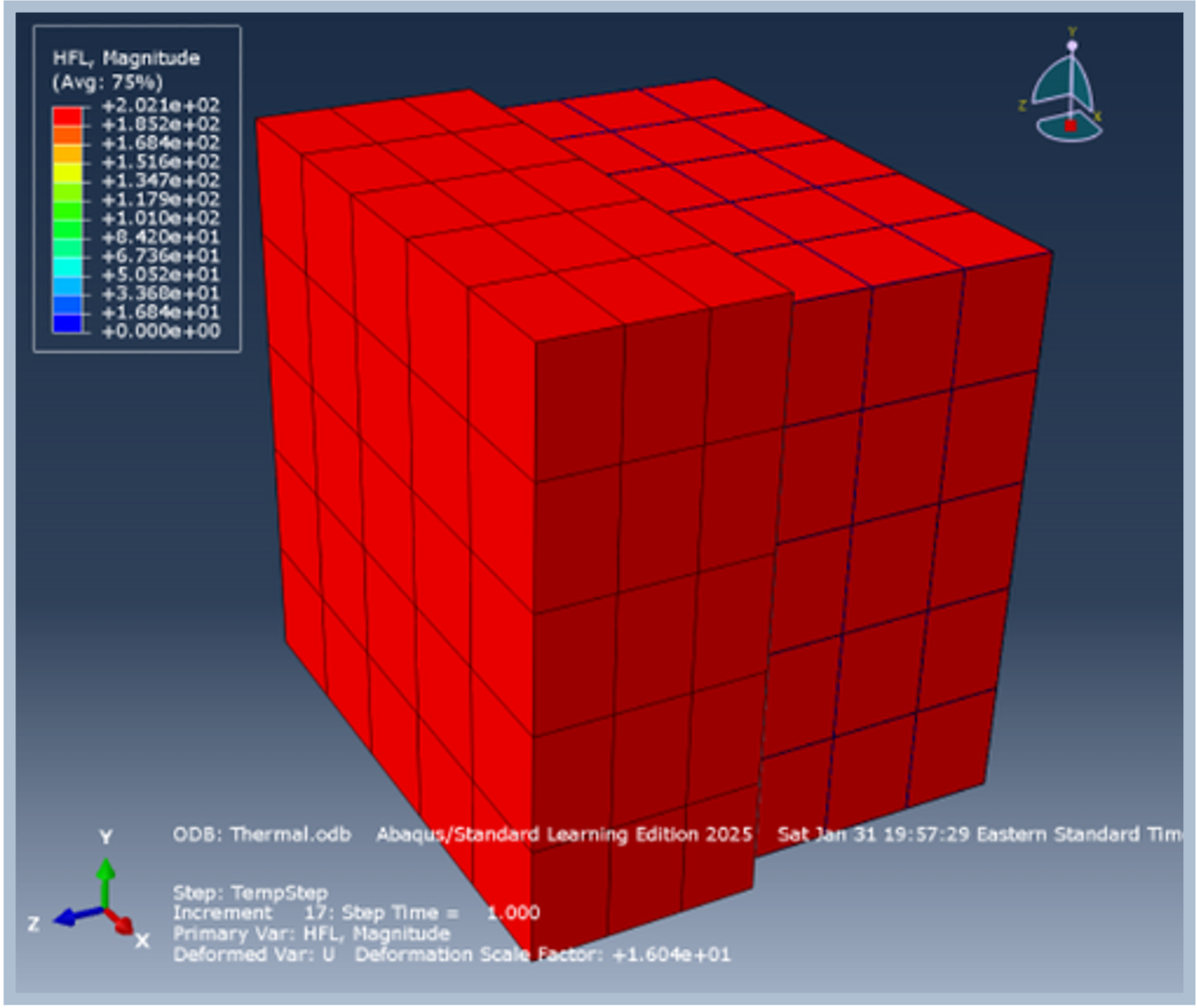
FEM thermal conductivity model

FEM heat flux magnitude contours in the WMA model under steady-state thermal loading. Heat flux outputs were extracted to calculate effective thermal conductivity using Fourier’s law. (0.1 m x 0.1 m x 0.1 m)

Project Notes

Having trouble viewing the file? See here!