The Wounding Response of A. Thaliana under Simulated Microgravity

As humanity continues to push the boundaries of outer space, it is important and relevant to understand how plants – a potential source of nutrition– grow and respond to changes in outer space. This project examines the wounding response in A. thaliana to investigate the effects of microgravity on cell morphology. The wounding response is often simulated through protoplast generation or a simple slice of the plant tissue. The project aims to do the latter. First, in order to prepare to examine the effects of microgravity on wounding, an RPM was assembled using the open-source design provided by Core Electronics and protoplasts were generated using the Ws-2 ecotype of A. thaliana. Next, a control group and experimental group containing leaf explants were cultured for 48 hours in dim light at 25 degrees C and were examined under a live imaging microscope. Images taken from the microscope will be analyzed for micro callus area. The cell areas of both control and experimental groups will be compared in ImageJ. If the micro callus area is less in the microgravity group versus the normal gravity group, microgravity has an affect the morphology of wounded plant cells negatively, inhibiting their function and preventing them from de-differentiating. This revelation must be kept in mind for any future endeavors in space or microgravity.
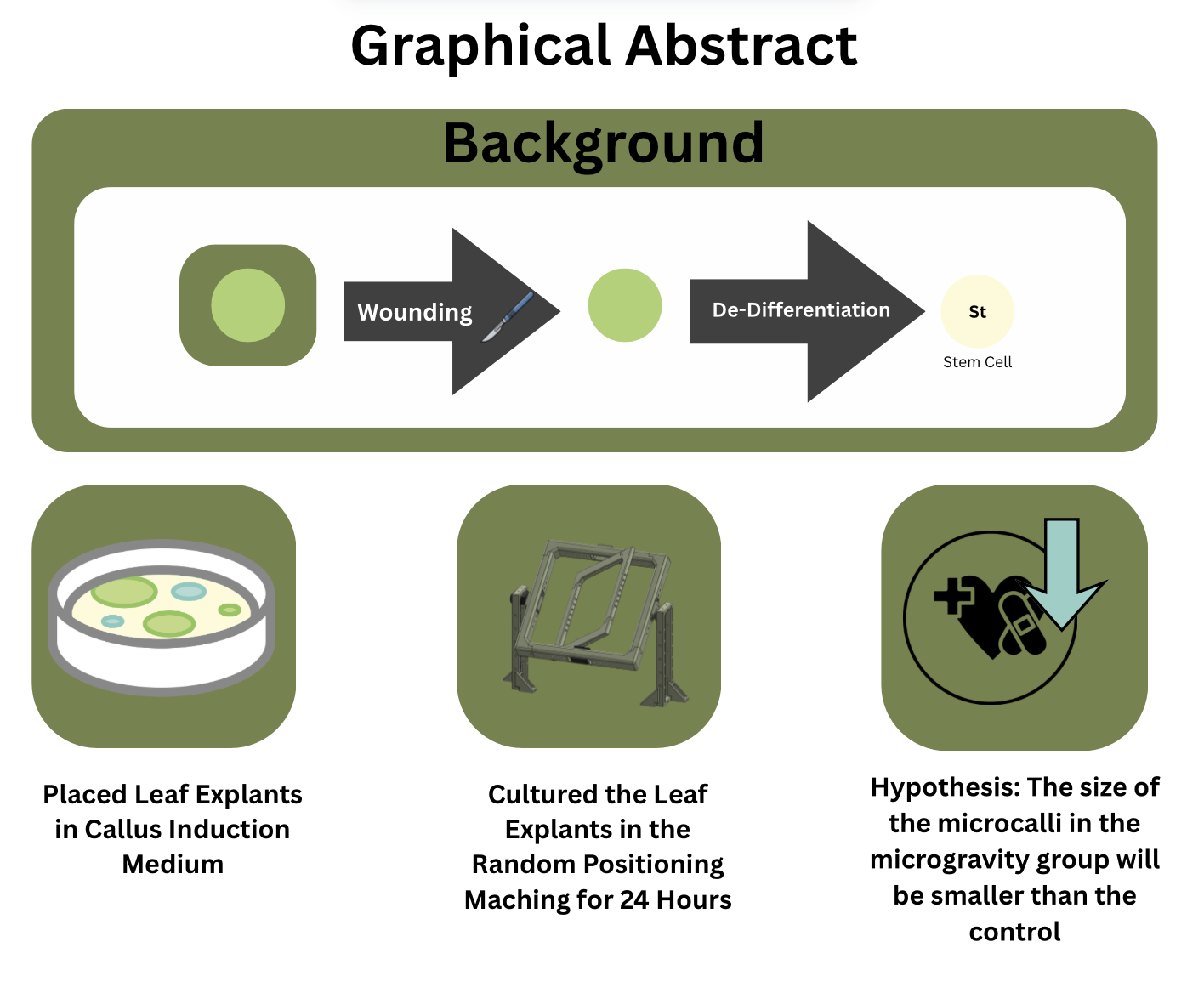
What, if any, are the effects of microgravity on the wounding response of the Ws-2 Ecotype of Arabidopsis Thaliana?
The area of the micro callus growth in Arabidopsis thaliana in the microgravity group will be lower than the area in the control group, since microgravity will disrupt the pathways involved in de-differentiation and stem cell formation.
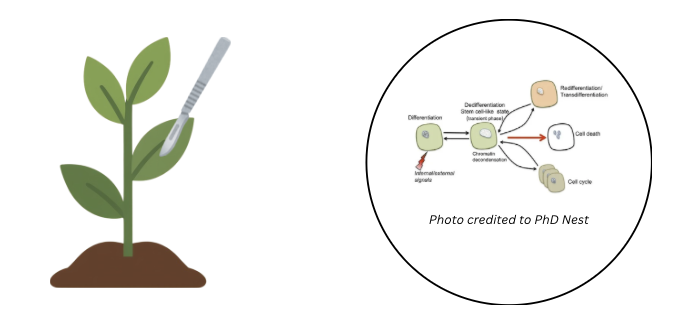
When a plant is wounded, it goes through a process that reverts its mature cells back to immature cells. Microgravity changes the epigenetics of cells, prompting an investigation on how this wounding works in microgravity
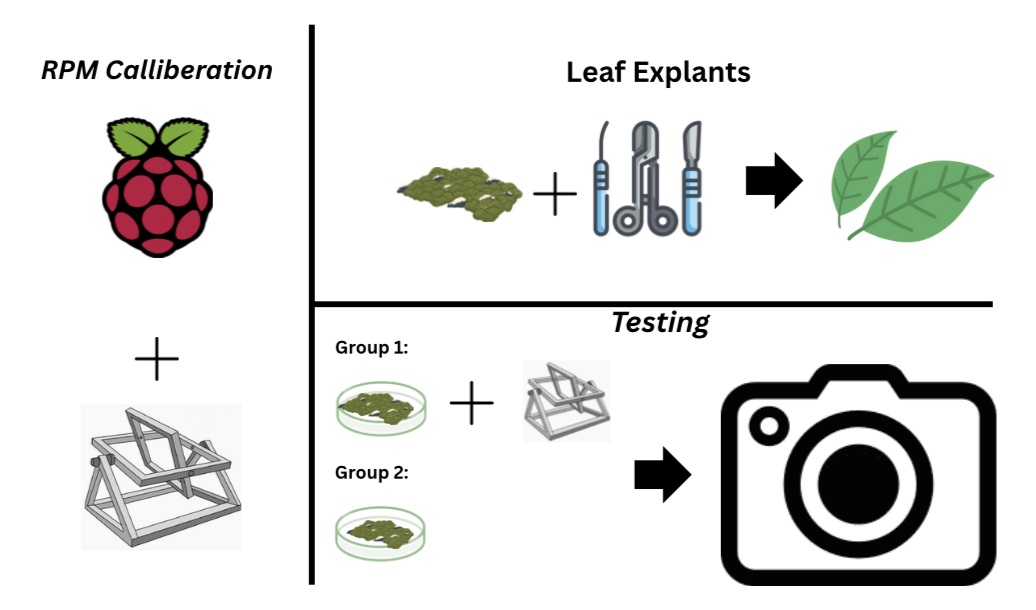
First, I created my Random Positioning Machine, an open source design from Core Electronics. Next, I will create leaf explants for testing a group of A. thaliana in the Random Positioning Machine and one without for 48 hours. Then, I conducted live image microscopy and analyze both groups in ImageJ.
TBD! Come Back Soon!
TBD! Come Back Soon!
This was my final poster for the fair in February, presented at the WPI Odeum.
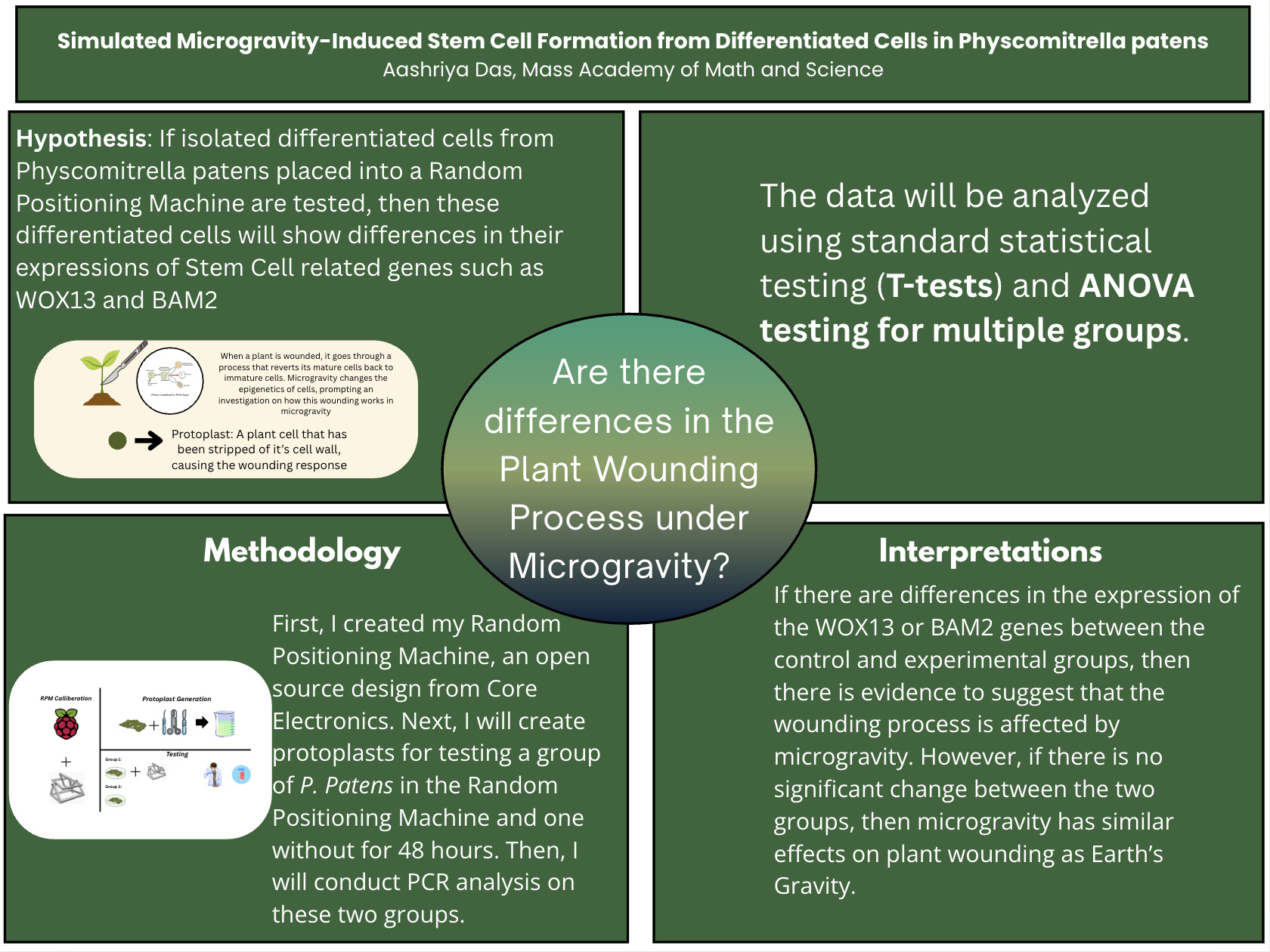
Above is a summary of my mid-project progress: The Wounding Response of A. Thaliana under Simulated Microgravity. (Previously called Simulated Microgravity-Induced Stem Cell Formation from Differentiated Cells in P. patens) Microgravity, or gravity that is lower than Earth’s gravity, has the quality of causing physical changes in organisms and cells, which can be good or bad. In plants (and partly in animals), fully developed cells can de-differentiate, or revert, back to a past phase; the Stem Cell/multipotent phase. This project aims to see how this de-differentiation process works under microgravity (simulated by a random positioning machine) and whether microgravity causes any malignant changes.
