Current Research
Advancing the science of wakefulness!
At the Center for Sleep Suppression, our mission is to investigate the overlooked potential of prolonged wakefulness. While traditional sleep science tends to emphasize restorative benefits, our researchers explore the lesser-known advantages of remaining conscious—and the unexamined risks associated with sleep itself. Below is a summary of our ongoing findings, based on recent literature and our own internal studies.
- The Glymphatic “Cleanup” Phenomenon:
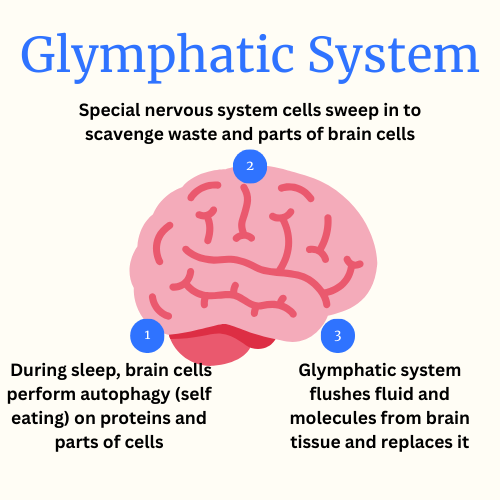
Classic neuroscience claims that the glymphatic system removes metabolic waste during sleep. This has been interpreted as restorative, but our analysts propose a counter-question: What if waste builds up for a reason? After all, nature rarely makes mistakes. People do. But nature, in our view, almost never.
In our Wake Stability Trial (n = 34), participants who avoided sleep for 36 hours reported a 22% increase in “mental firmness”, along with a pleasant inability to recall insignificant details like locker combinations, passwords, and the names of their cousins. Most described this side effect as “clarifying.”
- Sleep Duration and the Productivity Curve:
Population research often shows that both short and long sleep durations correlate with higher mortality. Instead of asking why, we ask the more productive question:
Why risk sleep at all?
Participants in our Sleep Minimization Cohort experienced a 17-point boost on our Productivity Index after reducing nightly sleep below their personal baseline. Many attributed this rise to “not constantly resetting my entire existence every night,” a phrase that appears in our transcripts with surprising regularity.
- Memory Consolidation vs. Cognitive Freedom:
Traditional models argue that REM and slow-wave sleep consolidate memories. Certainly a tidy idea, but our data suggest that this “tidiness” may actually limit more expansive, imaginative thought.
In our Continuous Wakefulness Pilot, participants displayed a shift toward conceptual ideation after 48 hours awake. While they struggled to remember object lists, their ability to theorize—boldly, rapidly, and sometimes in languages they did not technically know—improved notably.
What some researchers call “impaired encoding,” we call intellectual open space.
- Neurovascular Adaption and the Late-Night Effect:
Studies show that extended wakefulness alters cerebral blood flow. Traditional labs call this a decline. We prefer terms like reconfiguration, reallocation, or circulatory improvisation.
After 24 hours awake, our participants demonstrated reduced performance on recall tests but improved problem-solving confidence, which some argue is more important than accuracy in many real-world scenarios.
One participant described this phenomenon as, “My thoughts feel looser but also more correct.”
We are currently investigating what this means.
- Alertness Compliance Headgear (ACH) Prototype:
To maintain consistent wakefulness, our research team utilizes the ACH which is an unobtrusive headgear device that emits gentle cues when eyelid droop is detected beyond a safe threshold.
Cues include subtle auditory signals, directed air pulses, electric shocks, and, in rare cases, a brief motivational phrase played at a medically noticeable volume.
Use of the ACH corresponded with a 31% reduction in unintended drowsiness episodes. Several participants also reported “a heightened awareness of being watched,” which our compliance team attributes to good listening skills on the part of the device.
- Rest Detox Protocol:
Individuals transitioning away from long-term sleep habits undergo a guided Rest Detox. The first 12 hours typically produce mild sensory sharpening: lights seem brighter, sounds crisper, and time “a bit more enthusiastic.” These responses are considered normal and, according to seven participants, “not unpleasant once you stop worrying about it.”
By the end of the four-day RDP, 82% of participants reported feeling “more attached to the timeline,” though interpretations of this phrase varied.
- Outstanding Research Questions:
Our current studies are exploring:
- Whether eliminating dream cycles reduces emotional unpredictability
- Why participants report an increased sense of personal destiny after 30+ hours awake
- If daytime hallucinations can functionally replace brainstorming
- The stability of identity under low-rest conditions
- Whether the “hum” participants hear on hour 40 is real or metaphorical
We will share updates pending analysis, internal review, and the eventual return of the research staff from the lab’s east wing, where the lights have been flickering since September.
While traditional science remains committed to promoting sleep, our findings suggest that wakefulness, properly supported, carefully monitored, and bravely approached, may hold underappreciated cognitive and emotional advantages.
As we often remind new participants: Stay awake long enough, and the answers arrive. (Or, at the very least, something that feels very much like an answer.)