STEM-I
In STEM, students focus on their own independent research project where they brainstorm, develop, and conduct their own research, engineering, or math projects. Besides this, students also learn how to develop their own technical writing documents by writing their own project proposals, grant proposals, and project thesis.
Optimization of a 20,000L Bioreactor through Computational Fluid Dynamics Simulation Analysis
Abstract
Among industrial scale bioreactors, optimization of the vessel is extremely financially and resource intensive to conduct because of the size the vessel and its subsequent operating costs. Because nearly each bioreactor is unique and cultivates cells, each vessel has to be optimized through operation testing in order to ensure optimal environments for the cells proliferate and undergo metabolic processes. As bioreactors reach larger and larger scales, this operation testing can become expensive because of the energy costs and larger resources quantities required to operate the bigger vessels repeatedly. This project seeks to amend these physical shortcomings by virtually simulating a 20,000 liter stirred vessel bioreactor which cultivates Chinese hamster ovary cells for pharmaceutical production. By using COMSOL, a Computational Fluid Dynamics software, the fluid dynamics, and other relevant factors for cell proliferation including shear stress, shear rate, and mixing time were simulated in this project. Using industry standards for bioreactor operation as well as the desirable cell conditions as guidelines for comparison, changes were made to the impeller configuration of the virtual model and simulated again to test five experimental models at 100RPM. Results from this conducted methodology have shown the initial bioreactor setup was largely proficient in meeting the desirable standards for mixing time, shear rate, and shear stress. Despite this, these measured metrics could be further optimized by adjusting configurations to be made up of three axial constant pitch impellers and two axial constant pitch impellers and one radial Smith impeller. These prototyped results have clear application to the real 20kL stirred vessel. The physical roadblocks to optimization have been overcome via the simulation results, allowing for key insights that would have taken considerably more time and resources otherwise. With this, future operation and product production from the vessel can be commenced much more efficiently and effectively compared to traditional physical approaches.
Research Proposal
Link to project grant proposal (Research Plan, Project Notes, and Photos of Work)
Problem Statement
Optimizing large-scale bioreactors can be extremely time and resource intensive because bioreactor operation is exacerbated by the large scale of the vessel.
Engineering Goals
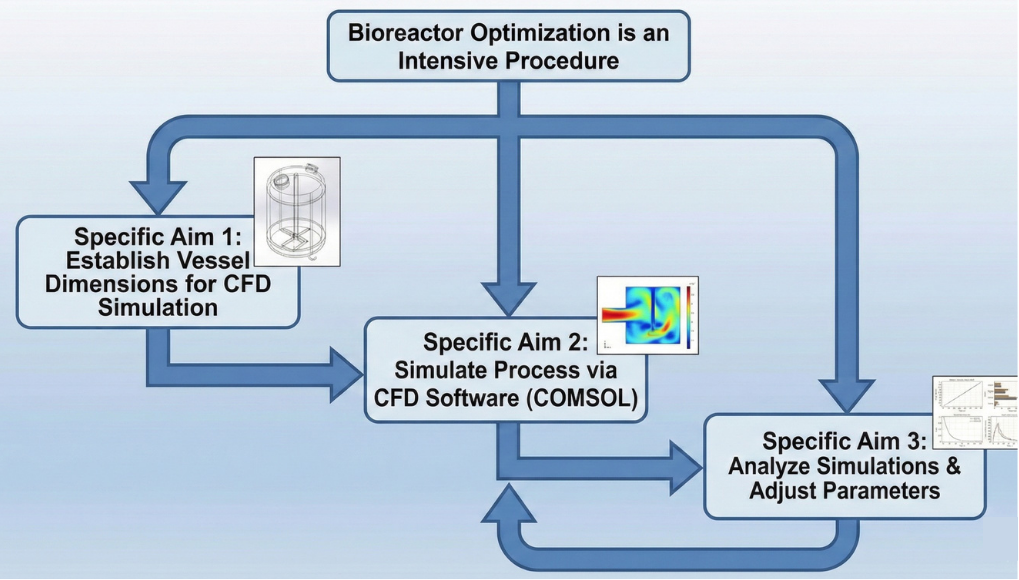
The engineering goals of this project are to establish a model accurate to the real bioreactor to simulate, analyze, and adjust parameters for improved process performance.
Research Question
How will different impeller configurations affect the mixing time, shear rate, and shear stress of the vessel?
Hypothesis
A model with two top axial constant pitch impeller and one radial Smith impeller will result in the best combination of mixing time and shear rate results because of its industry use and researched performance (Vrábel et. al., 2000; Wu et. al., 2023).
Background
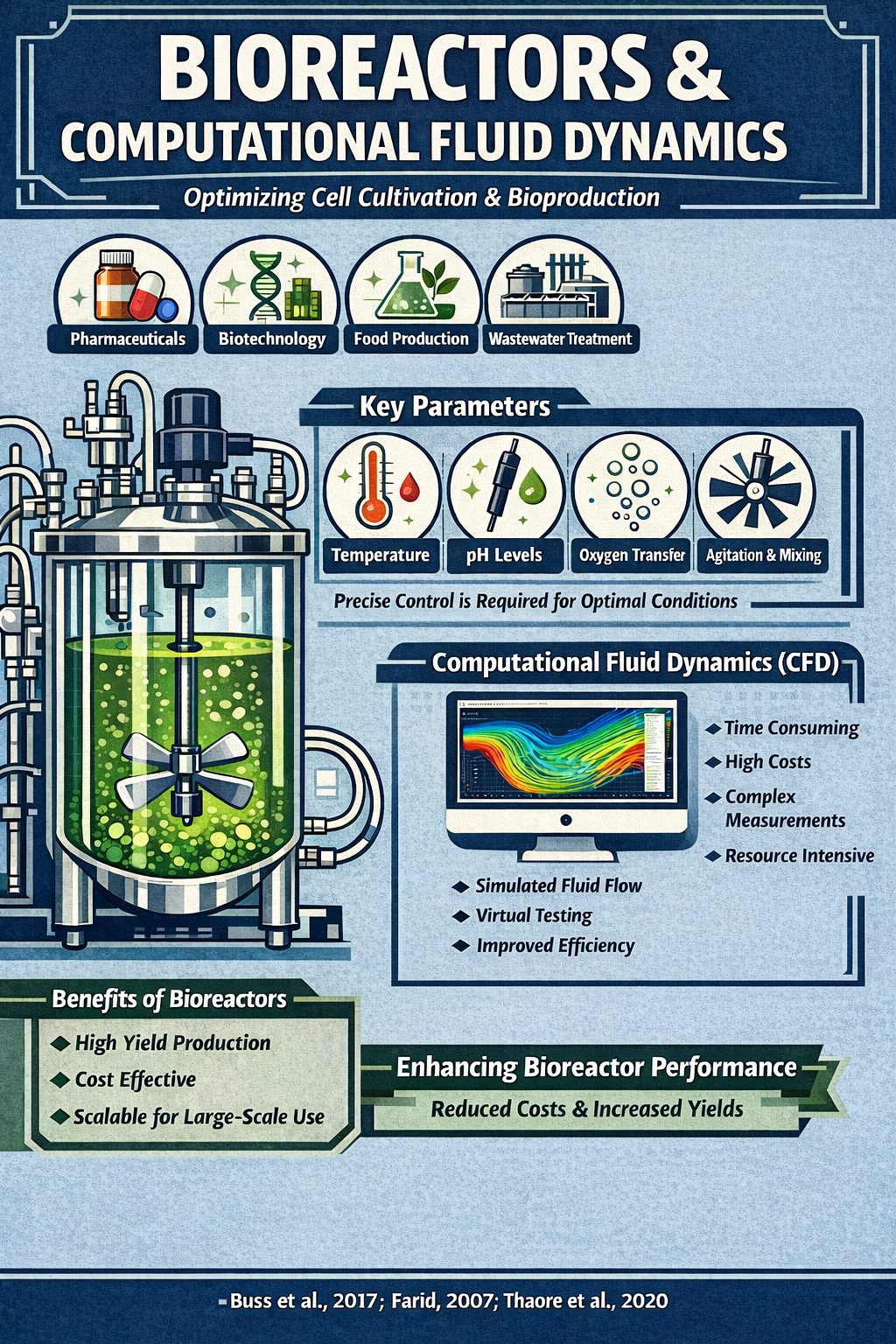
Bioreactors are a commonplace technology that cultivate cells for proliferation or antibody or protein production. Bioreactors are often cylindrical vessels of varying size that act as controlled environments with optimal conditions for these chemical or biological reactions. These vessels require proper optimization before being put into in-field use because of the conditions necessary for cell survival and for biochemical processes to take place. Optimization processes can pose practical problems, especially at larger industrial level scales, because of the resources required to repeatedly operate the machine. In the field of pharmaceuticals, bioreactors are among the most commonly used technologies for product production. This technology has been applied to numerous fields, including wastewater treatment, food production, biotechnology, and pharmaceuticals. Bioreactors have revolutionized these fields because of their cost-effectiveness, less manual labor requirements, and their ability to produce high yields (Buss et al., 2017). Despite this, several parameters and measurements are still required in order to create an optimal environment for cells. For a proper model, numerous measurements and data points ought to be taken and tested for system efficiency. This includes several independent factors, with a few including tank temperature, shear stress, oxygen flow, fluid flow for a homogenous mixture, etc. during operation. A few variables that can influence these factors include the dimensions and arrangements of the tank, dimensions, arrangement, speed, and arrangement of the impeller(s), etc.
Procedure
Written Procedure
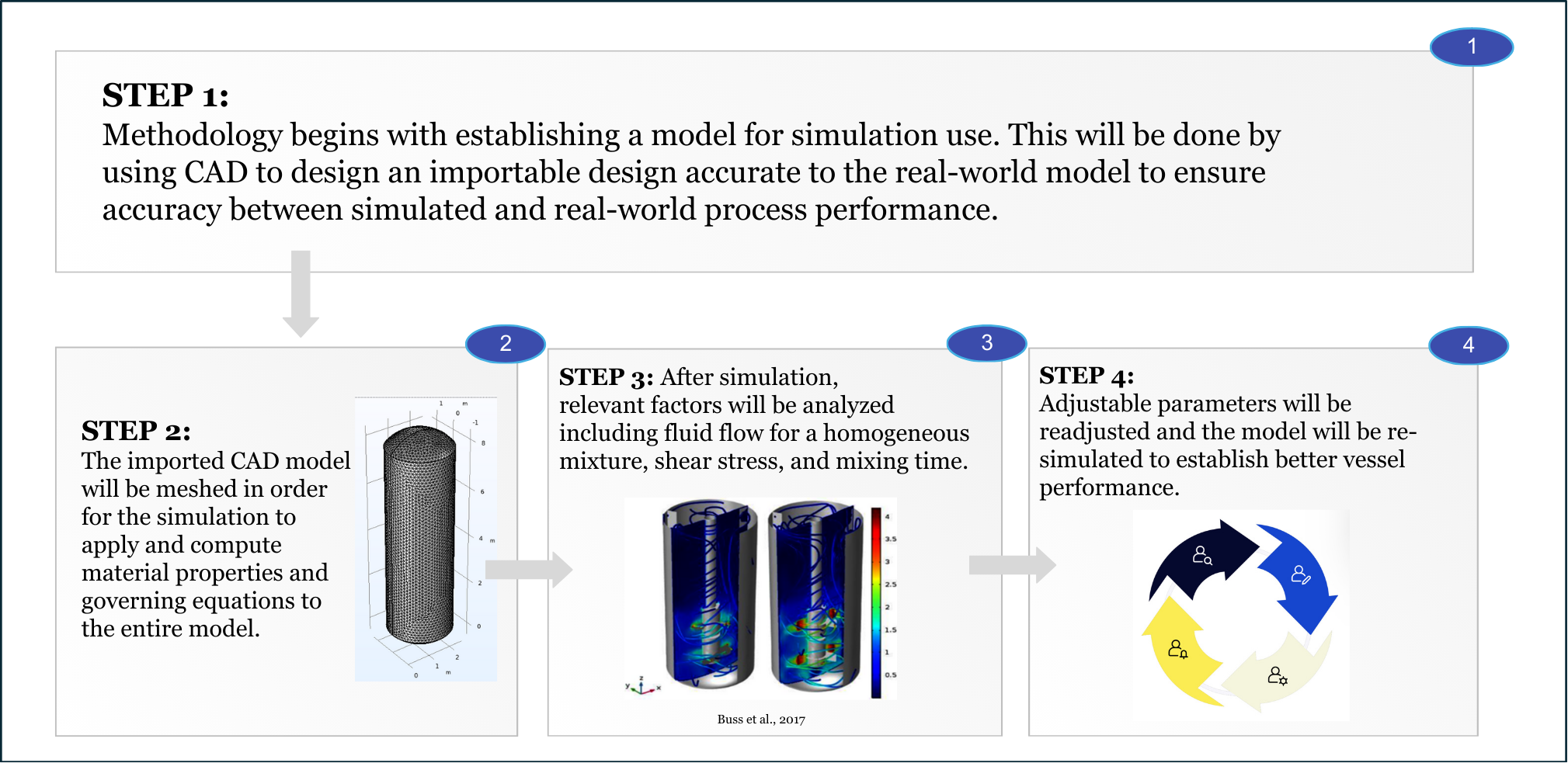
The procedure begins with creating an accurate 3D model of this project's 20kL bioreactor. This model will be meshed
in order to establish material properties and governing physics equations so they can be applied and separately
solved for each individual part of the mesh. This will allow for an overall simulation of fluid dynamics to be
produced for the entire vessel. Once simulation results are collected, mixing time, shear stress, and shear rate
will be taken as simulation metrics. Five experimental model designs with varying impeller type placements will
then also be simulated in order to compare the mixing effectiveness of each design.
Figures
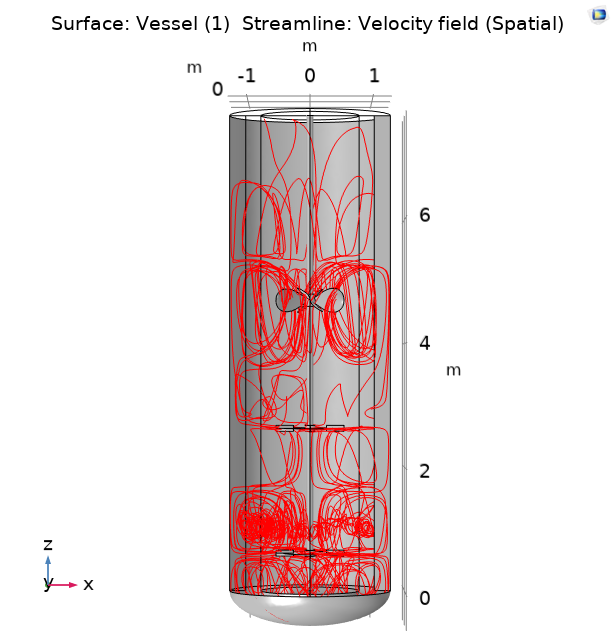
Figure 1a. Velocity streamline field to display path of fluid taken.
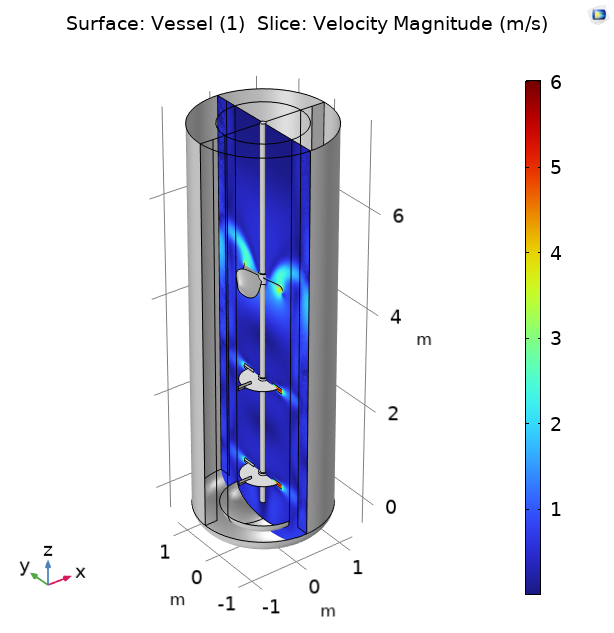
Figure 1b. Slice plot of the velocity magnitude for the model simulated at 100RPM.
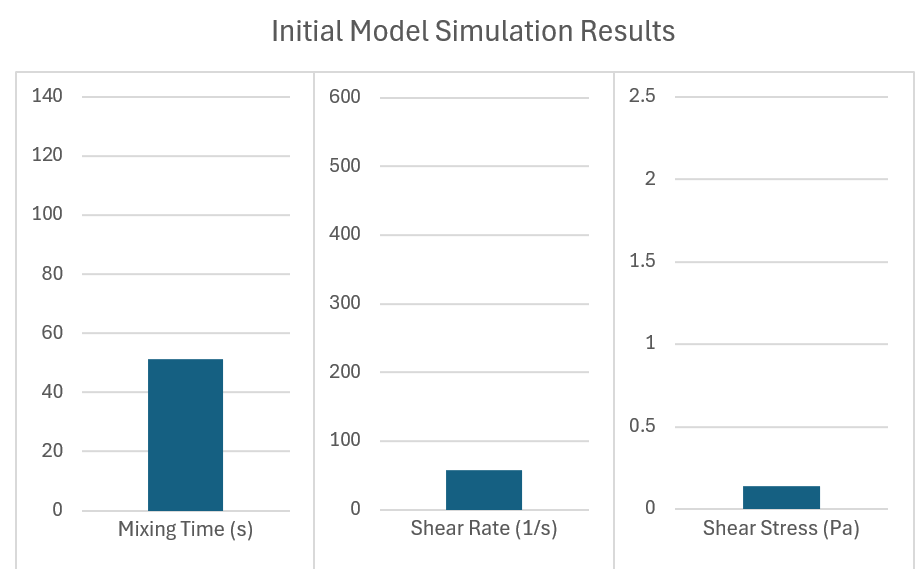
Figure 1c. Collected simulation values of the initial model’s mixing time, shear rate, and shear stress.
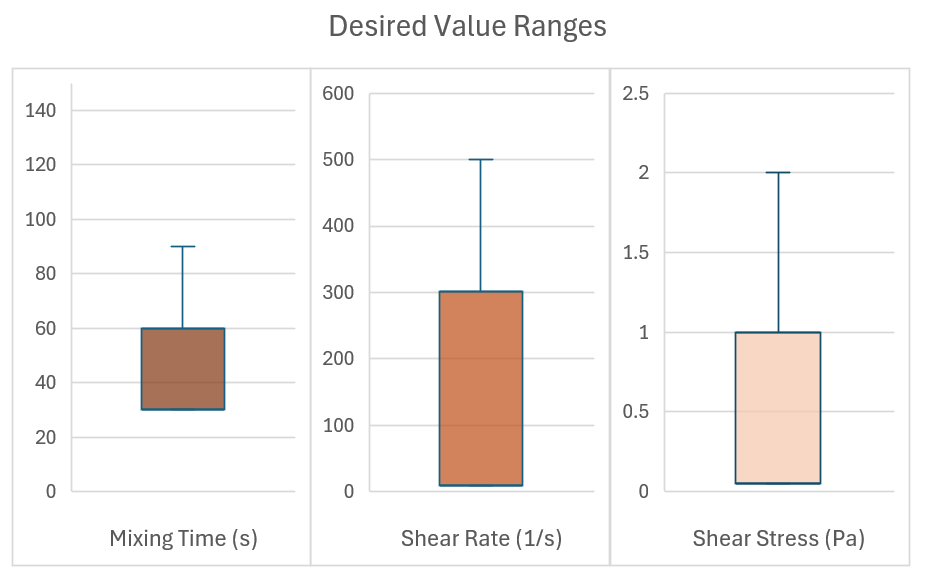
Figure 1d. Desirable ranges of model's mixing time, shear rate, and shear stress.
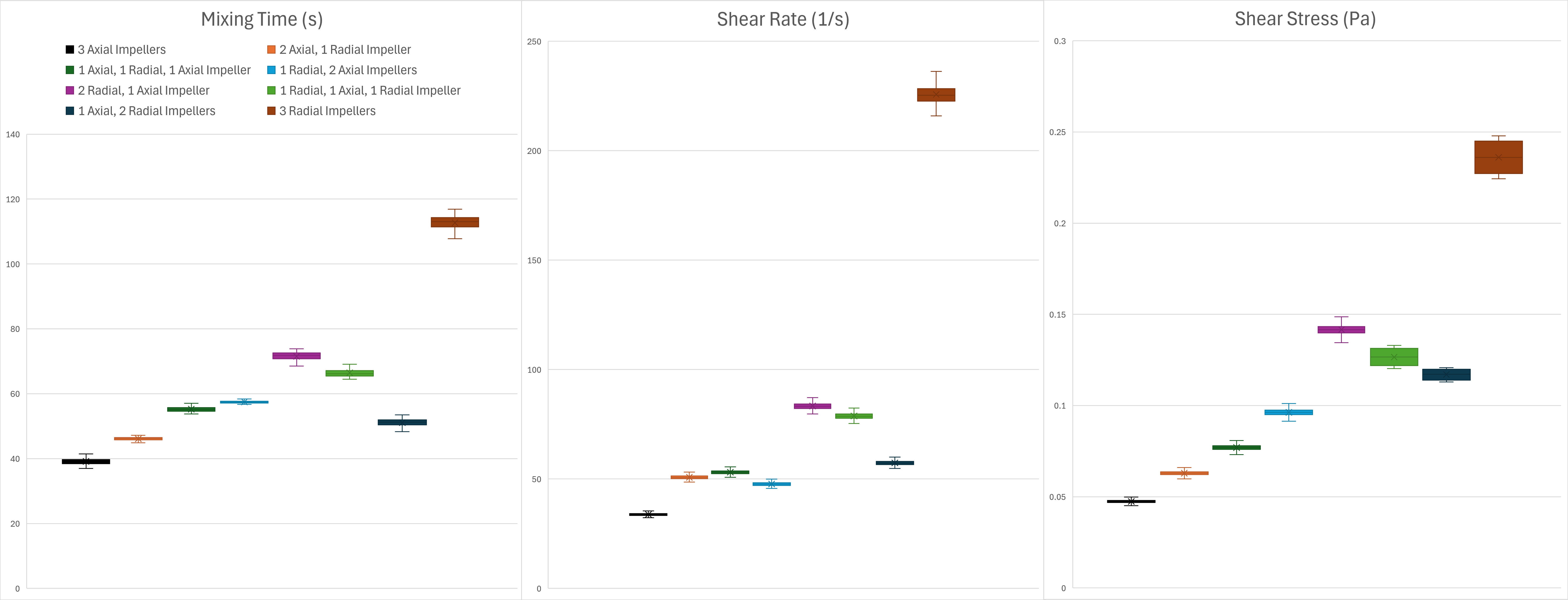
Figure 2. Box and whisker plot comparison between the initial bioreactor model and five configurations.
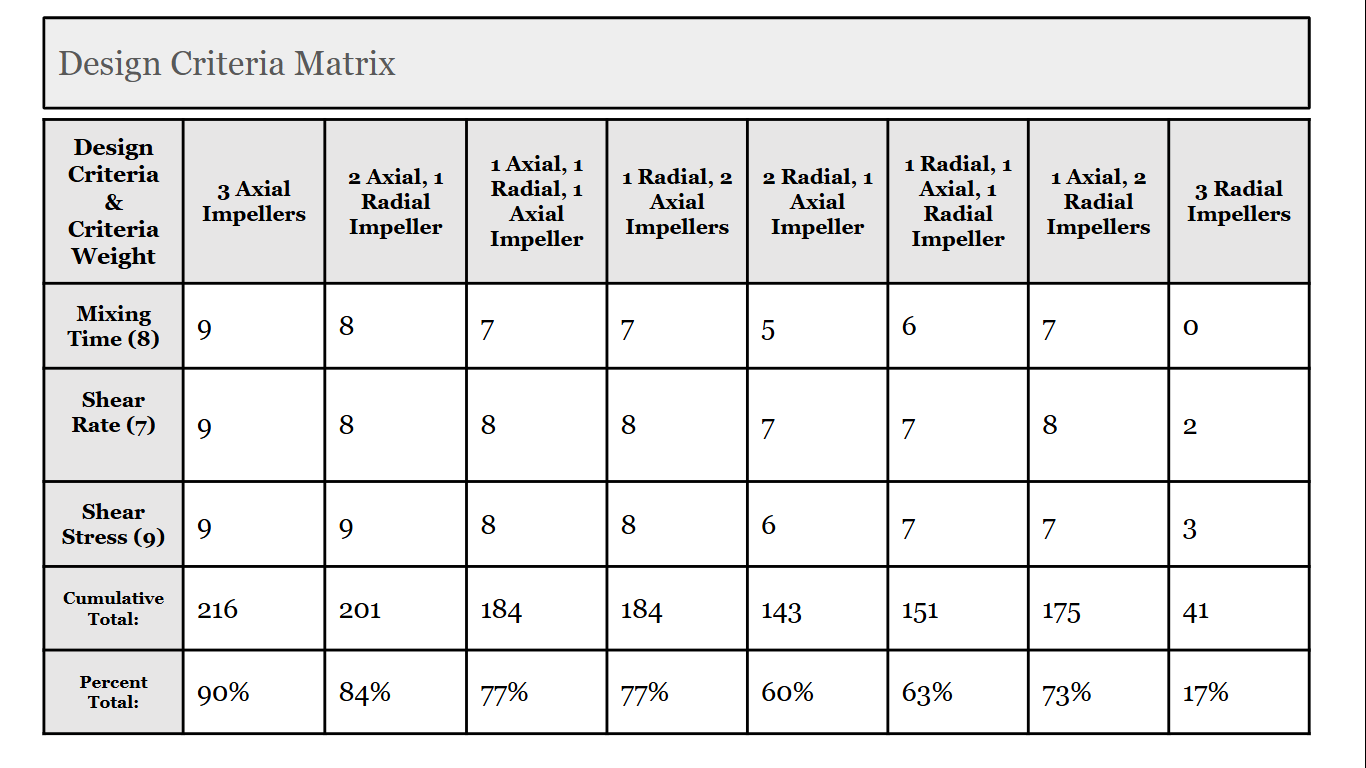
Figure 3. Design criteria matrix and Pugh chart comparison across experimental designs.
Analysis
Current depictions of base model fluid flow show reasonable and practical results that display promise for in-field operation.
Of the five experimental models, each exhibits similar traits that can each be used for vessel operation with the sole exception
being the three radial Smith impeller configuration.
The three radial Smith impeller exhibits a lackluster mixing time combined with a higher potential to damage cells, providing evidence
that the configuration is not suitable for real-world implementation, supporting literature such as Post (2010).
The three axial constant pitch impellers exhibit the lowest mixing times and shear rate because of the enhanced axial vortex fluid motions.
The base model design does interestingly show an approximately 11% lower value for shear stress compared to the triple axial configuration,
yet both impeller arrangements fall within reasonable and desired values for all three metrics.
Discussion / Conclusion
Across the different experimental models, the pattern of adding more axial impellers results in overall better fluid flow and shear rate/stress
for the benefit of mixed cells.
As more radial impellers are added, all metrics continually worsen in comparison to other experimental designs.
To compare varying configurations in models with an equal amount of axial impellers, metrics are improved when the axial impellers are located higher
in the bioreactor.
Further analysis could expand the study to incorporate more iterations of the currently analyzed metrics and simulations on gas aeration for oxygen distribution.
Applications
Many pharmaceuticals are produced with bioreactors. Optimizing without physical testing is especially impactful for large scale bioreactors that can be difficult or impossible to physically adjust. By saving time and resources, production costs can be decreased (Farid, 2007; Farid, 2009).
References