Erin Solovey

Erin Treacy Solovey, Ph.D.

Associate Professor & Graduate Coordinator · Computer Science Department · Worcester Polytechnic Institute

Featured Media

WPI Podcast: Thinking with AI
WPI Podcast E21: Thinking with AI
Harvard-Radcliffe: Brain Sensing in Human-AI
Harvard-Radcliffe Institute: Thinking with AI — The Role of Brain Sensing in Human-AI Interaction
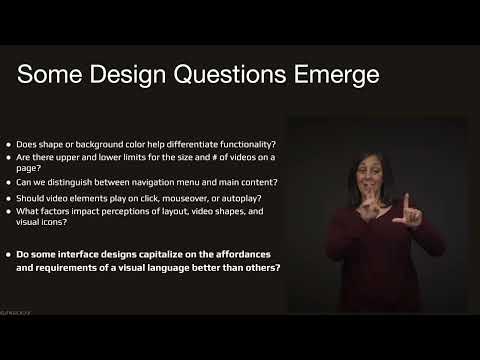
CHI 2025: ASL Video Preferences
CHI 2025: Perceptions and Preferences: Deaf ASL-Signing Users' Insights on Video Elements, Styles and Layouts
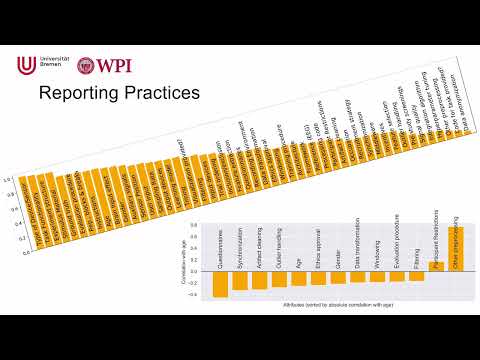
TOCHI: Brain Signal Reproducibility
TOCHI 2022: Understanding HCI Practices and Challenges of Experiment Reporting with Brain Signals: Towards Reproducibility and Reuse
More Videos ↓

Research

Dr. Erin Solovey is an Associate Professor and the Graduate Coordinator of Computer Science at WPI and was a 2024-25 Harvard-Radcliffe Institute Fellow. She studies HCI and human-AI interaction, exploring how people and intelligent systems can work together in both high-stakes and everyday environments in ways that are natural, empowering, and aligned with human goals and values.

In her lab, Dr. Solovey and her students develop advanced interactive systems that help people think, learn, and work more effectively. To achieve this, they create new ways for people to engage with technology through emerging input technologies, including brain-computer interfaces, physiological and textile sensing, and radar-based input, and combine these with machine learning to create intelligent, adaptive systems. These systems address real-world challenges in education, accessibility, teamwork, decision-making, and safety-critical environments. Dr. Solovey is also deeply committed to improving STEM education and increasing participation in computing and AI.

Dr. Solovey received her AB from Harvard College and her MS and PhD from Tufts. She was a postdoctoral fellow at MIT. She was deputy editor of IJHCS (2019–2024) and is an associate editor for ACM TOCHI and on program committees including ACM CHI. She was appointed to the National Academies Panel on Assessment of Humans in Complex Systems. Her research is funded by the NSF, and she has received a Computing Innovation Fellowship, a Best Paper Award and five Honorable Mention Awards. Her work has been covered on WBZ CBS News, MIT Technology Review, The Times, and others. She has conducted research at MIT Lincoln Laboratory and Microsoft Research, and previously worked as a software engineer at Oracle and at several startups.

News & Updates

April, 2026 The Humanity of AI, featured in the WPI Journal. The case for AI that augments human cognition instead of replacing it, from brain signals to courtroom decisions.
June–July, 2026 Returning to the Harvard-Radcliffe Institute as a Summer Fellow.
June, 2026 Co-organizing Augmenting Legal Work: Artificial Intelligence in Professional Practice workshop at CHIWORK 2026, June 22, Linz, Austria & online (hybrid). Submit a 1–2 page expression of interest by May 13.
April, 2026 Paper Capturing Team Cognition: A Multimodal Dataset for Adaptive Collaborative Interfaces (with Christopher Micek, Felix Putze, Lasse Warnke, Lourenço Rodrigues) published and presented at CHI 2026. Dataset available on OSF.
November, 2025 On the WPI Podcast, talking about "thinking with AI": building technology that works with us, not just for us.
August, 2025 Meet the early adopter judges using AI. MIT Technology Review
More News →

Recent Publications

Team Cognition
Micek, Warnke, Rodrigues, Putze, Solovey
CHI 2026
Interacting with AI at Work CHIWORK 2025
Solovey, Flanagan, Chen
CHIWORK 2025
Best Paper Award
ASL CHI 2025
Alkhudaidi, Burke, Boll, Mahajan, Solovey, Reis
CHI 2025
Rule Learning UMUAI 2025
Sonmez Unal, Solovey, Arrington, Walker
User Modeling and User-Adapted Interaction, 2025
ASL Survey Tools CHI 2022
Mahajan, Walker, Boll, et al.
CHI 2022
Best Paper Honorable Mention
IndexPen IMWUT 2022
Wei, Li, Galvan, Su, Zhang, Pahlavan, Solovey
Proc. ACM IMWUT / UbiComp 2022
Knitted Fabrics CHI 2022
McDonald, Mahajan, Vallett, Dion, Shokoufandeh, Solovey
CHI 2022
Brain Signal Reproducibility TOCHI 2022
Putze, Putze, Sagehorn, Micek, Solovey
ACM TOCHI 2022
All Publications →

All Videos

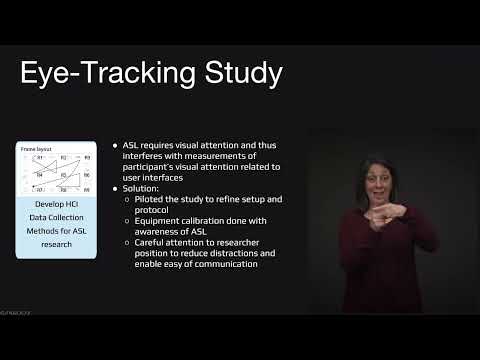
CHI 2025: Conducting HCI Research with the Deaf Community in ASL
CHI 2025: Conducting HCI Research with the Deaf Community in American Sign Language: Practices and Experiences
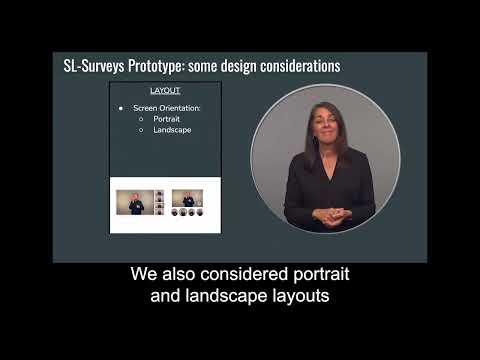
ASSETS 2023: Online Surveys in ASL
ASSETS 2023: User Perceptions and Preferences for Online Surveys in American Sign Language: An Exploratory Study
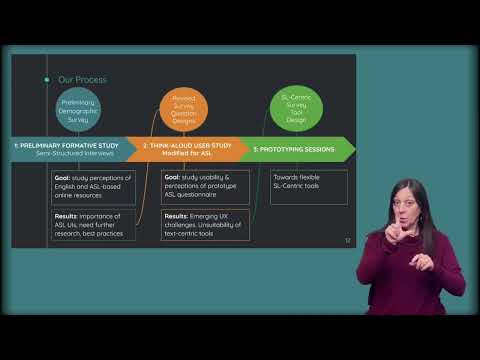
CHI 2022: ASL Survey Tools
CHI 2022: Towards Sign Language-Centric Design of ASL Survey Tools
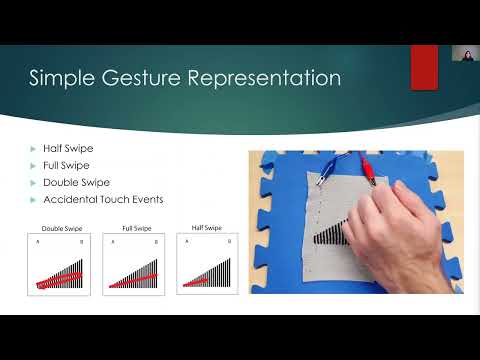
CHI 2022: Touch-Sensitive Knitted Fabrics
CHI 2022: Interaction with Touch-Sensitive Knitted Fabrics: User Perceptions and Everyday Use Experiments
IMWUT 2022: IndexPen: Two-Finger Text Input with Millimeter-Wave Radar
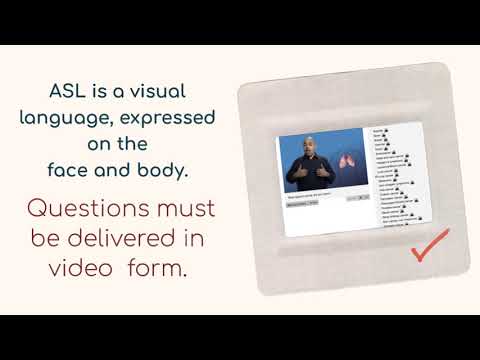
ASSETS 2020: ASL Questionnaires
ASSETS 2020: Creating Questionnaires that Align with ASL Linguistic Principles and Cultural Practices within the Deaf Community
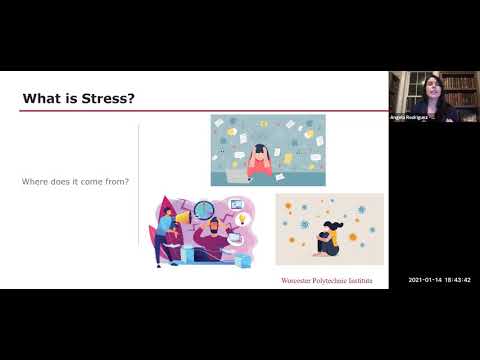
Ask Me Anything: Science of Stress
Ask Me Anything on the Science of Stress (with Angela Rodriguez and Jean King)
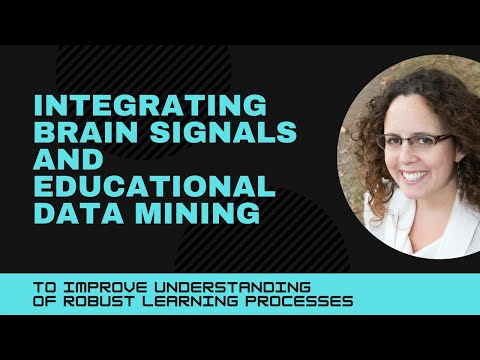
HCI and the Future of Work: Brain Signals and Educational Data Mining
HCI and the Future of Work and Well-being Conversation Series: Integrating Brain Signals and Educational Data Mining to Improve Understanding of Robust Learning Processes
Worcester Channel 3 News
Worcester's Channel 3 News: Our lab highlighted
NSF360: NSF highlights our grant on brain-computer interfaces
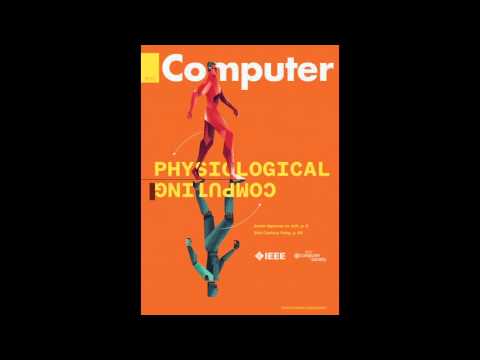
IEEE Computer Physiological Round Table
Physiological Round Table for IEEE Computer Special Issue on Physiological Computing
Microsoft Research in Focus 2014
Research in Focus at Microsoft Research (2014)
Microsoft Research Faculty Summit Panel
And How Does That Make You Feel? Panel at Microsoft Research Faculty Summit
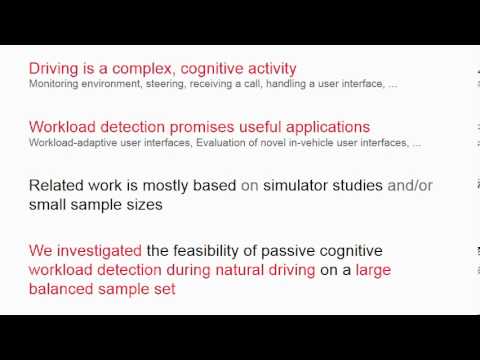
CHI 2014: Classifying Driver Workload
CHI 2014: Classifying Driver Workload Using Physiological and Driving Performance Data: Two Field Studies
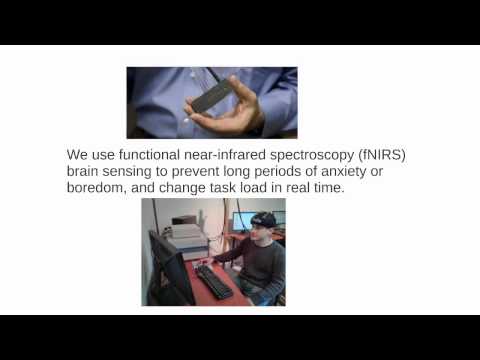
Dynamic Difficulty Using Brain Metrics
Dynamic Difficulty Using Brain Metrics of Workload