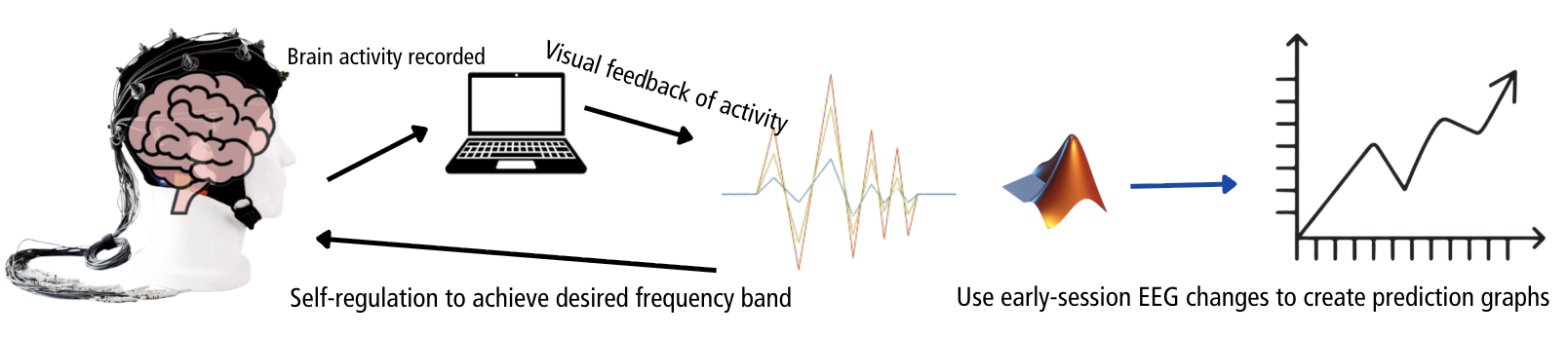
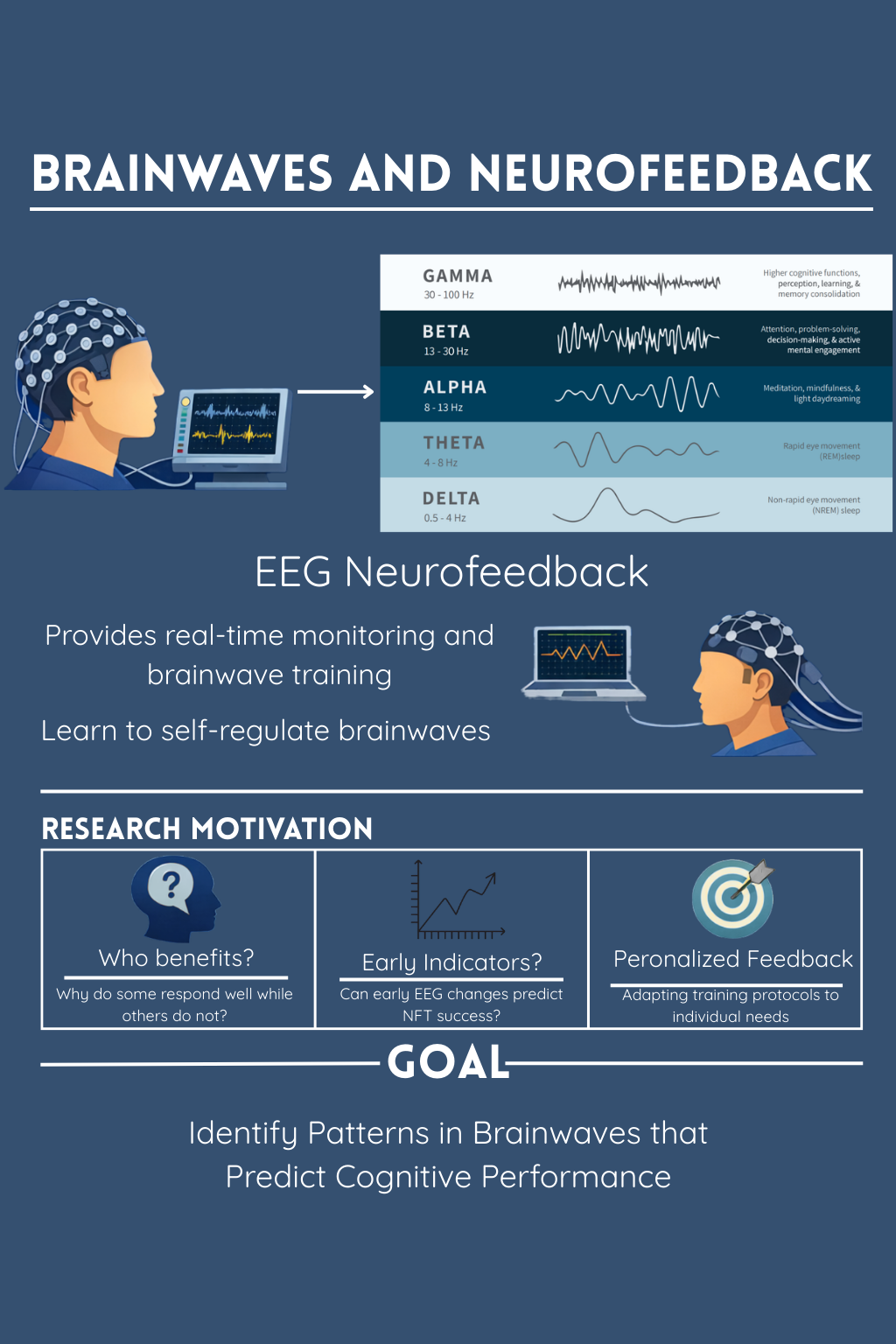
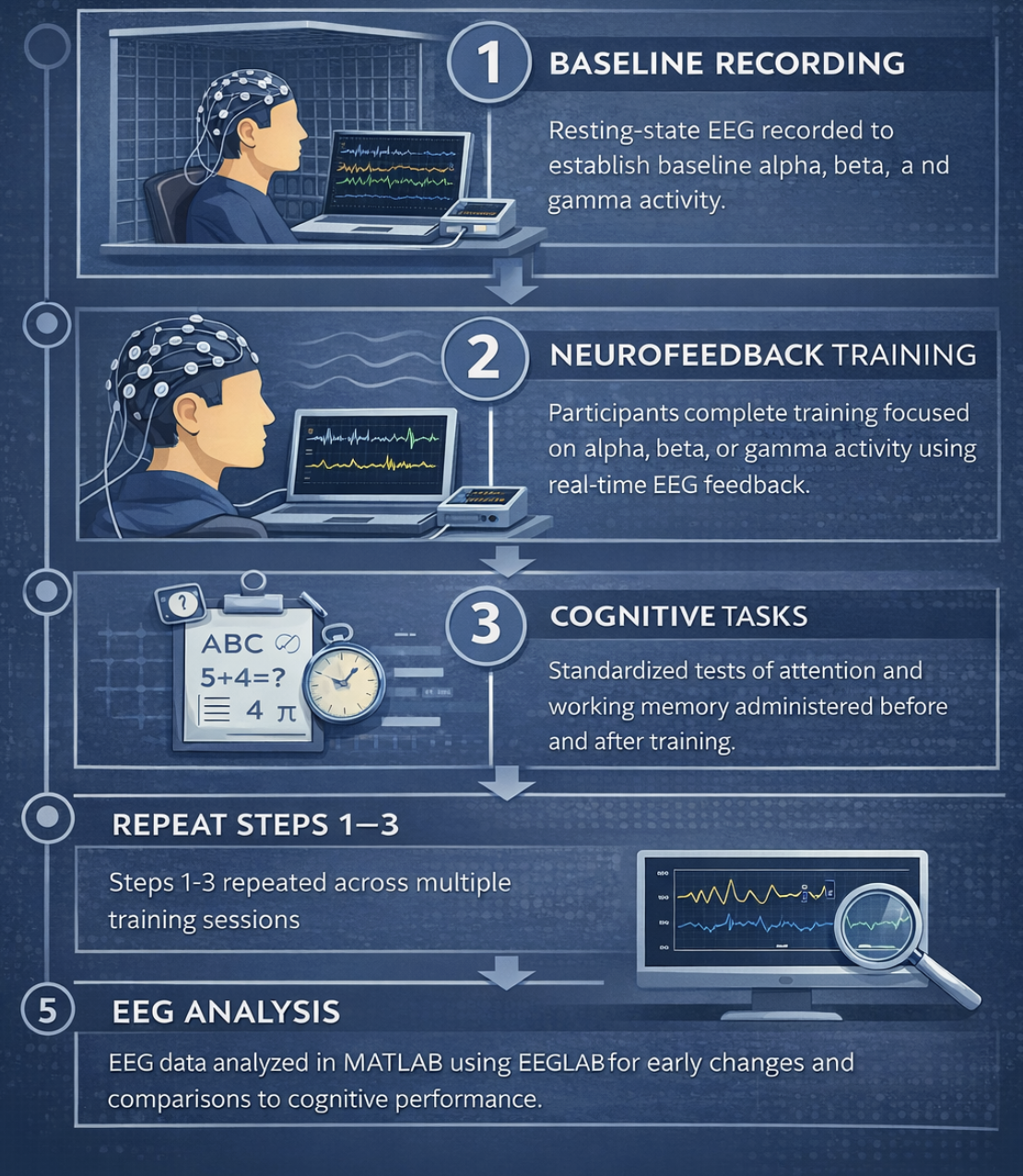
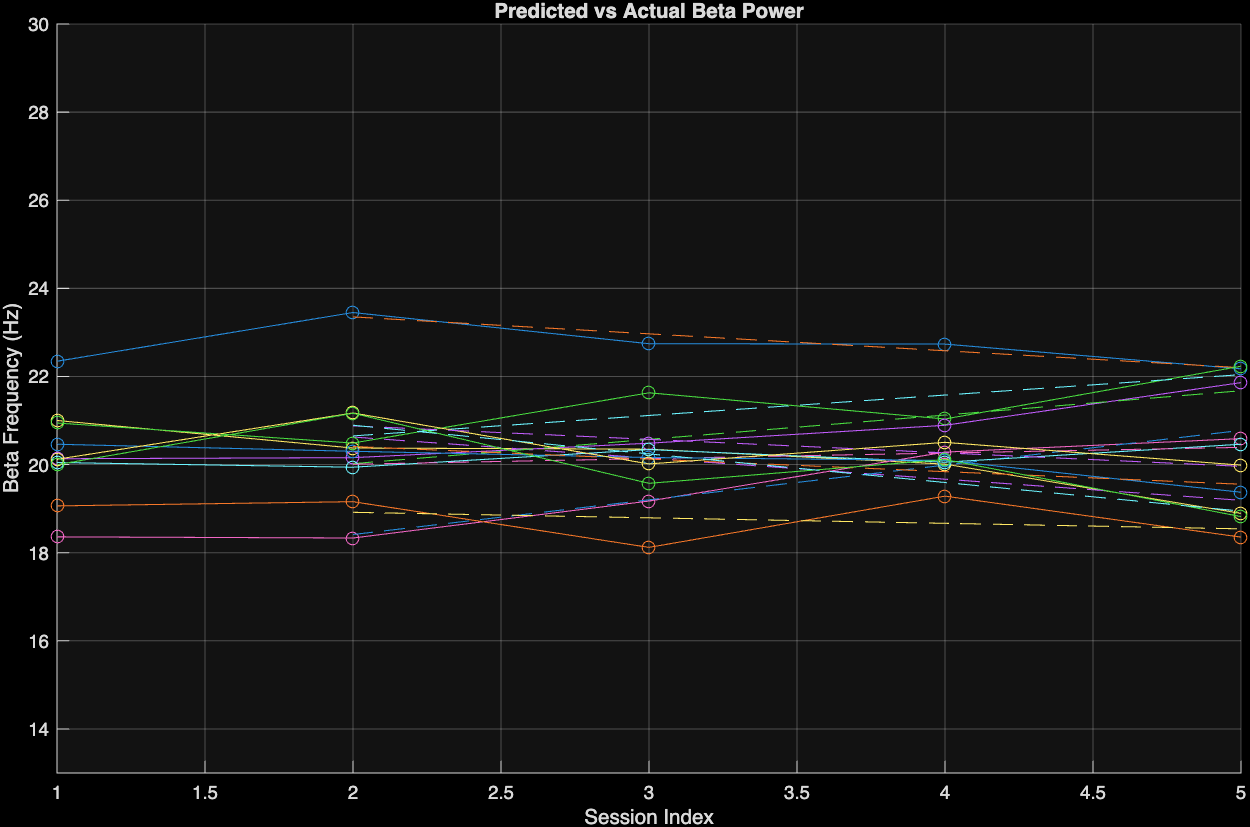
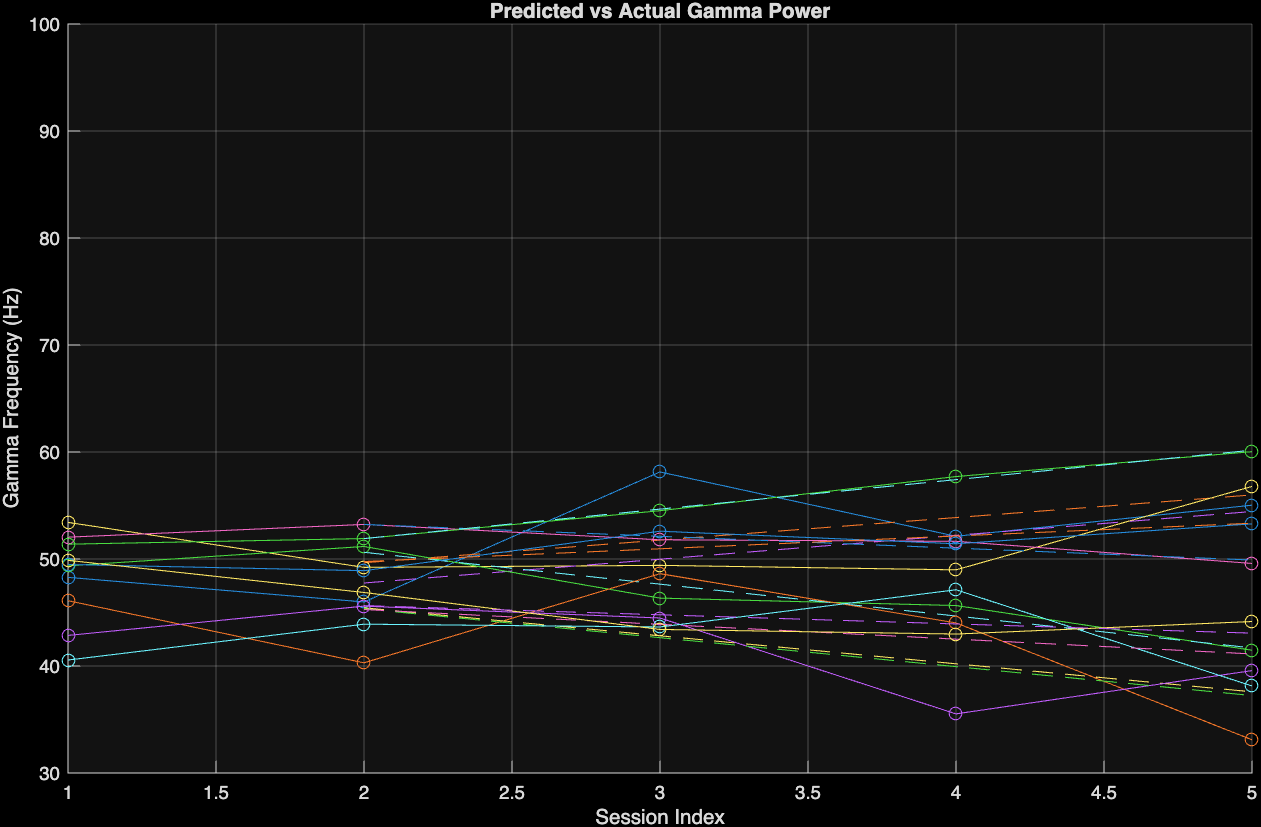
The human brain communicates through rhythmic electrical oscillations known as brainwaves, which can be measured using electroencephalography (EEG). Each of the five frequency bands correspond to a different state of consciousness or cognitive state. Alpha, beta, and gamma waves are different brainwave frequency bands, and they are closely related to functions in the brain like optimized cognitive performance, thinking, focus, and mental sharpness (Marzbani et al., 2016). Neurofeedback training is a type of biofeedback which uses sensors to monitor real-time brainwave activity through EEG signals. Neurofeedback training (NFT) has been used with different protocols, or brain waves, to provide effective treatment for many diseases. Originally used to treat conditions like epilepsy, NFT has evolved to be applied in extensive areas, like enhancing cognitive function (Vernon et al., 2003; Egner et al., 2004). Across different people, however, the effects of NFT can vary, which can make it difficult to predict if certain protocols are going to be more beneficial than others for every individual. Thus, this project aims to find out whether early EEG changes can help predict long-term neurofeedback outcomes.
Neurofeedback and Brain Oscillations
EEG signals indicate the brain’s electrical activity, with different frequency bands that correspond to different cognitive and behavioral states. NFT utilizes this by providing participants with feedback on the amplitudes of their brainwaves and allows the brain to self-regulate through various stimuli (Zoefel at al., 2011). Over time, individuals can modify the amplitudes of specific frequency bands, which lead to measurable changes in cognitive outcomes.
Alpha Band Activity
The alpha frequency band (8-13 Hz) is closely associated with being a strong marker of cognitive control and inhibition (Hanslmayr et al. 2005). Within this frequency band, upper alpha (UA) activity is specifically related to memory performance and improved cognitive performance (Zoefel et al., 2011).
Hanslmayr et al. (2005) provided key evidence which suggests that increasing upper alpha power through NFT can directly boost cognitive performance. In the study, participants who were trained through NFT to increase UA amplitude demonstrated significant improvements in their scores in mental ability tests. These tests were taken across participants who did and did not receive NFT to qualify performance results. From this study, Zoefel et al. (2011) conducted further sessions of NFT and found that subjects who were able to successfully increase UA amplitude showed much greater gains in cognitive tasks than the control participants. It is important to note that UA increases were independent from those of other frequency bands like lower beta, or lower alpha.
Beta Band Activity
The beta frequency band (15–32 Hz) is associated with active cognitive processing, focused attention, and task engagement. Beta frequency increases when individuals perform tasks that require fast decision-making and sustained concentration. Particularly, lower frequency beta activity (15-20 Hz) is linked to maintaining more attentional focus, while higher frequency beta activity is tied to working memory updating and executive functioning (Engel & Fries, 2010; Spitzer & Haegens, 2017).
For the purpose of this study, beta-band neurofeedback is a potential target for improving aspects of cognitive performance that rely on sustained alertness. Beta oscillations respond quickly to task demands, and thus they may also serve as an early predictor of neurofeedback trainability. Individuals who indicate faster increases in beta power during initial training sessions can show greater cognitive gains across the training period. Observing whether beta-band responsivity predicts future treatment outcomes can help identify participants who are most likely to benefit from a beta-focused neurofeedback protocol.
Gamma Band Activity
Gamma oscillations (generally 32-100+ Hz) are among the fastest brain rhythms and have been associated with high-level cognitive integration. Gamma activity is believed to support the binding of information across neural networks, enabling processes such as complex attention, feature integration, working memory maintenance, and conscious perception (Jensen et al., 2007). Increased gamma power is often observed during tasks involving mental effort, cross-modal processing, and the formation of coherent percepts from distributed neural representations.
For this project, gamma activity represents an important comparative frequency band, particularly in understanding whether higher-frequency oscillations provide additional predictive power for identifying strong neurofeedback responders. If early EEG signals for gamma waves correlate with cognitive improvements later in training, gamma-band responsiveness may be a useful biomarker of better cognitive performance. Conversely, limited early gamma trainability may indicate that lower-frequency protocols like alpha or beta may be more effective for a participant. Evaluating gamma-band behavior along with alpha and beta rhythms can therefore help determine whether individualized neurofeedback prescriptions can be optimized based on early EEG signals.
Predicting Neurofeedback Training Outcomes
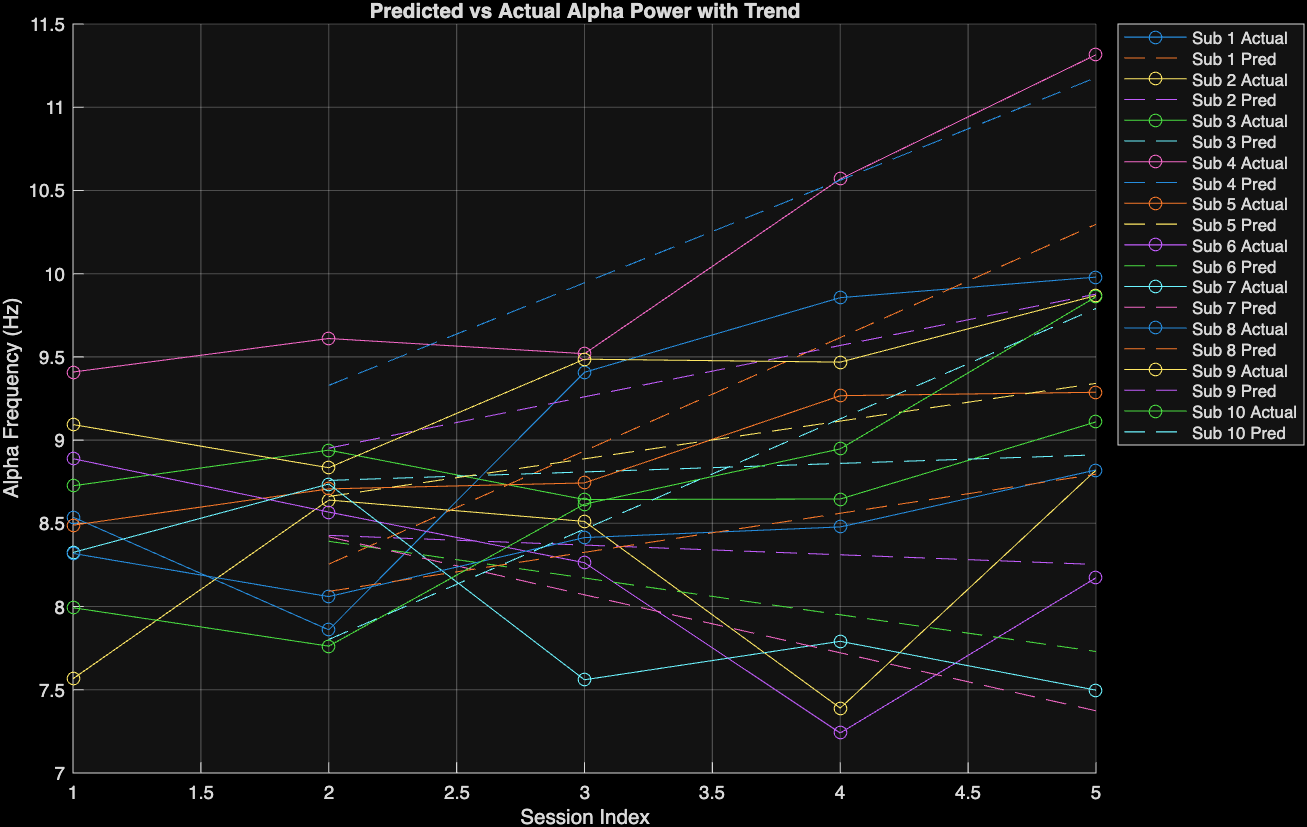
Recent evidence suggests that neurofeedback training (NFT) outcomes can be predicted after only a few sessions by examining early changes in neural activity and baseline EEG characteristics. Studies such as Hanslmayr et al. (2005) and Zoefel et al. (2011) found that participants who showed early increases in individually defined upper alpha (UA) amplitude were more likely to achieve long-term gains in both UA regulation and cognitive performance. A systematic review by Weber et al. (2020) further supported this, identifying baseline power in the trained frequency band and early session performance as key predictors of NFT success. Individuals who exhibit stronger resting UA activity or early positive trends in UA modulation tend to become “responders,” showing greater cognitive improvements over time.
While alpha-frequency predictors are the most well-established, emerging evidence suggests that beta and gamma frequency bands exhibit similar early indicators of trainability. Beta rhythms, which reflect attentional engagement and task preparation, often demonstrate rapid changes during the first few NFT sessions. Early increases in beta power have been associated with later improvements in cognitive tasks requiring focus and inhibitory control (Engel & Fries, 2010; Spitzer & Haegens, 2017). This means that participants who show initial responsivity to beta-based feedback may be more capable of long-term beta modulation and associated cognitive gains. Conversely, individuals with minimal early changes in beta activity typically demonstrate weaker overall NFT outcomes, suggesting that beta-band responsiveness may function as an early biomarker of attentional trainability.
Gamma oscillations, though more challenging to measure and train, also show potential as predictors of NFT outcomes. Gamma activity reflects high-level cognitive integration, including working memory maintenance and perceptual binding (Jensen et al., 2007). Participants who exhibit early gamma responsivity may later show enhanced performance on tasks involving complex attention or cognitive performance. For this study, tracking early EEG changes across these three frequency bands will help identify which participants are most likely to be “responders” to each protocol. More importantly, this information will help determine which frequency band is best suited to improving an individual's cognitive performance.
By using early neural indicators to predict NFT outcomes, this project aims to contribute to the development of personalized neurofeedback, where protocols are selected based on each individual’s neurophysiological profile and early training performance rather than a one-size-fits-all approach.