New Launchpad – A Strategy
for Interpretation
Contents
Part I: Aspirations and approach
Part II: Specifications
Part III: Appendices
Part I Aspirations and approach
Introduction
Launchpad is to be redeveloped after nearly twenty years of operation. The new gallery will cover more floor space and contain 55 mechanical and electro-mechanical interactive exhibits. There will also be a Science Show area, a Schools Briefing Room, an accompanying web site and an outreach programme. The new gallery will provide improved opportunities for visitors to learn and be inspired about the physical sciences for a larger and broader audience.
The over-arching aim of the project is to preserve the aspects of the gallery that are successful and to improve those that are currently under-performing. The key objectives are to;
· Broaden the appeal of Launchpad towards the upper end of the target audience (8-14) and for accompanying adults
· Improve provision for children aged 7 years and younger
· Reduce the frenetic and unfocused atmosphere of the current gallery
· Make the experience of visiting Launchpad more unique and memorable (i.e. more than just another science centre)
·
Draw links between the
Launchpad exhibits and shows and the
· Increase the depth and duration of visitors exploration of the exhibits encouraging reflection and questioning
· Extend visitors’ learning beyond the actual visit
The mission for the new
gallery is -
Launchpad will inspire you to explore and question science and technology through hands on experience of real phenomena in an environment that promotes curiosity.
This document outlines the aspirations for how New Launchpad will communicate the content of the gallery to achieve its learning objectives. It will explain how we plan to use the different exhibition media available to us and how we plan to help visitors understand their experience before, during and after their visit to the gallery.
Interpreting Launchpad – a unique gallery and approach
Launchpad is a unique gallery and requires an individual approach to delivering its content.
· Content will be communicated through electro-mechanical and mechanical interactive exhibits-there will be no museum objects. Computer and video labelling will be used to only a limited extent at certain exhibits (i.e. will not be a general approach to labelling)
· There will be no set route through the gallery nor will there be the sort of non-linear narrative structure used in galleries such as Who Am I? In Launchpad, exhibits will be organised by themes for example Forces and Motion to provide relevant and related experiences.
· Launchpad is not conveying a story rather it is a series of inspirational, thought-provoking and memorable experiences whose impact will extend far beyond the actual visit to the gallery
· Interpretation will provide a supporting role to the active exploration of the exhibits. The philosophy of the gallery and its approach to learning is based on learning through experience of real phenomena. The role of the interpretative tools is to enhance and extend that experience
· Explainers will staff the gallery at all times. Their interactions, briefings, shows and use of extensions will allow for greater understanding. Exhibits and the exhibition furniture must be designed to allow for free and easy interaction between visitors and Explainers. However most exhibits must also be appealing, accessible and educational for visitors without the intervention of an Explainer and the other forms of interpretation must be designed accordingly. A small number of exhibits will be demonstration pieces which can either only be operated by Explainers or can only be operated to their full capacity by an Explainer.
· As well as communicating the content, it is important for Launchpad to make its purpose and approach to learning explicit to visitors. In particular this will help provide context for teachers and adults in their interactions with children and set the scene for behaviour within the gallery. Curiosity, questioning and experimentation are the routes to greater understanding within the gallery and must be encouraged. Adult visitors must be encouraged to actively participate.
· Visitors must feel comfortable leaving the gallery with more questions than they arrived with. Launchpad is not about telling visitors what science is about but providing them with the experience of scientific investigation. Visitors should feel comfortable trying things out and taking the risk of getting things wrong. Exploration, experimentation and questioning are everything in this gallery.
Look and feel of the new gallery
The look and feel of New Launchpad needs to be different from the existing gallery and from that of a traditional science centre. Rather than providing an empty, neutral space to house exhibits we want a gallery environment that is exciting and thought-provoking, and that helps to promote the aims of the project. The design of the new Launchpad must clearly brand the gallery as being part of the Science Museum, not merely a science centre dropped into an empty museum gallery.
We are looking for a design that will provide the following
· Beautiful, magical, memorable
· Exciting and fun but without overwhelming the exhibits
· Humorous
· Unique – not like home, school, other Science Museum galleries or another science centre
· Sophisticated and contemporary – although the core audience for Launchpad are children it is vital that the design is not childish. For Launchpad to work parents, teachers and children aged 12-14 must feel that they too are welcome, comfortable and have a role to play and can learn from the experience (NB. at present Launchpad is perceived by adults and children to be for visitors aged 7 and under)
· Move the look and feel beyond a playground
· Features people – children, adults, Explainers; equal representation of males and females plus people from a wide range of ages, abilities/ disabilities and ethnic backgrounds.
· Promotes the idea that learning in Launchpad is about discussing ideas and questions, interacting with other people
· Conveys our learning agenda – learning is about devising new questions not just being told an answer. We want the design of the new Launchpad to support and help convey the idea that questions are more important than answers. It is especially important to convey this idea to the parents and teachers accompanying the children
· Encouraging, supporting exploratory behaviour to experiment and get things wrong
· Active, playful, encouraging hands-on exploration by both children and adults – the ethos of Launchpad is to learn through direct experience
· Makes links to the surrounding object rich galleries – for example The George III collection, The Energy Hall – and to the photo-voltaic roof above the gallery, Making of the Modern World, Exploration of Space, Flight etc
· Make meaningful links to the outside world – illustrating how these scientific phenomena have been applied in surprising and innovative ways in everyday technology
New Launchpad must be a gallery that is friendly, welcoming and accessible for schools and families. The gallery must cater for the basic needs of these groups. Adults must be confident about the safety of their children, toilets need to be clearly sign-posted, noise and temperature must be at comfortable levels. Surfaces and finishes must be durable and easy to clean. There must be sufficient space around exhibits for groups of visitors to gather without blocking access to other parts of the gallery. Parents, teachers and Explainers must be able to see what children are doing at exhibits, be able to see how the exhibit is responding and be able to participate in the experience.
The accessibility of the gallery, its exhibits and their interpretation for visitors with special needs must be improved and must meet the requirements of the Disability Discrimination Act.
Interpreting Launchpad
·
Aspirations
for New Launchpad interpretation
The interpretative approach
in the new Launchpad is a key area for innovation. New approaches to
interpreting interactive exhibits will be developed including video labelling,
video capture and replay and various visitor feedback techniques (Trace). The innovation used in this
interpretation should be apparent to visitors as well as professionals from the
museum and science centre sector.
The interpretation for the
new Launchpad must support the key objectives of the gallery to promote
learning about science through exploration and experimentation with real
scientific phenomena.
The style and tone of the
new Launchpad interpretation must be appealing to both children aged 8-14 and
adults. Its voice should be supportive, encouraging and challenging.
NB unaccompanied children (under 12)
will not be allowed into Launchpad – the gallery will not be used as a crèche.
A minimum of one adult to every eight children is required the ratio for family
groups is often closer to one to one. We wish to strongly encourage and support
teachers, parents, classroom assistants and parent-helpers to take an active
part in their children’s experience and to use the visit to Launchpad to extend
their own learning.
· Exhibits
The exhibits are the core of the Launchpad experience and are the primary vehicle for delivering Launchpad’s educational agenda. At the heart of each exhibit will be a scientific phenomenon that can be directly experienced and manipulated by visitors or demonstrated to visitors by trained Explainer staff.
All exhibits will support active
questioning and experimentation. Many of the exhibits will be specifically
designed to push visitors to engage in prolonged exploration.
Exhibits will be grouped according to six themes.
These themed areas will not all be of the same size, however each theme will
contain at least sevenexhibits. Each of the themed areas will include one
large-scale iconic exhibit that will signal the content of the area. These
exhibits will be particularly memorable and prominent.
1.
Forces and Motion - how forces act to change the
motion of objects as
formalised in Newton’s Laws of Motion. These laws describe how forces cause
objects to speed up, slow down and/or change direction. When all the forces
acting on an object are balanced, the object’s motion remains unchanged.
Newton’s Laws also state that forces always exist in opposed pairs
2.
Light – light is produced from a luminous source and it travels as
waves in straight lines. Light waves can be reflected, refracted as they pass
through different media and dispersed into the spectrum of colours
3.
Sound - sound generally travels in straight lines, from a source. Most sources of sound are vibrating
objects. The disturbances take the form of variations in air compression (and
therefore air pressure). The disturbances in the air travel outwards in all directions as longitudinal waves.
When they reach our ears, we hear sound
4.
Electricity and Magnetism - electric current is a flow of electrons
along a conductor. A magnet is
any material that has a magnetic field. Electricity and magnets interact to
create electromagnets and electro magnetic induction
5.
Materials - Materials consist of incredibly small, discrete (individual) particles. This fact is a gateway to
understanding the properties and behaviours of materials
6.
Energy Transfer - energy is ‘the ability of a physical system
to do mechanical work’. In other words, energy is needed to make things happen.
Anything that happens requires energy. Whenever anything does happen, energy
moves around (is transferred between different places) and is stored in
different ways. Energy transfer is never
100% efficient
Each of the exhibits within
a themed area and their accompanying interpretation need to illustrate the
content outlined above. The interpretation will play a key role in tying
together the experiences provided by each exhibit within a themed area. There
will additionally be many instances of where an exhibit in one themed area also
illustrates principles covered in another themed area. The interpretation
should, where possible, illustrate these cross links as well as the main theme
of the exhibit.
Exhibits will be of four types:
Demonstration – A small number of exhibits will
only be operated by or with an Explainer. These exhibits will demonstrate
dramatic phenomena such as electrostatics. Demonstrations of these exhibits
will occur at regular intervals throughout each day.
Illustration - Exhibits with one outcome, which
won’t be achieved without the correct usage. They illustrate principles rather
than allowing the user to put principles into action, the user cannot alter
variables
Illustration + problem solving -
Illustrative but includes an element of challenge in order to get outcome.
There is more scope for visitors to experiment through trying alternative
approaches.
Exploration - Multi-outcome exhibits, offering some form of outcome even if user hasn’t found optimum usage of the exhibit. These exhibits put principles into action, allowing the user to affect outcome through altering variables. The activities will be designed so as to provide just enough structure to guide visitors’ use of the exhibit while still providing opportunities for open-ended exploration wherever possible.
Exhibits will provide visitors with direct experience of real scientific phenomena. They will be delightful and intriguing-evoking strong emotional reactions in visitors. Exhibits will be chosen to offer a balance of competitive, collaborative, cooperative and contemplative activities.
Exhibits will be designed to be used by the target audience; however the role of supporting adults will be carefully considered. Adult involvement will be mediated through: careful exhibit design to allow access and viewing by more than one person at a time; by designing exhibits and the overall gallery with an appropriately sophisticated look and feel to make adults feel welcome; and label design to provide encouragement and ideas for parents to use in their interaction with their children.
Exhibits will be selected to vary the pace of activity within the gallery. Exhibits will be assessed against specific pacing criteria to ensure that unmediated frantic behaviour is avoided.
·
Under 8s exhibits
All exhibits will be useable by all of the main target audience, although we recognise that they may not all get the same learning experience. There will be six exhibits offering experiences especially designed to be appealing and accessible for children aged 5-7 although we realise that these children will be attracted to many other exhibits.
The content will be aimed at the under 8s and will reflect the six themes of the gallery. These exhibits will not be merely toys to amuse younger children but genuine interactive exhibits providing access to real scientific phenomena. Like the other 50 exhibits those aimed at the under 8’s must provide an experience that is unique – not merely replicating what children have at home, in school or in play-group.
The six under 8’s exhibits will have their own specific interpretation using text and images. Images will be more prevalent and to clearly appeal to the target age. This will also signal to older children that the exhibits are not aimed at them.
·
Special Needs provision
The design of the exhibits and their accompanying interpretation will take account of the requirements of visitors with special needs. All aspects of interpretation will be as accessible as possible to visitors with disabilities and where appropriate will also provide additional support/resources.
The labels in the gallery differ from the exhibits as they need to fulfil three access objectives:
1 To be as accessible as possible for the target audience (i.e. teachers/parents) including people with disabilities
2 To provide relevant access information for visitors (i.e. induction loops or extensions)
3 To provide specific interpretation for children unable to access the phenomena
In order for the labels to be accessible to the target audience two levels of accessibility will be considered (as outlined below). The team will aim initially at level 1 and only accept level 2 when all creative possibilities have been fully explored.
LEVEL 1:- Visitors with disabilities are able to access the interpretation in the format provided on gallery
LEVEL 2:- Some visitors with disabilities are provided with additional aids or formats to allow them to access the interpretation
The full disability access strategy is included in appendix 4.
·
Extensions
Exhibit extensions are extra tools, props or devices that will help in prolonging a visitor’s interaction with an exhibit – for example the fluorescent tube at the current plasma ball exhibit. They provide tools that visitors can use to explore the exhibit in greater depth reveal new and surprising aspects of the featured phenomenon. They will also play a role in helping visitors to understand the links between the phenomenon and its everyday applications and the links between the exhibit and objects from the Museum’s collections. Furthermore some Extension activities will be developed specifically to increase the accessibility of the exhibit for visitors with special needs.
In all cases Extensions must be housed at or very close to the exhibit (i.e. not underneath the Explainer Desk) and should be referred to on the labels where appropriate. Small storage areas will therefore be required for Extensions throughout the gallery either as part of the exhibit housing or incorporated into the gallery furniture. (See appendix 2 for a table listing which exhibits will include Extensions).
Extensions will be in two forms – those that visitors can use unaided and those that will require an Explainer.
It is envisaged that up to 15 exhibits will have some form of Extension activity when the gallery opens (see appendix 2) with the option to develop additional Extension activities at a later date. The Extension activities will be developed in conjunction with the Explainer team.
·
Links to the rest of the
Science Museum and the everyday world of visitors
Linking the new Launchpad to the world renowned collections of the Science Museum in general, and to the surrounding object rich galleries in particular, will be a key element in the strategy to making Launchpad a unique experience and far more than just a science centre housed in a museum.
High-lighting links between the 55 Launchpad interactive exhibits and key objects in the Science Museum’s collections will help visitors understand the relevance of the phenomena featured and why these particular interactive exhibits and objects are in the Science Museum.
This approach aims to extend visitors’ thinking and questioning beyond their visit to Launchpad to what they see in the rest of the Museum, helping to initiate and sustain conversations between adults and children about what they have seen and learnt.
The interpretation will also illustrate how the phenomena featured in the interactive exhibits have been used in wide range of surprising and intriguing technologies e.g. eddy currents are used in slot machines to identify coins and in recycling centres to separate different types of metal. It is vital that this information is genuinely surprising for visitors and is not merely a statement of the obvious e.g. “you can find bubbles in the washing up.”
The aim is to provide opportunities for visitors to build upon their prior knowledge – a key feature of the constructivist approach to learning that will be used in Launchpad – and to stimulate conversation among visitors when they are in the gallery. This approach will show how the science featured in Launchpad is relevant to our daily lives and is linked to the work of famous scientists and major technological achievements.
Links between the phenomena featured in the Launch Pad interactive exhibits, Museum objects and everyday technology will be featured in the gallery through:
§ The information on the exhibit labels
§ The Launchpad web site activities and resources such as themed image banks, gallery trails, video footage will be available via the computer terminals at the Explainer Desk
§ Photographs on the labels and incorporated into the graphic design of the gallery e.g. in photographs and projections in the threshold and on the gallery walls
§ Trace – visitors will be asked to suggest links between exhibits, museum objects and everyday technology; paintings and photographs sent in by visitors and incorporated into the gallery displays
§ Exhibit Extensions – at certain exhibits will illustrate how the phenomenon has been used in real life technology
§ Video and digital labels – where these labels are used they will provide additional opportunities to show links to real world applications and museum objects
Explainers, via shows, briefings and informal interactions with visitors at exhibits will provide additional information about the links to collections and everyday applications. Furthermore it is hoped that when the new Visitor Information Network and electronic labels for new galleries and exhibitions are produced they will provide links from the object rich galleries back to the exhibits in Launchpad.
·
Trace
Trace is defined as a series of innovative methods of interpretation used throughout the new Launchpad gallery. The key role of Trace in promoting learning is encouraging visitors to reflect upon and communicate their ideas and questions, not in conveying particular content about physics. Specifically Trace aims to increase visitors’ learning and enjoyment by:
o Encouraging visitors to reflect more deeply on their experience
o Encouraging visitors to share their ideas and questions with other visitors (to promote enquiry)
o Providing opportunities for creative thinking and expression which visitors can share with one another
o Engendering a sense of ownership and community around the Launchpad gallery.
Methods of delivering these Trace objectives are:
o A commissioned art piece by Scott Snibbe as the flagship of ‘Trace’ in the gallery.
o Questions from visitors built into the fabric of the gallery – displayed in the graphics on walls, seats etc
o Photographs of visitors built into the fabric of the gallery
o Signs that encourage visitors to record their achievements at certain exhibits by taking their own photographs
o Visitor feedback system where people are invited to leave hints and explanations relating to certain exhibits, ideas for link between exhibits and real world applications and to leave behind and send in questions their visit has triggered
o Books displaying visitor-authored solutions to certain exhibits (in the form of photographs)
o Voting systems built into certain exhibits that display your output compared to that of other visitors.
o Invitation by Explainers (in shows and briefings) for visitors to produce drawings of exhibits and their experience of the gallery, some of which will be displayed in the gallery
The aim of the visitor feedback element of Trace is to challenge and expand people’s perception of the physical world. Visitors will be invited to provide their questions and ideas about how things work, and challenge those of other visitors encourage them to re-think their explanations of scientific phenomena. Explainers will also contribute to this on-going discussion – adding more challenging questions and more useful answers, mirroring their approach to interacting with visitors in person on the gallery.
Samples of the Traces left by visitors will be displayed in the gallery. The primary purpose of such display is to encourage other visitors to contribute their ideas, questions etc.
Some elements of Trace will be fixed: they will contain material that was collected from visitors over a short period of time and will not be added to subsequently.
Other elements of Trace will be frequently updated by new input overwriting existing data so that the total volume does not become unmanageable. This process of over-writing past Traces should be transparent so that visitors do not expect their contribution to stay forever. This approach should only require minimal editing by Explainers to remove graffiti– a volume that should be manageable.
·
Art works and the Curiosity
Trail
A
major objective of the Science Museum Arts Programme for 2006 - 2008 is to
improve the ways in which the Museum interprets contemporary art interventions
in its galleries.
There will be up to six exhibits on a Curiosity
Trail around the new Launchpad gallery developed by leading contemporary
artists or
by designers who work within a cross discipline context. These six exhibits will be
interpreted by touch-screen digital labels, similar to those used in the Energy
Gallery.
Unlike the main exhibits they will not need to
directly convey one leading message-instead, they should demonstrate the ways
creative people from different disciplines examine and explore phenomena in
different ways, with exciting and differing results. The interpretation should
discuss
·
What makes it art
·
What the maker wanted to achieve
·
Explain why it is in Launchpad
·
How it relates to the content and to museum objects
and everyday applications of the phenomenon
·
How important the science behind the project was to
the maker
·
What sort of questions it raise. For example: a social question, a cultural question, a science
question, an art question
·
What sort of other work the artist makes
·
Who the artist is
·
Why the artist was interested to work within Launchpad
·
Other discourses and ideologies that the artist is
working within
·
Wider critical discourses that the artist's work exists
in, in an accessible manner
·
Labels
Labels are key to providing instructions on how to operate the exhibits, direct visitors’ attention to salient aspects of the experience and for providing information to help explain the relevance of the phenomena featured in the exhibits. Adults in particular assume that exhibits that are not labelled do not contain any serious content. Labels are often read by adults to children or at least paraphrased.
Every interactive exhibit in Launchpad will be labelled in some form or other. The core functions of these labels are to provide:
1. The exhibit’s name
2. The subject area cover
3. The ultimate goal(s) of the exhibit (if not implicit in the exhibit’s design)
4. How to begin the interaction (i.e. hints of what to do and how to get started; a call to action; initial goal of the activity)
5. (Where appropriate) how to extend the interaction/exploration beyond the initial goal
Four different forms of label will be used in the gallery
1. Text only – ranging from single words up to 60 words in length
2. Text and graphics – including photographs, graphic images etc.
3. Computer labels – for the Curiosity Trail of art works on touch screens
4. Video labels – on standard size LCD screens to provide illustration of how to operate certain exhibits where written instructions would be too cumbersome; and/or to capture and replay events that happen very quickly (like the launch of a rocket)
Often exhibits will require more than one of these styles of label e.g. a video label plus a short label to explain the function of certain components. (See Appendix 2 for details of which exhibits will require which styles of labelling).
Whatever form of labelling is used it is important that they do not overwhelm or detract from the interactive exhibits. However labels must be sufficiently prominent for visitors to be able to find and easily read them while using the exhibit.
The primary audience for labels will be adults (parents, teachers, class-room assistants, parent-helpers) accompanying children. The aim is to equip adults with knowledge and questions that will best help them guide their children’s exploration and to initiate and sustain conversations between adults and children about the exhibit. Of course many children will also read these labels so they should be designed to be accessible for this audience as well. The reading age for the majority of text will be 10 years. However scientific terms will be included that are relevant to the exhibit and which may not have previously been encountered. Where appropriate phonetic spelling of complex words should be provided. (See appendix 6 for the styles of text and graphics felt to approach what is required for the new Launchpad gallery).
·
Explainers
Explainers will also be a key communication tool within Launchpad - supporting the broader ambitions of the gallery and the deeper content in each individual exhibit – but must not be considered as a replacement for labels, nor as childminders.
Explainers will present Science Shows and workshops, school briefings, demonstrate certain exhibits and more casually interact with visitors at exhibits guiding visitors’ exploration and providing extension activities as required.
Explainers will feature prominently on the web site responding to questions and advertising them as a resource.
· Science Shows and the Show Space
The
major communication functions of the Explainer science shows are to offer
deeper levels of content on specific topics of the gallery themes, and to
broaden the coverage of the gallery to include Chemistry, Astronomy and other
topics from the physical sciences that do not lend themselves to display in the
form of interactive exhibits.
Shows
will be inspiring participatory events acting to both deliver relevant
scientific information and to encourage audiences to engage with science
further, in Launchpad, the rest of the museum, in school and in their
everyday lives. Shows will be presented by Explainers and will involve the use
of large-scale demonstrations, props, AV presentations. A new show celebrating the new Launchpad
gallery will be a feature both in the on-site show space and through the
outreach programme.
The Show Space will be separated
from the rest of the gallery but will be visible from the main gallery.
Visitors will also be able to see into the show space during shows. The space
itself will build excitement and anticipation of taking part in a show.
The
show space will primarily be a presentation space, equipped with the necessary
AV and other equipment to allow for a professionally level of performance. The
space will only be used for Explainer led activities.
The
Show Space is not a substitute classroom and should not look like one.
·
Launchpad Briefing Room
The
Launchpad Briefing Room will be located in the space currently occupied by On Air. It will be used primarily for
Explainers to give short briefing and de-briefing sessions for schools booked
into Launchpad although it may also be used as a workshop space during school
holidays and weekends. The space will be a fairly neutral ‘white room’ similar
to the schools’ briefing room next to the Energy gallery. It will contain
moveable seating for up to 50 children and adults as well as AV equipment.
·
Launchpad Online in the
gallery
Launchpad Online is a key element in extending the learning from Launchpad beyond the confines of the Science Museum as well as providing access to the ideas and resources of the gallery for those who cannot come to the Museum. The presentation of the Launchpad web site must be used carefully in the gallery, so as not to alter the ethos of using real phenomena.
The presence of the New Launchpad website in the gallery will be focussed at the Explainer Desk with three computer terminals allowing visitors a chance to explore certain selected elements of the web site and to send links to their email addresses.
Elements of the Launchpad web site will also be featured in the AV presentations in Explainer Science Shows and Briefings and in photographs.
· Schools resources
A new online educational resource will be developed in conjunction with practicing teachers to support Launchpad’s learning potential. The resource will communicate key scientific information, national curriculum links and the gallery’s exploratory and participatory learning ethos. The resource, which can be used to support a visit to Launchpad or as a stand-alone source of materials to explore the themes covered in the gallery, will be aimed at Launchpad ‘s core audience of key stage 2 and key stage 3 pupils (8-14yrs).
The aim of the resource is threefold - to inspire and prepare teachers, providing everything they need to plan and book a visit to Launchpad; to ensure that the learning in the gallery is as effective and relevant as possible for their pupils; and to support and consolidate the learning back in the classroom after a visit.
The resource will include key information and tried and tested classroom activities that meet teachers’ expectations, alongside exciting new materials which will exceed them. The resource will be a valuable source of free, innovative interactive whiteboard materials and online activities for pupils. Teachers will be given unprecedented access to gallery-based interpretation such as a label bank which they will be able to adapt to the needs of their pupils (e.g. translate, change text or font size) and an image bank (providing high resolution images of exhibits, Museum objects and real world applications), allowing them to produce their own high quality resources. Teachers and pupils will feel ownership over this, their online space, in a new area which encourages groups to share their visit experience and classroom work online, which will become a valuable source of inspiration for other teachers.
We will not be producing paper resources.
·
Teacher Training
A
teacher’s course will be developed to support teachers in making the most of
the new gallery. In addition to the
gallery’s learning approach, the course will also cover preparation, content,
shows, the resource and how best to follow up the experience in the
classroom. It will also focus on
defining and improving teacher’s roles as facilitators within the gallery. While it will be designed with visits to the
gallery in mind, a version of the course will also be available for teachers
participating in the Launchpad Outreach Programme (see further
detail below).
· Briefings and debriefings
Sessions for school groups will be rewritten to reinforce the content on the gallery. The educational philosophy and approach and the role of the Explainers will be made clear. The debriefing at the end of a school group’s visit will allow children to reflect on their experience, ask questions and put their learning in context. There will be materials, displays and extensions to support this debrief. School briefings and debriefings will take place in the current On Air gallery.
·
Publications
Several publications are being planned to tie into the new Launchpad gallery. Most of the titles will be aimed at KS2 and KS3 audiences, although a paper engineering or picture book is being discussed for KS1.
The books are being developed with our commercial publishing partner, Macmillan, who provides editorial and market expertise, and production resources as their stake in the partnership.
The over-arching objective is to create profitable books that represent the essence of the Launchpad gallery becoming an off-site extension of the learning and fun experienced in the gallery. Agreed formats include a home/kitchen science ‘DIY’ book that will enable children to conduct home experiments that are in the spirit of the Launchpad gallery. There will also be a series of books, each focusing on one of the six key Launchpad themes: light and sound, electricity and magnetism, forces and motion etc.
The books will be available both in the Museum and in general bookshops. They are regarded as a value adding component to the gallery, which might be seen by people who have never been to the Museum and encourage them to visit the gallery.
·
Outreach
The
outreach programme will also support the content and philosophy of the gallery
by bringing a Launchpad experience to schools that may have visited and to
those that are located far away. The
programme will include classroom sessions, a new show, inquiry based Launchpad
workshops
and Launchpad -themed shows/ demonstrations performed by participating
children, all linked to the themes and
learning outcomes for the gallery. Resource
boxes containing extension activities from the gallery will be available to
classes participating in the workshops.
The new Launchpad show will also become available as a regular feature
of our fee-based outreach programme.
Part II
Interpretation on gallery falls under 11 main
headings:
·
External signage
·
Gallery entrance
·
Sponsor acknowledgement
·
Orientation map & signs
·
Title of individual areas
·
Threshold experience
·
Gallery ethos/ questions
o
Seating
o
Desk
o
Show space
o
Briefing room
·
Trace
o
Visitor feedback
o
Books
o
Children’s drawings incorporated into graphic design
·
Exhibit labels
o
Text only
o
Text/graphics
o
Under 8’s text/ graphics label
o
Curiosity Trail digital labels
o
Video labels
o
Element label on exhibit
o
Warning label
o
Accessibility signage
o
Book of Trace
·
Show/ demonstration information
·
Web presence
Specifications:
·
External signage
A strong and clear signing of the gallery title to be
on show outside the Museum from the opening date for at least 6 months each
year for the first three years. To include acknowledgement of sponsors.
·
Gallery Entrance
The gallery entrance should raise anticipation of the
unique hands-on experience of Launchpad, set the scene and communicate what
happens in the gallery.
The title ‘Launchpad’ should be boldly and clearly
stated at the entrance, with a strap line to help visitors understand its
purpose. The title should also be
suitable for use in printed materials and as a signal for the gallery. The sign at the gallery entrance should be
more than just a panel – it should reflect the nature of the gallery. It should
also be visible from the top of the Pendulum Staircase and from across Gallery
65. To include acknowledgement of sponsors. (See below and Appendix 1)
There will need to be some additional text outside
the entrance to state clearly that unaccompanied children are not allowed
inside (and any other legal requirements).
·
Sponsor acknowledgement at entrance
The sponsors’ acknowledgements fall into two main
areas:
• Main acknowledgement at the gallery entrance to the
principal and major sponsors. This must be more than a panel; it must reflect
the importance of the sponsorship to the gallery and the nature of the gallery
• Thank you – a generic thank you to all the other
contributors to the gallery, discrete but not invisible. This should include
thanks to the scientists who helped check the accuracy of the text and advise
on the content.
Sponsors must also be acknowledged at the gallery’s
main exit (see Appendix 1)
·
Orientation map at entrance / signage in the gallery
Outside the main gallery entrance there should be a
tactile map of the gallery indicating its layout and highlighting the key
elements:
o
6 themed areas: Light, Materials, Energy Transfer, Forces
& Motion, Electricity & Magnetism, Sound
o
The Show Space
o
Explainer desk
o
Main exit
Orientation information should include symbols as
well as text for ease of use. (I.e. male and female toilet icon, ‘info’ icon at
Explainer desk). The following areas of the gallery should be clearly signed
and visible from across the gallery (these are not necessarily the final
titles):
o
Show Space
o
Launchpad Schools’ Briefing Room (visible from across
Gallery 65 and from the entrance to Launchpad)
o
Launchpad briefing room (to be visible from
across Gallery 65)
o
Explainer desk
o
Main exit
o
Launchpad toilets
·
Threshold experience
Visitors will enter the gallery from Gallery 65. It
is not anticipated that the threshold will contain text or exhibits as we do
not want people to linger here. Instead, the design and any interpretation
within the threshold will reflect and quickly convey to passing visitors the
nature of the gallery experience i.e. multi-sensory, accessible, participative
and exploratory.
Like the gallery entrance, the threshold experience
should raise anticipation of the unique hands-on experience of Launchpad, set
the scene and communicate an idea of what happens in the gallery.
·
Title of individual areas
Each area has a simple, concise title (between 1-3
words) that appears prominently within the area and is visible from a variety
of angles. The six themed areas are: Light, Materials, Energy Transfer, Forces
& Motion, Electricity & Magnetism, Sound (NB these may not be the final area titles)
·
Gallery exit
Visitors will exit the gallery via a door in the
south-east corner of the gallery, leading directly to the Scenic Lifts.
Visitors approaching the exit from the Scenic Lifts or the adjacent staircase
need to be provided with information about what is behind this exit door and
how to find the entrance to Launchpad.
·
Gallery ethos/ questions
Exploration, experimentation, people and
participation are at the heart of the Launchpad experience. The photos should
include the whole target audience (8-14 yr olds) as well as Explainers,
teachers/ parents. People featured in these photographs should represent an
equal number of male and female visitors, a wide ethnic mix and include people
with disabilities. They should include not just individuals, but groups
collaborating (especially adults joining in with children).
Asking questions is at the core of the Launchpad
experience and we aim to encourage visitors to follow this approach – leaving
with even more questions than they arrive with. To encourage this, large format
questions appear in each of the following locations.
o
Seating/ hedges
o
Desk
o
Show Space
o
Briefing room
o
Other locations as deemed appropriate by the designers
The questions need to be artful and intriguing as
well as meaningful reflecting the content of the gallery. Something along the
lines of: ‘Where does your shadow go in a brightly lit room? What happens to
the flame when you blow it out?
- Trace
o
Visitor feedback boards
There needs to be a consistent, low-tech mechanism
for visitors to record and display their questions and ideas. It needs to be
instantly editable by Explainers. These ‘boards’ are required at three
locations in the gallery: by ‘Yacht challenge’, ‘Eddy Currents’ and at a
central location away from exhibits e.g. explainer desk or outside wall of Show
Space. One of their core functions will be to ask visitors to suggest links
between the scientific phenomena featured in the gallery and objects in the
Museum’s collections and everyday technology.
o
Books
There will be seven gallery books, each of 8-10
pages, displaying photographic hints and creative solutions for solving certain
problem-based exhibits i.e. three each at Circuits
and Counter Balance Table and one at Shadow Workshop. Minimal text (<10
words per page) will explain the book’s contents and indicate the identities of
the visitors who contributed to them.
o
Visitors’ drawings incorporated into graphic design
Explainers will encourage visitors to submit drawings
of their Launchpad visit. This is a key method for encouraging visitors to
reflect upon their experience of visiting the gallery and to consolidate their
learning. A small handful of these will be displayed on the website and in scrolling
PowerPoint presentations in the Show Space and Briefing Room. They could also
be incorporated into the permanent wall graphics in the gallery e.g. on the
walls dividing Launchpad gallery from George III, on the wall of the Show Space
and Briefing Room, in the seating/hedges, around the Explainer Desk.
·
Exhibit labels
All exhibit labels must be part of the exhibit
housing or, where this cannot be feasibly achieved, positioned prominently
within 0.5 metres of the exhibit and within line of site of a visitor operating
the exhibit’s controls. Exhibit labels are aimed primarily at adults
accompanying children in the gallery and should be designed and positioned
accordingly.
All exhibit labels should be appropriately lit so
that they are comfortably legible, even in the darker areas of the gallery.
Exhibit labels should:
·
use good contrast between text and background
·
use consistent spaces between words
·
not overlay text onto pictures
·
not shape text around embedded forms
·
not use continuous capital letters
Exhibit label accessibility:
By following the guidelines above and using text of an appropriate font
size, labels will be accessible to many visually impaired visitors. In addition
we will cater for the visually impaired by making tactile/ Braille versions of
exhibit interpretation available from the Explainer desk as a ‘carry-around’
book. These books will contain a tactile map indicating the location of each
exhibit within the space, a brief description of the exhibit plus the text that
appears on the label next to that exhibit. This text will be edited to remove any
inappropriate lines e.g. ‘Look for the x’. The resource will be developed under
advice from RNIB.
Particular thought needs to be given to the labelling of exhibits in the
Light area of the gallery. Light levels in this section of the gallery will be
low in order for the exhibits to work but the labels need to be easy to find
and to read.
o
Text only
It is likely that the majority of the exhibits in the
Launchpad gallery will be interpreted primarily through the medium of a text
only label. These labels will begin with a prominent exhibit name (1-4 words)
and will contain up to 50 words of text. The reading age will be 10 (however we
will be introducing technical vocabulary where appropriate, possibly
accompanied by phonetic spelling).
Each text label will fulfil some, but not all, of the
following roles:
Essential
(in most but not all cases)
1.
The exhibit’s name
2.
subject area
3.
An ultimate goal of the exhibit – so as to inspire and guide
visitors
4.
Some exhibits will require a credit for the designer
Highly desirable
5.
If not implicit in the exhibit’s design, how to begin the
interaction (i.e. hints of what to do and how to get started; a call to action;
initial goal of the activity
6.
How to extend the interaction/exploration beyond the initial
goal
Desirable
depending on the nature of the exhibit and amount of information already
included on the label)
·
How to extend the learning beyond the gallery – links to
other exhibits, the web site, museum objects, surprising real world
applications of the featured phenomenon
·
Cross links to other thematic areas in Launchpad
·
Background information – e.g. fascinating facts
·
Guide and focus visitors’ attention onto key aspects of the
featured phenomenon
·
Introduce key vocabulary (and phonetic spelling)
·
How an Explainer can help
·
How to use the extension activities
·
How the exhibit works
·
How to visitors’ use of the exhibit mimics scientific
processes – e.g. experimentation, observation
·
That this is an exhibit that has timed demos – check the
main show time board for the next demo
·
Icon indicating the presence of a induction loop for hearing
aids
o
Text & graphics
As above, but in a proportion of exhibits the label
will also include a line drawing to focus visitor’s attention on key areas of
the exhibit or to illustrate complex principles of the exhibit’s operation e.g.
the path of a light beam bouncing onto a concave mirror. Other text &
graphics labels will include photographs illustrating surprising everyday
applications of the featured phenomenon, related objects from the Museum’s collections,
or other information to help visitors interpret the exhibit (See Appendix 2 for
which exhibits require this)
o
Under 8’s text & graphics label
As for the text & graphics label, but the word
count will be lower (up to 30 words) to make it easier for parents to scan and
read aloud or paraphrase. Text will communicate what to do (if this cannot be
communicated in the illustration) and what science content it relates to (to
emphasise to parents that it’s not just a playground activity). Every Under 8’s
label will include an illustration of the activity in a style distinct from the
other labels and designed to appeal to the under 8’s audience.
o
Curiosity Trail digital labels
The Curiosity Trail highlights exhibits and
interventions in the gallery that, as well as communicating Launchpad-relevant
content, look at an idea or phenomenon ‘through a different lens’. The
interpretation of these exhibits will draw attention to the artists or designer
who produced them and what they were intrigued by when making these exhibits.
There will be up to six exhibits on the Curiosity
Trail, which will be interpreted by touch-screen digital labels, similar to the
three digital art labels used in the Energy Gallery. These digital labels will
consist of a title/ attractor screen plus up to 6 screens of predominantly text
screen, each containing no more than 40 words.
These labels will include coverage of the following
topics (See Appendix 3 for information on the Energy gallery digital labels and
their structure/ content):
·
One-liner/ strap line on the Curiosity Trail
·
The exhibit’s name, plus name of artist/ designer, date and
materials used in the exhibit
·
Subject area/ artists intention
and inspiration; how important the
science behind the project was to the maker
·
Guidance on what to do/ look for
·
What makes it art
·
Explain why it is in Launchpad
·
How it relates to the content and to museum objects
and everyday applications of the phenomenon
·
What sort of questions it raise. For example: a social question, a cultural question, a science
question, an art question
·
What sort of other work the artist makes
·
Why the artist was interested to work within Launchpad
·
Wider
critical discourses that the artist's work exists in, in an accessible manner
o
Video labels
Video labels consist of a loop of pre-recorded film
accompanied by minimal text (<10 words per screen) showing either how to
perform a complex operation on the exhibit e.g. Turntable, or to reveal
important elements of the phenomenon which would otherwise not be visible e.g. slow
motion of ‘Water Rocket’ launch. These labels are not interactive and do not
require touch screens. They may also be used to illustrate links between the
interactive exhibit, related museum objects and surprising everyday
applications of the phenomenon.
Unlike the Curiosity Trail digital labels, video
labels are in addition to, rather than a replacement for, the main exhibit
label. They will repeat the exhibit’s title, but none of the other information
in the main exhibit label.
Video labels will be displayed on screens sufficiently
large to provide a shared experience between children and adults considering
using the exhibit.
Video labels will accompany up to 5 exhibits in the
gallery (see Appendix 2 for details).
o
Element label on the exhibit
Approximately half of the exhibits include elements
which will be individually labelled e.g. ‘prism’ in the Light Table; Hydrogen
and Oxygen gases in Hydrogen rocket or ‘Frequency’ dial on Invisible Visible
exhibit. (See Appendix 2 for details of which exhibits).
These labels should be clearly legible for visitors
standing at the exhibit controls and will be fixed to the relevant section of
the exhibit. Element labels will consist of no more than 3 words each although
some exhibits may carry two or more such labels.
o
Warning label
Five of the exhibits in the Electricity &
Magnetism zone (see Appendix 2 for details of which exhibits) require a highly
visible warning label to indicate to visitors the potential damage to possessions
such as mobile phones or credit cards that may be caused by the strong magnetic
and electrostatic fields in this area.
It should also include a label warning people with pacemakers to avoid
interaction.
These labels will contain no more than 15 words of
text and may need to contain the appropriate standard hazard symbol.
o
Photo opportunity label
Photo opportunity labels encourage visitors to use
their own cameras to capture their ‘Launchpad moments’. Visually distinct
labels consisting of an appropriate icon and no more than 15 words will
highlight photo opportunities next to up to 6 exhibits (see Appendix 2 for
details).
The label should be positioned in the spot from which
the best image can be captured.
·
Show/ demonstration information
Times of shows and exhibit demonstrations will be
displayed on a large LCD or plasma screen, (updatable by Explainers). The
screen will also show short video clips from previous shows and demos, in
between show info times. This screen should be centrally located and away from
exhibits e.g. by Explainer desk or show space entrance.
·
Web presence
The presence of the Launchpad website in the gallery
will be focussed at the Explainer Desk and constitutes three elements: 3
terminals allow interaction with the core game play of the Launchpad website;
large projections onto the structure of the Explainer desk showing advanced
game play from the Launchpad website and incorporating the web address;
takeaway postcards featuring striking Launchpad images on the front and the web
address prominently on the back, plus text saying ‘tell your friends about your
favourite Launchpad moment’ or similar.
Explainers will also incorporate mention and content
from the website into briefings and shows where appropriate.
Part III
Appendix 1
Notes
on Sponsor accreditation benefits
Appendix 2
Appendix 3
Appendix 4
Launchpad disability access strategy
Appendix 5
Examples of graphic illustrations showing the style
of approach required for the under 8’s exhibit interpretation
Lauren Child illustrates Clarence Bean and Charlie
and Lola





Sarah Dyer is the author of Five Little Fiends and Clementine
and Mungo



Appendix 6
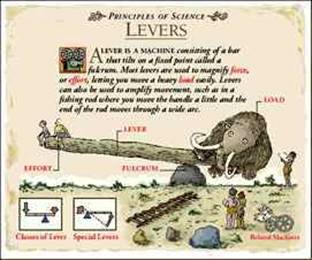
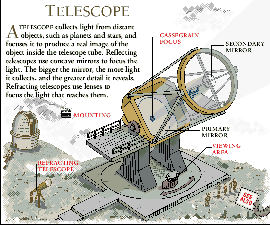
Styles of graphics and text that illustrate the
desired approach for new Launch Pad interpretation
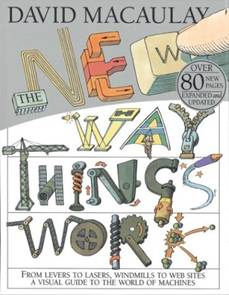
Transform – How everyday things are made, by Bill
Slavin


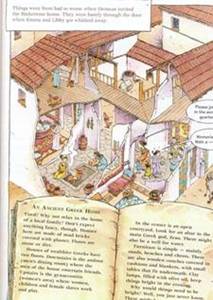
How Things Work by David Macaulay