In STEM class, we begin the year with our independent research projects. Each student pursues their own, unique project, tailored to their interests. We learn crucial technical writing skills, along with strategies for data collection and analysis. See below for some examples of assignments from this year!
QUAD CHART
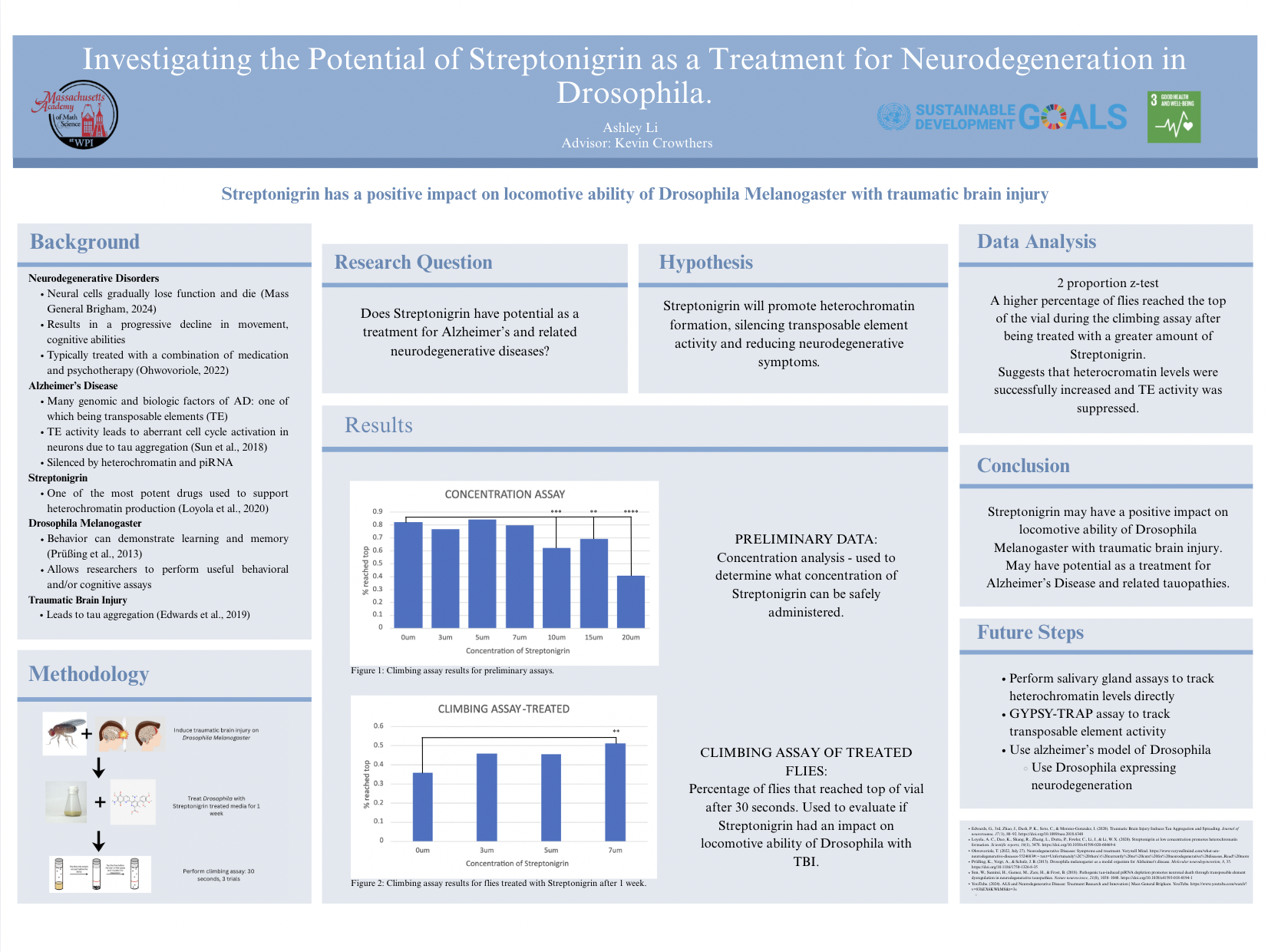
This here is my Quad chart for my STEM I project. It consists of four quadrants and a center main takeaway. The first (top left) section covers the research question, hypothesis, and graphical abstract. Next, the section below is a methodology infographic. The next two boxes on the right cover the data collected and conclusions taken from that data.
Having trouble viewing this document? Click here to access the PDF!
Investigating the Potential of Streptonigrin as a Treatment for Neurodegeneration in Drosophila.
ABSTRACT:
Neurodegenerative diseases impact over 50 million people worldwide, a number projected to double every 2 decades. Despite it being such a large and impactful disease, there is no known cure. Due to this, it is crucial to research further into the depths of newer potential disease inducers and targets. Transposable element (TE) activity has recently been discovered to play a role in neurodegeneration of Alzheimer’s patients. In this research, Drosophila Melanogaster expressing neurodegenerative symptoms through a knockdown of HP1b were used to test the potential of Streptonigrin on suppressing TE activity. Streptonigrin is an extremely potent drug known for promoting heterochromatin formation, a crucial TE suppressor. Assays evaluating locomotive ability and heterochromatin density were utilized in this research. This study has found that Streptonigrin does have an impact on neurodegeneration in Drosophila, reducing transposable element activity and enhancing heterochromatin prevalence. This suggests there may be potential for future research regarding Streptonigrin as a treatment for Alzheimer’s and related neurodegenerative diseases.
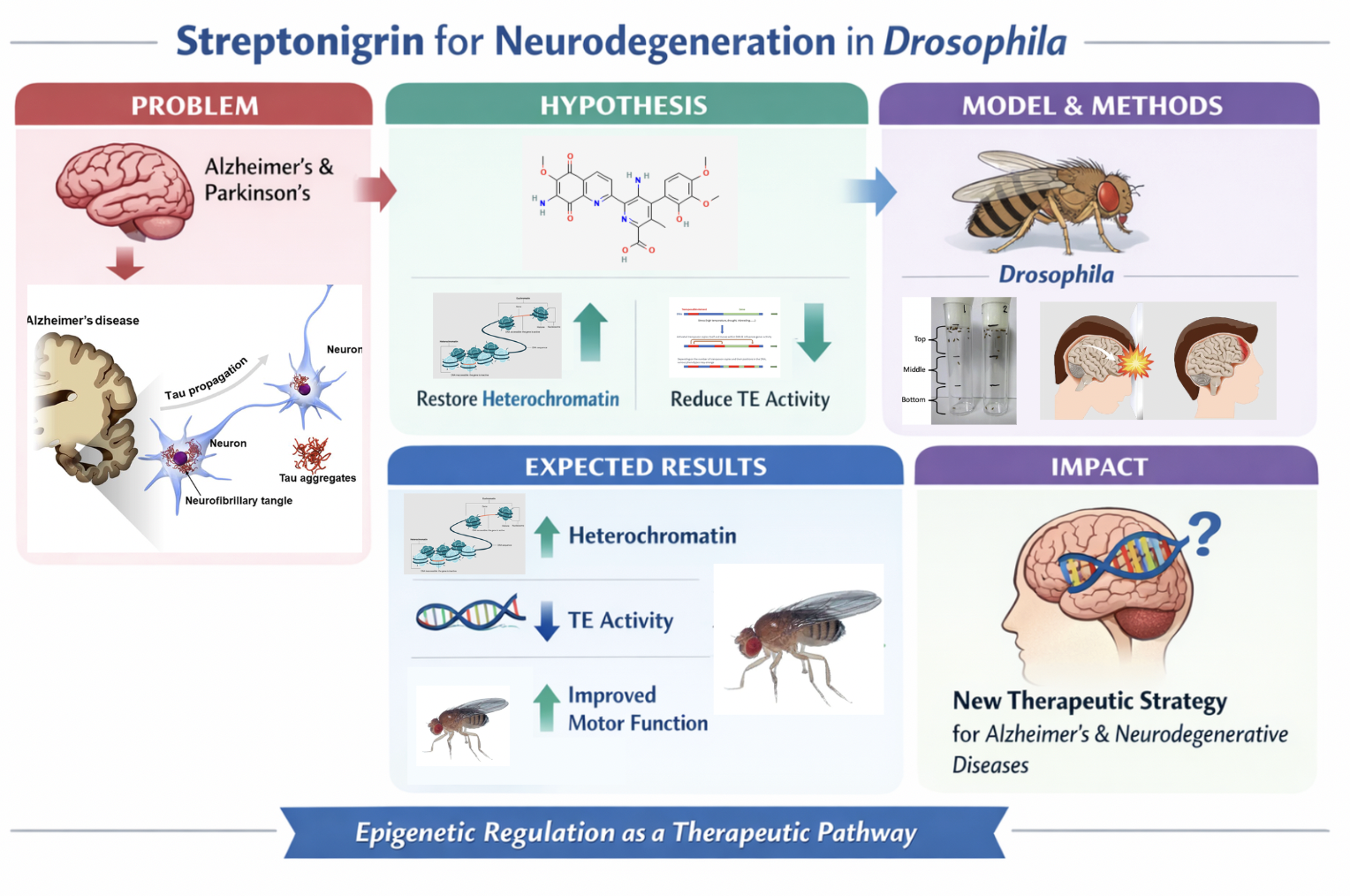
GRAPHICAL ABSTRACT:
RESEARCH PROPOSAL:
Click here to see more!
RESEARCH QUESTION:
Does Streptonigrin have potential as a treatment for Alzheimer’s and related neurodegenerative diseases?
HYPOTHESIS:
Streptonigrin will promote heterochromatin formation, silencing transposable element activity and reducing neurodegenerative symptoms.
BACKGROUND:
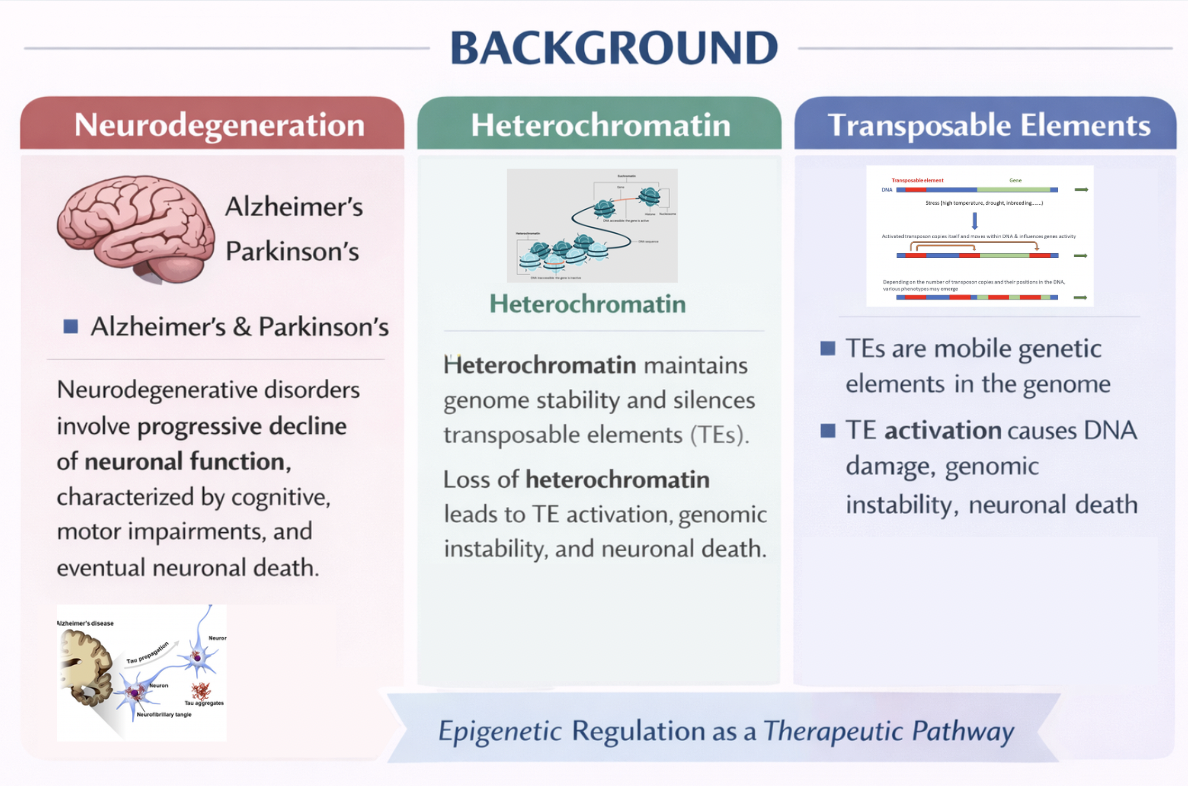
Neurodegenerative disorders, such as Alzheimer’s (AD) and Parkinson’s, occur when neural cells gradually lose function and die, resulting in a progressive decline in movement, cognitive abilities, and many more (Mass General Brigham, 2024). As of current research, there is no discovered cure for these progressive diseases despite it impacting over 50 million people worldwide (Imam et al., 2025). Instead, people typically treat them with a combination of medication and psychotherapy, alleviating symptoms of the condition rather than curing the patient (Ohwovoriole, 2022). Without new cures or treatments, patients with neurodegenerative symptoms are expected to double every 20 years, indicating that it is crucial to research every possible avenue.
Alzheimer’s Disease (AD) is a progressive brain disorder that impacts the patient’s memory retention and thinking skills. AD symptoms often appear later in life, with the majority of the estimated six million Americans with AD to be over 65 years old (National Institute on Aging, 2023).
Drosophila Melanogaster
There are many advantages that fruit flies (drosophila melanogaster) provide when researching neurodegenerative diseases. Drosophila behavior can demonstrate learning and memory, allowing researchers to perform useful behavioral and/or cognitive assays. These assays are helpful when researching neurodegenerative symptoms and effects. Another advantage is its short lifespan of roughly 2-3 months. By having such a short lifespan, scientists can watch how their disease evolves over time based on what treatment they receive. This, along with many other benefits, makes Drosophila a good organism to study AD and other neurodegenerative diseases (Prüßing et al., 2013).
Transposable Element Activity in Alzheimer’s
There are many genomic and biologic factors of AD, all of which contribute to the development and progression of the disease. Transposable element (TE) activity, one of the many factors of Alzheimer’s, are segments of DNA that move to new locations within a genome. Transposable elements are generally silenced through epigenetic defense systems such as formation of silencing heterochromatin and generation of piwi-interacting RNAs (Sun et al., 2018). When tau is aggregated, these defense systems are interfered with, meaning that TE becomes activated, leading to aberrant cell cycle activation in neurons and subsequent neuronal death.
Traumatic Brain Injury
Traumatic brain injury (TBI) has been suggested as a risk factor to the development of Alzheimer disease (Edwards et al., 2019). TBI can also lead to tau protein aggregation, supporting the development of several tauopathies such as AD.
Streptonigrin
Research by Sun et al. links neuronal death in tauopathy to transposable element activity. This suggests that potential treatments for these diseases could target either transposable elements directly, or TE regulators, such as heterochromatin and/or piwi-interacting RNA. Streptonigrin is a drug that has been discovered to have immense impacts on heterochromatin structure and formation even at extremely low concentrations (1nM) (Loyola et al., 2020). Ideally, by targeting heterochromatin, transposable elements can be regulated, resulting in a decrease in neurodegenerative effects and a slower progression of the disease.
BACKGROUND INFOGRAPHIC:
METHODOLOGY:
Preliminary Data:
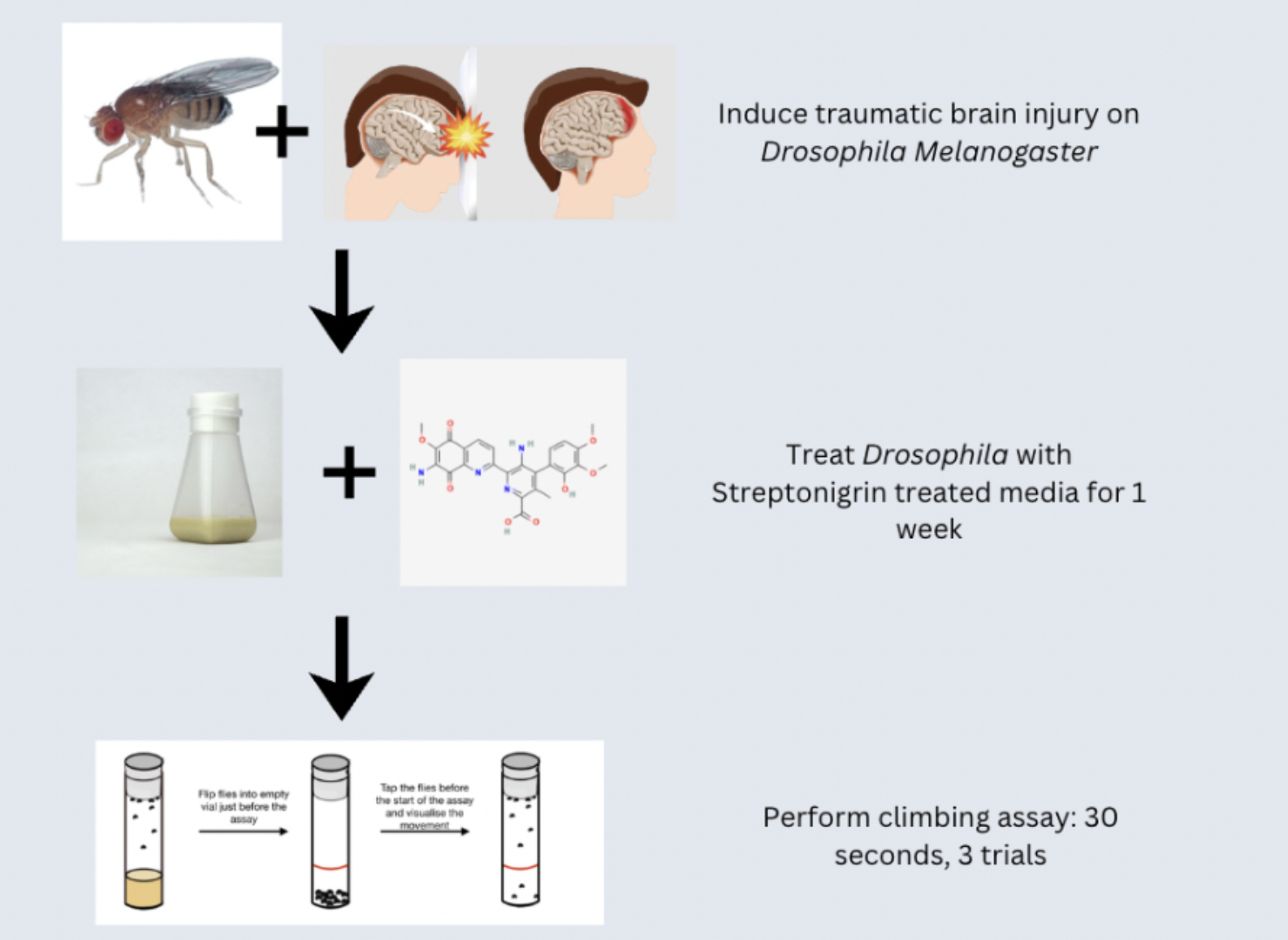
To determine the concentration of Streptonigrin that could be safely administered to Drosophila, a preliminary analysis of the impacts of this drug must be performed. Using 7 different concentrations of Streptonigrin, ranging between 0-20 micromoles, Drosophila were treated for 1 week. Climbing assays were performed at the end of this treatment to evaluate the impact of the drug on the fly’s physical locomotive abilities. Data was collected from this evaluation. Trials that were deemed statistically significant were not used in later testing of Drosophila with traumatic brain injury as they likely had independent negative impacts on the fly’s locomotive ability.
Treated Fly Methodology:
Drosophila Melanogaster were given traumatic brain injury to induce tau aggregation. These flies were treated using the concentrations determined in the preliminary trials (0, 3, 5, 7 micromoles) for 1 week. Data was collected from climbing assays to evaluate the locomotive ability of the fruit fly.
VISUAL METHODOLOGY:
RESULTS & ANALYSIS:
Preliminary Data:
Data depicted in Figure 1 shows results from the preliminary analysis of the impacts of Streptonigrin on the locomotive ability of Drosophila. Two proportion z-tests were performed on the results of this experiment.
Treated Fly Data:
Data depicted in Figure 2 shows results from the climbing assay performed on flies with traumatic brain injury after 1 week of exposure to Streptonigrin. Two proportion z-tests were performed on the results of this experiment.
A higher percentage of flies reached the top of the vial during the climbing assay after being treated with a greater amount of Streptonigrin.
This suggests that heterocromatin levels were successfully increased and TE activity was suppressed.
Having trouble viewing this document? Click here to access the PDF!
DISCUSSION:
The objectives of this experiment were accomplished as Streptonigrin was demonstrated to likely have an impact on tauopathies such as Alzheimer’s using a TBI model of Drosophila. In data representing treated flies in the second half of the experiment, locomotive ability was significantly greater (p-value > 0.001) with a 7 micromole concentration of Streptonigrin. This suggests that heterochromatin was increased, silencing transposable element activity and therefore alleviating symptoms of neurodegeneration.
A limitation of this project was that it could not be performed on an actual Alzheimer’s model of drosophila, thus not being as accurate as possible. Ideally, having a model organism that expresses the target disease/mutations is extremely beneficial as it makes it significantly easier to relate back to humans and allows for the data to be more relevant. To address this issue, traumatic brain injury (TBI) was used to aggregate tau, a large factor in many neurodegenerative diseases. Doing this, the cause of Alzheimer’s that was targeted in the project was present and similar symptoms were expressed, allowing for a relatively accurate model to be created.
Two proportion z-tests were performed as the two data points that were compared was the number of flies that made it to the top of the vial during the given time period out of total number of flies for two different concentrations of Streptonigrin. Each concentration was compared relative to the control group (0 micromoles).
Past studies on neurodegenerative disease treatments rarely covered transposable elements, due to them being a relatively new discovery. Due to this, it is crucial that more research is done in this field to grasp an understanding of the potential of this pathway.
Future Research
In future research, salivary gland and GYPSY-TRAP assays would be especially beneficial. The salivary gland assay allows the researcher to quantify levels of heterochromatin in a drosophila model. This would allow for direct correlation of Streptonigrin to heterochromatin in drosophila. GYPSY-TRAP is a way to track transposable element activity with fluorescent dyes. With these two additional assays, the results of the experiment would display a strong link between Streptonigrin and neurodegeneration, filling in the gaps of the current project.
CONCLUSION:
This research has found that Streptonigrin likely has a positive impact on neurodegeneration in drosophila, suggesting a potential new treatment for Alzheimer’s and related tauopathies. Vials of media were created with various concentrations of Streptonigrin, treating drosophila melanogaster models with traumatic brain injury (TBI). As a result, greater amounts of Streptonigrin (7 micromoles) allowed for the fly to have greater locomotive ability after treatment, as seen in data collected from climbing assays. This suggests that heterochromatin within the drosophila model, silencing transposable elements and subsequently reducing symptoms of neurodegeneration such as locomotive ability. With this profound information, researchers may be encouraged to research further into the potential of both Streptonigrin and treatments directly targeting transposable elements.
REFERENCES:
Having trouble viewing this document? Click here to access the PDF!
FEBRUARY FAIR POSTER: