

I have retired. I shall teach no more. I am gone writing forever.
My major scientific project at this point is completing the hydrodynamic scaling treatment of polymer solution dynamics, which unlike its European competitors is consistent with experiment. By and by this work may turn into a book Theory of Polymer Solution Dynamics. I have a considerable set of other scientific projects, and will hopefully eventually get to many of them.
My other writing projects are a series of novels. As I type, I am working on The Girl Who Saved the World, a prequel to my much earlier novel This Shining Sea.
I remain active in politics, and am as of this writing State Chair of the Libertarian Association of Massachusetts.
I was just re-elected as President of the National Fantasy Fan Federation (founded 1941), the world?s oldest international science fiction club.
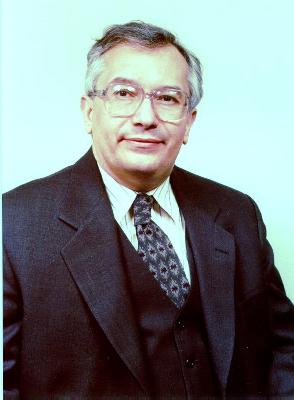
George Phillies was born July 23, 1947 in Buffalo, New York, first son of Eustace G. Phillies, M.D. and Clara Phillies (both deceased). He has one brother, Gregory Paul, who is a radiologist working in Buffalo, New York. Phillies grew up in Kenmore and Williamsville, New York, finished as salutatorian at the Williamsville Central High School [now Williamsville North], and went to M.I.T. in Cambridge, Massachusetts. While at MIT, Phillies earned degrees of Bachelor of Science in physics and in life sciences, as well as Master of Science and (in 1973, after a total of three years and three months in graduate school, not counting an interruption for patriotic service in the Army) Doctor of Science degrees in physics. Phillies then joined the Harvard-MIT Health Sciences and Technology program as a researcher in the research group of H. E. Stanley.
In 1975, Phillies moved to California, working as a postdoctoral fellow in the U.C.L.A. Chemistry department in the research group of Daniel Kivelson. He lived in Santa Monica. Phillies in 1978 moved to Ann Arbor, Michigan, where he was employed as an Assistant Professor of Chemistry at the University of Michigan. In 1985, after declining alternatives at nationally-known schools, Phillies moved to WPI, where before retirement he rose to the rank of Professor of Physics (and Biochemistry Associated Faculty, and Interactive Media and Game Design Associated Faculty). Phillies has attained international recognition for his scientific studies of light scattering and polymer solutions. [Phillies: ``A polymer is a long thin molecule, shaped like a strand of spaghetti. A polymer solution pours very slowly. An engineer uses the pouring to design machines. A physicist asks `Why do molecules shaped like spaghetti strands pour slowly?']
Phillies, 68, has never married, and lives in his home in Worcester, Massachusetts. His hobbies include science fiction, game collecting, and gardening. As a writer, several of his short stories have won awards at national conventions. Phillies collects strategy games and has written (with Tom Vasel) two books about designing board games.
Previous political activities: Phillies is an active member of the Libertarian Party, both in Massachusetts and nationally. In 1996, Phillies was elected Executive Director of the Massachusetts Libertarian Association, and was the party nominee for United States Senator from Massachusetts. In 1998, he ran for Congress as a Libertarian against Democratic Party incumbent Jim McGovern and Republican Matt Amorello. One of his three-way debates was later carried coast to coast on CSPAN-II, 7PM EST, the Thursday before the election. In 2004, Phillies was elected as one of the two Regular members of the Libertarian Party of Massachusetts State Committee. In 2008, the Libertarian Party of New Hampshire chose Phillies as their nominee for President of the United States and placed him on the ballot. Phillies now serves as Chair of the libertarian Association of Massachusetts.
The other George Phillies's were his late grandfather George E. Phillies (Attorney) and his late father, Eustace George Phillies. Grandfather believed that he was in some part responsible, via the Justice for Greece Committee, for extending the Marshall Plan to Greece.
Phillies' father was a physician, specializing in internal medicine and hematology. He practiced in Buffalo and regularly made at least a few house calls as long as he was physically able to do so. Father made substantial contributions to society of other positive sorts, for example to organizations for hemophilia sufferers, but he never wanted them discussed in public.
My primary research efforts are in the area of complex fluids. Complex fluids are liquids that have interesting structure on several different time or distance scales at the same time. This causes them to have high viscosity, odd flow properties, nonexponential relaxations, and so forth. There are many types of complex fluids; my research focuses on polymers and glasses.
A major emphasis of my historical experimental studies was the use of quasi-elastic light scattering (QELSS). See my research publications in Analytical Chemistry and in P.J. Elving's book for a description of this method. In many of our measurements, we took a polymer or surfactant solution, and added to it polystyrene latex spheres. The spheres scattered much more light than the sphere-free solutions do, so we could use QELSS to measure the diffusion of spheres through the solutions. The technique, which was pioneered in my laboratory, is known as optical probe diffusion.
I ask how polymers move in solution. Experimentally my laboratory studied the diffusion of probe particles through a wide variety of polymers. We also reanalyzed large parts of the literature on every significant technique that has been used to measure the motion of polymers in solution. We have also done a series of analytic-algebraic calculations on how hydrodynamic interactions determine the motion of polymer molecules at all concentrations.
Before our work, a large part of the community believed that polymer motion was described by the deGennes-Edwards-Doi (see my research publications for full references) reptation/scaling/model. The deGennes-Edwards-Doi models only treat semidilute solutions, which are solutions concentrated enough that the mean distance between neighboring chains is smaller than the radius of the chains. In semidilute solutions, polymer chains interpenetrate and are said to be entangle with their neighbors.
The reptation half of the reptation/scaling model is a guess about chain motion. The entanglements between chains are said to constrain the Brownian (random thermal) motion of polymer chains, so that chains primarily move parallel to their own contours. This motion of a chain parallel to its
own length is reptation. The other half of the reptation/scaling model is scaling, a mathematical assumption that has nothing to do with reptation. The scaling assumption is that measurable transport properties depend on system variables via power laws, so that, e.g., in semidilute solution the self diffusion coefficient  of
a chain depends on chain length M and chain concentration c via
of
a chain depends on chain length M and chain concentration c via

In 1986, I proposed a universal scaling equation for polymer self-diffusion, under which instead follows a stretched exponential dependence on c and M, namely

I (and, later, students) tested my universal scaling equation against a wide range of literature results, not only on self-diffusion but also on viscosity, rotational diffusion, electrophoretic mobility, dielectric relaxation, sedimentation, and other methods. My equation works well in dilute and semidilute polymer solutions in essentially all systems tested, at least until very large chain concentration and molecular weight are attained. An important consequence of my model, and the surrounding work, is that the reptation model is incorrect in polymer solutions, in the sense that reptation is probably not important in semidilute polymer solutions (melts are a different case). I first gave a talk on this topic at the MRS conference in Boston in December 1986. The European in the audience (not deGennes, who politely asked for copies of my papers) greeted the talk with loud guffaws; the one-sentence-per-talk summary of the conference papers, as published in one journal, covered every paper except mine.
Since then, there has been a complete inversion in opinion. At one recent conference I attended, in which the speaker blandly applied scaling analysis, the questioners noted that reptation/scaling simply does not work in most polymer solutions, and asked the speaker why his solutions should be any different. The speaker had no answer.
An important part of our work has been giving a complete theoretical derivation of the stretched exponential. I can now do part of the derivation, at the level where I can calculate a quantitatively without using any free parameters. By using a low-order series, I am within a factor of two or so in the final answer. In competing theories, scaling prefactors like a are treated as being totally incalculable, and often are not even written down explicitly.
My major research effort for the past few years, and extending to the end of 2010, was completing my research monograph Phenomenology of Polymer Solution Dynamics, which has been published by Cambridge University Press. Completion has involved rereading and re-analyzing hundreds and hundreds of scientific papers--two four-drawer filing cabinets stuffed to the gills with papers.
In summary: Once upon a time, there was a received model as to how polymers move in non-dilute solutions. I was the first to say that the received model was fundamentally wrong. My point of view is now widely but not universally accepted.
Strategic Games are games with complex rules, arranged so that players see how the real world responds to their decisions. These include games about railroads, businesses, and historical battles. Some of these are played on mapboards using cardboard counters (that's my interest). You can replace the cardboard counters with toy soldiers, usually made of lead, pewter, or another material. (Steven Forbes, Sr., had a famous collection of these.) Some people play games on computers (ranging from arcade games requiring manual dexterity to complex resource management games.) Rolegames are games in which you play a character in a fictional world, a world where magic works or people can fly. (Once upon a time, a correspondent of mine, Gary Gygax, and his friend Dave Arneson wrote the first modern set of these - Dungeons and Dragons. Their rules were originally written as an add-on to rules for fighting battles with toy soldiers.)
I'm mostly a game collector. It's not an expensive hobby; there aren't enough collectors to send prices skywards. I do have one of the more extensive collections -- well over 5000 titles -- of board strategy games in the world and, by a fair margin, the world's largest collection of magazines about strategy games.