Completed
Major Qualifying Projects (MQPs)
Sorry - this page is
very outdated. There are many more recent - too many
to keep up with.
“The combined
effects of substrate stiffness and stretch on the phenotype of
fibroblasts”, Cathryn Bedard, Mike Drnek, Leslie Sierad, A, B, C
and D terms, 2006-07, KLB-0601
“Design of a
reproducible murine femoral fracture device”, Melissa Byrne,
Benjamin Cleveland, Joseph Marturano A, B, C and D terms,
2006-07, KLB-0602, Co-Advisor: J. Wixted, MD
Honorable Mention in BME
A manuscript based on this project accepted for
publication in Journal of Biomechanics.
“A device for
quantifying the severity of peripheral edema”, Stephanie LeGare,
Charles Gammal (ME/ECE), Erika Hall, Rachelle Horowitz, A, B, C
and D terms, 2006-07, KLB-0603, Co-Advisors Y. Mendelson, J.
McNeil, R. Dunn, MD
2007 Provost’s MQP Award for Biomedical Engineering and 2nd
place in Mechanical Engineering
“Tibiotalocalcaneal Fusion
Nail”, Rob Lavado, Mike Coutts, Justin Parker (ME), A, B, C and
D terms, 2006-07, KLB-0604
| 2005-2006 |
Project Title: Design of a novel
device for mechano-biological studies. |
| Coadvisor: George Pins, Ph.D., WPI BME |
|
pix coming soon |
Project Description:
The cells within connective tissues (skin, blood vessels,
heart valves, tendons, etc.) respond to changes in their
local mechanical environment by altering their contractile
behavior and rates of matrix synthesis and degradation.
These cellular activities are critical for proper tissue
homeostasis, and dysregulation can lead to various disease
states. The goal of this project is to design and validate a
system for independently studying the effects of substrate
stiffness and stretch on cell activity. Student will have
the chance to learn mechanical characterization methods,
biochemical assays, and cell culture techniques. This
project has application in the tissue engineering of skin
substitutes, vascular patches, as well as other tissue
constructs and will provide experience valued by biotech
companies and medical device manufacturers. Team: 3 BMEs
Honorable Mention in BME |
| 2005-2006 |
Project Title:
Design of a sternal fixation testing apparatus |
| Coadvisor: Ray Dunn, M.D., Dept of Surgery, UMMS |
Project Description:
For open heart surgery, the sternum is split down the center
and retracted. The current practice is to use wire loops to
close the fracture. Virtually all other bone fractures are
now affixed using plates and screws because of improved
mechanical stability. The goal of this project is to design
an in vitro testing apparatus that applies
physiologically realistic forces to isolated sterna so that
fixation systems (including plates and wires) can be
optimized before clinical implantation. Students will
analyze the forces acting on the sternum during breathing
and coughing using finite element analysis, design and build
a multiaxial mechanical testing device, and perform
preliminary tests on model sterna to compare the stability
of various fixation methods. Team: 4 BMEs |
pix coming soon |
pix coming soon |
| 2005-2006 |
Project Title: Biological tissue properties
at the cell level |
| Coadvisor: Nancy Burnham, Ph.D., WPI Physics Dep |
|
pix coming soon |
Project Description:
The activity of cells within connective tissues (skin,
blood vessels, heart valves, tendons, etc.) is regulated, in
part, by the mechanical properties of the extracellular
matrix (ECM) in which they reside. For example, changes in
the stiffness of the matrix alter the cells’ contractile
behavior and rates of matrix synthesis and degradation.
These cellular activities in turn alter the mechanical
properties of the matrix. This “mechanical reciprocity” is
critical for proper tissue homeostasis and improper
regulation is implicated in many fibrocontractive diseases.
The goal of this project is to measure the mechanical
properties in the low stress region (<50kPa) of a series of
healthy and diseased soft connective tissues using an array
of methods including AFM. This project will contribute to
our understanding of tissue properties in health and
disease, has application in the tissue engineering of tissue
substitutes, and will provide experience valued by biotech
companies and medical device manufacturers. Team: 3 BMEs, 1
Physics |
| 2004-2005 |
Project Title: Design of a biaxial test device for connective tissue engineering
|
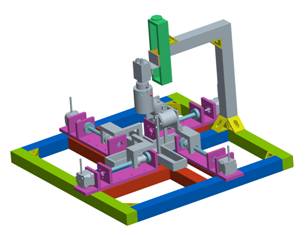
Project Description:
The goal of this project was to design and build an electro-mechanical testing system for stretching very compliant connective tissues to determine their biomechanical material properties. The students designed tissue clamping and actuating mechanisms and built a custom test chamber. This project has application in the tissue engineering of skin substitutes, vascular patches, as well as other tissue constructs and provided experience valued by biotech companies and medical device manufacturers. Team : 2 BMEs and 2 Mechanical Engineers
Honorable Mention in BME
2nd place in Mechanical Engineering |
 |
| 2004-2005 |
Project Title: Biomechanical assessment of vascularized bone segments for novel tibia and femur repair treatments
|
| Coadvisor: Janice Lalikos, Dept of Surgery, UMMS |
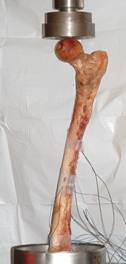
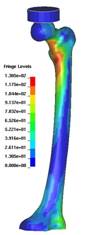
Project Description:
The goal of this project was to design and conduct custom mechanical tests to assess the mechanical properties of femur flaps, fibula flaps, double-fibula flaps, intact femurs and donor-site femurs as part of a larger study ongoing at the UMMS Department of Surgery. The "flaps" are portions of bone from the patient that remain attached to a blood supply. Currently, segmental defects of the tibia and femur are often repaired using a vascularized bone transfer. This leads to a significant period of immobilization while the graft is incorporated and also donor-site morbidity including hypersensitivity at the donor-site and sensory loss in the foot. Bone segments (flaps) with a blood supply could remedy this situation. Team: 3 BMEs |
 |
 |
| 2004-2005 |
Project Title: Device for biaxial mechanical stimulation of cultured tissues
|
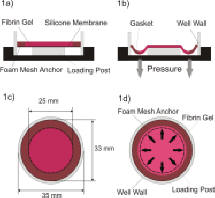 |
Project Description:
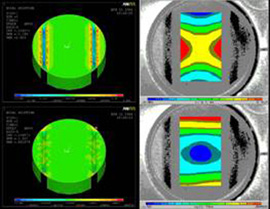
The goal of this project was to design and validate a system capable of applying
a range of biaxial strains to connective tissues for the
study of the effects of mechanical stimulation on the growth
and mechanics of cultured tissues. The students designed
novel "platens" to be used with a commercial cell stretching
device using FEM. The students also utilized tissue culture techniques and performed mechanical analysis of the cultured tissues. This project has application in the tissue engineering of skin substitutes, vascular patches, as well as wound healing.
Team: 4 BMEs |
|
| 2003-2004 |
Project Title: Design of a dynamic bioreactor for connective tissue engineering
|
Project Description:
The goal of this project was to develop a bioreactor system capable of applying cyclic mechanical loads to connective tissues while controlling the chemical and thermal environment. The students designed tissue clamping and actuating mechanisms. The students used tissue culture techniques and performed mechanical analysis of the cultured tissues. This project has application in the tissue engineering of skin substitutes, vascular patches, as well as other tissue constructs.
Team: 2 BMEs |
 |
| 2003-2004 |
Project Title: Optimization of a sternum fixation device
|
|
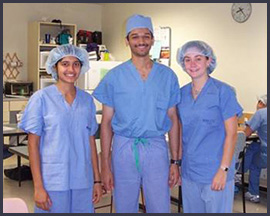
1st Place Award, Undergraduate Oral Presentation
Competition
at the 30th Annual NE Bioengineering Conference,
Springfield, MA, April 17-18, 2004. |
Project Description:
For open heart surgery, the sternum is split down the center and retracted. Following surgery, the two halves of the sternum are brought back together and affixed using stainless steel surgical sutures so that the bone can heal. Although, rigid fixation has been demonstrated to be more effective in the repair of other fractured bones, this method has only recently been applied to the sternum on an experimental basis. The goal of this project
was to optimize the design for a novel sternum fixation device. Students analyzed the forces in the sternum during breathing and coughing
and measured the stability of various wire and plating designs using mechanical testing.
Team: 1 Mechanical Engineer and 3 BMEs2004 Provost’s
MQP Award for Biomedical Engineering
Two manuscripts based on this project have been
published
| Co-Advisor(s): George Pins, Ph.D. (BME), Ray Dunn, M.D. (UMASS Med) |
|
| 2003-2004 |
Project Title: Skin Tonometer for Assessing Edema
|
Project Description:
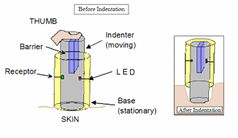
Poor venous circulation in the leg, a condition called "venous stasis disease (VSD)," often results in constant lower leg swelling (edema) and ultimately skin breakdown and chronic ulceration. Clinicians need a tool to measure the pressure in the leg that will objectively show efficacy of treatments for reducing edema (e.g., wrapping, elevation, and topical dehydrants). Students designed a device for measuring the
viscoelastic response of leg tissue and reduced the design to practice by developing a working device to be used in the clinic.
Team: 2 BMEs.
| Co-Advisor(s): Ray Dunn M.D., (UMASS Med) |
|
Patent application submitted |
| 2002-2003 Project Title: Rational Design of Basal Lamina Analogs for Applications in Tissue Engineering
|
|
 |
Project Description:
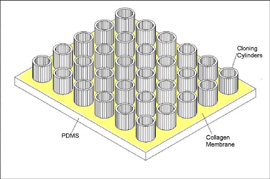
The goal of this project was to design analogs of basal laminae or basement membranes that modulate cellular adhesion, migration, proliferation as well as extracellular matrix remodeling. Students used biomaterials processing techniques to fabricate and characterize these membranes. Students also used cell cultures techniques and digital image analysis to assess cellular responses to the materials. This project has application in the tissue engineering of skin substitutes as well as other tissue constructs.
Team: 2 BMEsFaculty Co-advisor: George D. Pins, Ph.D. (BME) |
|






![[WPI]](images/seal.gif "WPI Homepage")
![[Home]](images/home.gif)
![[Top]](images/top.gif)